
AI news ·
AI companions increase loneliness rather than reduce it, study finds
AI companion apps make loneliness worse over time, a year-long study of 2,000 adults found. Unlike daily texts with a real peer-which cut loneliness by 9%-chatbot use showed no meaningful benefit.
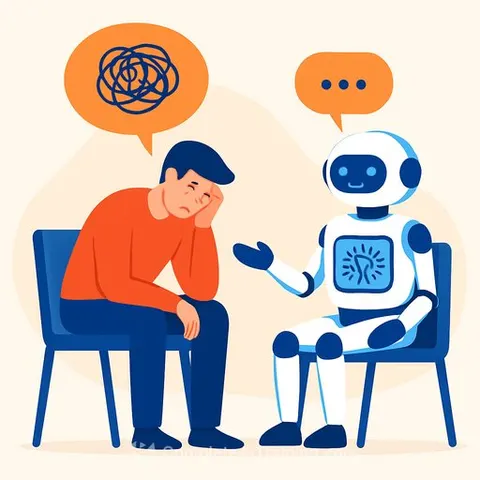
AI Companions Make Loneliness Worse, Research Shows
People who use AI chatbots designed to simulate romantic partners report increased loneliness over time, according to a year-long study published in Psychological Science. The research tracked over 2,000 adults from English-speaking countries and found that those who relied more heavily on AI for social interaction became lonelier than before they started.
The finding comes as AI companion use has grown sharply. One in five Americans have used an AI designed to simulate a romantic partner, and 72% of teenagers have tried an AI companion at least once, according to a 2024 Common Sense Media survey.
The Human Connection Gap
A separate study from the University of British Columbia tested AI companions directly against human contact. College freshmen who texted a randomly assigned fellow first-semester student daily for two weeks reported a 9% reduction in loneliness.
Students who messaged a Discord chatbot daily for the same period saw a 2% reduction - statistically identical to writing a single sentence in a journal each day.
Why AI Falls Short
The fundamental problem with AI companions isn't the technology itself, according to Ruo-Ning Li, lead author of the UBC study. It's the structure of the interaction.
"When you're talking with a chatbot, you can get a lot from it, but you never have the chance to give something back," Li said.
Human relationships depend on reciprocity - both receiving help and providing it. Organisational psychologist Adam Grant made a related point: relationships require giving services to others. AI chatbots function as servants, not companions.
The research suggests that for professionals developing or evaluating AI social applications, the limitations run deeper than processing power or conversation quality. Consider exploring AI Research Courses or Generative AI and LLM Courses to understand the behavioral and technical dimensions of these systems.