What Book Authors’ AI Copyright Court Losses Mean for the Music Business
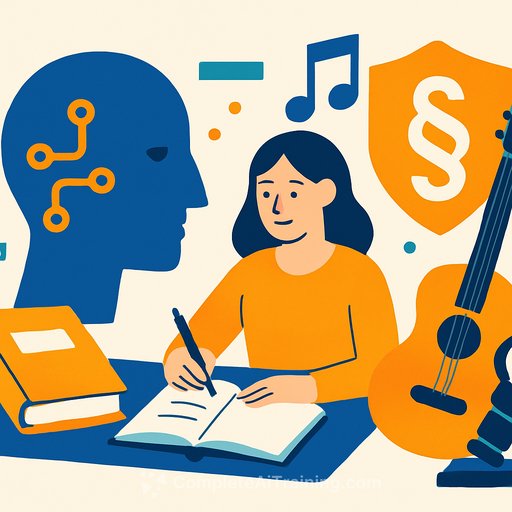
Two recent court decisions favored generative AI platforms in copyright disputes brought by book authors. Judges found that training large language models (LLMs) on unlicensed books qualifies as “transformative” and falls under “fair use.” This has raised questions about the fate of music industry lawsuits against AI platforms like Suno, Udio, and Anthropic. However, legal experts caution against assuming these rulings doom music copyright claims.
Both rulings, from California federal courts, ended authors’ claims against Anthropic and Meta using distinct legal reasoning but reaching the same conclusion. These were the first fair use decisions focused on generative AI, causing concern among music rights holders who are suing AI companies for training models on unlicensed songs and lyrics. Still, this is not a definitive loss for music companies.
Why These Rulings Aren’t the Final Word
- There are over 40 pending lawsuits involving AI and copyright, with judges still weighing fair use questions.
- District court rulings don’t set binding precedent; appeals and possibly Supreme Court decisions will shape future outcomes.
- Critically, these rulings pertain solely to books, not music — and experts emphasize the medium matters legally.
Ken Anderson, an entertainment attorney, points out that music and visual arts involve far more complex copyright analyses than literary works. Christopher Ford, an intellectual property litigator, highlights “market impact” as a key difference. Unlike books, AI-generated music can directly compete with human artists. For instance, AI bands like The Velvet Sundown receive real Spotify playlist airtime, which Ford sees as significant evidence of potential market harm.
Training Data vs. AI Outputs
The June court rulings focused on the legality of using unlicensed works for training AI models, not on the outputs those models generate. Both judges noted that infringement claims based on AI-generated content could be analyzed differently. Megan Bannigan, an IP lawyer, says music labels may have stronger cases arguing that AI-generated songs infringe copyrights, especially when the outputs closely resemble protected works.
Implications for Music Industry Litigation
The initial fair use rulings don’t signal the end of copyright litigation for music companies. Anderson advises AI firms not to rely on text-based fair use opinions as a green light for musical uses. Instead, these decisions could guide labels and publishers in refining their legal strategies and evidence collection.
Ford notes that plaintiffs’ attorneys are improving their pleadings, discovery methods, and expert analyses in newer cases, learning from earlier rulings. This evolution could strengthen music industry claims against AI platforms.
Settlement Prospects and Industry Outlook
Some licensing discussions between labels and AI companies like Suno and Udio are underway, but experts doubt recent rulings will push parties toward quick settlements. Ford explains these decisions don’t represent overwhelming wins for defendants that would discourage litigation. Bannigan agrees, emphasizing that platforms are eager to prove fair use, so significant settlements aren’t expected soon.
For legal professionals tracking AI copyright developments, these cases highlight the need for focused strategies that consider differences between creative media and the distinction between training data and AI outputs. Keeping an eye on evolving case law will be essential.
Your membership also unlocks: