Insurance pivots amid AI boom and geopolitical turmoil in 2026
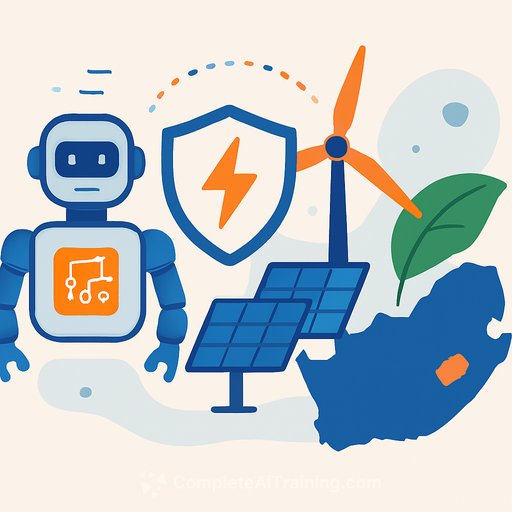
AI adoption. Geopolitical tension. A surge in renewables. Rising cyber aggression. These aren't side stories - they're the market. And insurance is right in the middle, pricing risk while clearing the path for growth.
Justin Naylor, CEO of iTOO Special Risks, puts it plainly: the same forces filling headlines are the ones rewriting risk, underwriting and specialist cover in 2026. Here's what that looks like - and what to do about it.
AI moves from pilots to full-scale operations
"AI has moved from pilot projects to full enterprise-wide adoption. I'm seeing it everywhere - law firms using AI to support decisions, doctors scanning skin lesions, even brokers comparing policy wordings," says Naylor. "AI is a way to put insurance experts on steroids."
Insurers are deploying AI agents to speed up decisions, automate routine work and sharpen broker service. The benefit is time back with clients - where deals are won. Naylor pegs AI spend in South Africa at roughly $3bn already, and growing.
New AI exposures - and products - are emerging
With adoption up, so is unsupervised use and unintended outcomes. That creates real demand for AI performance guarantees and liability cover when AI-driven decisions lead to financial loss. Expect scrutiny on data quality, model governance and auditability to rise.
If you're refining wording, underwriting or controls, the NIST AI Risk Management Framework is a useful reference for assurance and governance.
Creativity and human connection still win
Despite the AI boom, Naylor expects a swing back to real human connection. "AI cannot replace genuine creativity or human insight. Humans still come up with truly creative ideas. That's why one of our values is Maverick Progress."
iTOO will host its Unconference on Thursday, 5 March 2026, bringing 500 brokers and partners together for face-to-face learning with iTOO experts.
Geopolitics fuels cyber demand
Tense politics - from shifting US alliances to Brics dynamics - is feeding cyber risk as nation-states and groups use attacks as pressure. Cyber remains one of the fastest-growing lines, with iTOO launching Active Watch, a 24/7 cyber-monitoring service for top corporates.
Political violence and terrorism cover is also in high demand as elections, protests and riots disrupt operations. Kidnap and ransom is back on agendas too, with South Africa recording over 17,000 kidnappings last year.
Green transition accelerates - and needs specialist cover
South Africa's pivot from coal to renewables is reshaping exposure. "Renewable energy is our biggest and fastest-growing business. Wind and solar are booming, and we're seeing major growth across Southern and East Africa," says Naylor.
Opportunities are opening in grid-connection and transmission projects, energy exchanges, specialist energy guarantees and carbon credits (both voluntary and compliance markets). With more than 300 consecutive load-shedding-free days noted, insurers are critical to sustaining momentum.
A soft market - but not for everyone
Balance sheets are strong and pricing softened over the past year. It's flattening now, but still slightly cheaper. Naylor cautions it would take a $200bn global event to force a hard turn upward.
That said, bad risks and unmanaged exposures will still see increases. The signal is clear: price relief rewards quality risk management, not complacency.
What to do now: Practical moves for insurers and brokers
- Put guardrails on AI: establish model governance, human-in-the-loop review, and incident reporting for AI errors. Align with the NIST AI RMF.
- Develop AI liability offerings: craft wording for consequential loss, bias, IP infringement and data leakage. Build clear triggers and exclusions.
- Train front lines: upskill underwriting, claims and broker teams on prompts, validation and red-flag detection. See AI for Insurance.
- Strengthen cyber posture: expand pre-bind scans, incident retainer partnerships and 24/7 monitoring for top accounts. Price political-motivated events into scenarios.
- Revisit PV/terrorism models: update aggregates for protest-driven damage and business interruption. Stress test urban clusters and logistics nodes.
- Refresh K&R frameworks: validate client protocols, travel policies and crisis vendors. Clarify sub-limits and response timelines.
- Build renewable energy expertise: stand up underwriting playbooks for wind/solar, grid interconnects, storage and transmission. Consider surety for energy guarantees.
- Back carbon markets carefully: separate voluntary vs. compliance credit risks, permanence concerns and counterparty due diligence.
- Use broker time better: shift routine queries to AI so teams can focus on complex placements and advisory. Measure turnaround and hit rate.
- Be selective on price: use soft-market conditions to win good risks and exit deteriorating ones. Reward clients who actively manage exposure.
The bottom line
AI is scaling, geopolitics is raising the stakes, and renewables are opening new frontiers. Pricing is friendly - for now. Naylor's guidance holds: invest in technology, work closely with brokers to actively manage new risks, and stick with the experts while the market is soft.
Your membership also unlocks: