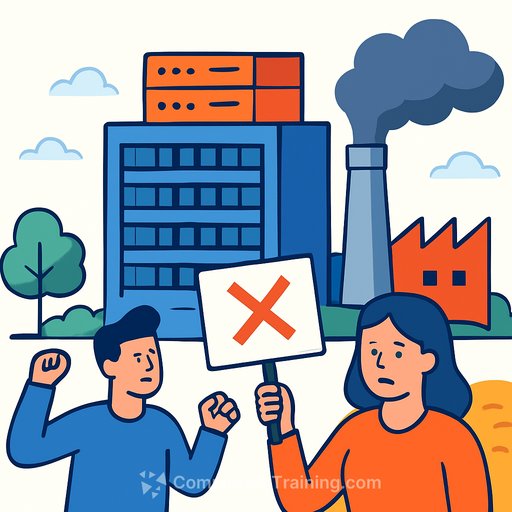
AI data centers are straining energy and water. Here's how to plan, build, and finance accordingly
AI demand is pulling data center projects into every growth market. The catch: outsized electricity and water needs that stress local infrastructure and timelines. If you work in real estate or construction, this isn't a headline-it's a design brief and a risk register.
Why this matters for developers, owners, and builders
- Higher load per acre changes site economics, substation needs, and interconnect timing.
- Cooling choices can spike potable water demand unless you plan reclaimed or dry solutions.
- Permitting, community agreements, and supply-chain bottlenecks can stall a deal for quarters, not weeks.
- Tenants want speed, scale, and ESG credibility at the same time-your design and contracts must reconcile all three.
Site selection filters that prevent regret
- Electrical capacity and timing: Confirm available MVA, upgrade costs, and queue position. Ask for dual feeds, voltage level, and realistic energization dates. Transformer and switchgear lead times can stretch 12-30 months-lock them early.
- Water security: Validate rights, seasonal limits, and drought triggers. Prioritize reclaimed sources and confirm treatment, storage, and distribution constraints. Map discharge permits and thermal limits upfront.
- Cooling fit: Match climate to approach: air-cooled chillers, dry coolers with adiabatic assist, or liquid options for high-density racks. Model water-use effectiveness (WUE) and set hard caps by month.
- Fiber and latency: Proximity to long-haul routes, diverse paths, and carrier-neutral facilities reduces project risk.
- Zoning and neighbors: Noise from equipment yards, diesel testing windows, traffic, and visual screening. Bring community benefits and transparency to the first meeting, not the last.
Design moves that cut energy and water without killing schedule
- Thermals: Hot/cold aisle containment, higher supply-air temps within ASHRAE envelopes, and free-cooling hours. Design for staged upgrades as rack densities rise.
- Cooling tech: Choose low- or no-evap strategies where water is tight. Where water is available, set use caps and install metering at make-up and blowdown to manage in real time.
- Liquid for hotspots: Start with direct-to-chip in high-density zones before full immersion. Plan service clearances and leak detection into the layout.
- Electrical architecture: Right-size UPS topologies and consider battery systems that support grid services to improve economics while meeting reliability targets.
- Heat reuse: If you're near district loops or large thermal loads (hospitals, campuses), route waste heat to offtakers. It's capex-heavy, but it scores with cities and ESG screens.
- Monitoring: Instrument PUE and WUE at commissioning. Tie DCIM and BMS data to operating playbooks so drift is caught fast.
Pro formas and contracts that won't backfire
- Utilities: Model demand charges, capacity reservations, and curtailment risk. Negotiate construction service agreements and milestone energization dates.
- Procurement: Long-lead items-transformers, switchgear, gensets, chillers-need parallel paths and deposits. Prefabricated electrical rooms can shave months if logistics are nailed down.
- Energy sourcing: Explore utility green tariffs, PPAs, or RECs aligned to tenant requirements. Clarify who owns the attributes and reporting rights.
- Water terms: Codify drought-stage allocations, alternative sources, and a cooling changeover plan. Price out non-potable tie-ins and on-site storage from day one.
- Leases and SLAs: Define density ramps, redundancy tiers, and efficiency targets with incentives and remedies on both sides.
Permits, community, and compliance
- Environmental review: Groundwater drawdown, thermal discharge, stormwater, wetlands, and air permits for emergency generation. Keep studies concurrent, not sequential.
- Construction windows: Noise curfews and traffic management influence phasing and crane days. Share the plan early with local officials.
- Community benefits: Local hiring, apprenticeships, and infrastructure upgrades build trust and speed approvals.
What to do next
- Run a location scan that scores sites by MVA available, interconnect timing, reclaimed water access, fiber diversity, and permitting path.
- Hold joint pre-application sessions with the utility and water authority; align on dates and deliverables before design development.
- Commission an integrated energy-and-water model; set firm targets for PUE and WUE and tie them to pay apps.
- Pick a cooling strategy that meets annual water caps and can pivot as rack density grows.
- Issue LOIs for long-lead equipment now, with alternates approved.
- Prepare a community brief that explains electrical and water use, mitigations, and benefits in plain language.
Want more industry-specific AI context and case studies for your team? Explore AI for Real Estate & Construction.
For background on sector-wide resource use, see the International Energy Agency's analysis of data centers and networks (IEA) and U.S. guidance on data center efficiency strategies (DOE Better Buildings).
Get Daily AI News
Your membership also unlocks:
700+ AI Courses
700+ Certifications
Personalized AI Learning Plan
6500+ AI Tools (no Ads)
Daily AI News by job industry (no Ads)