
AI news ·
AI data centers pull skilled tradespeople from residential work, delaying home repairs and construction
Data centers are paying electricians $40 an hour plus per diem-more than double residential wages-pulling tradespeople from homebuilding and leaving homeowners waiting five to six days for AC repairs.
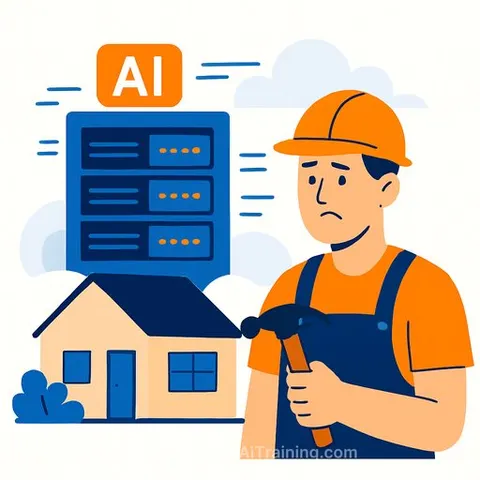
A critical shortage of electricians and HVAC technicians is hitting the residential construction sector as AI data centers siphon off skilled labor with higher wages, leaving homeowners facing longer repair wait times and delayed building projects. The surge in data center construction, driven by demand for AI infrastructure, has created a vacuum for licensed tradespeople, with some projects offering pay more than double what residential contractors can match.
In Abilene, Texas, the 4-million-square-foot Stargate data center backed by OpenAI and Oracle has pulled workers from local homebuilding crews. Gene Lantrip, an Abilene homebuilder, called the data centers "a double-edged sword." The influx of temporary workers needing housing has boosted demand for new homes, but his subcontractors lost many employees to the higher-paying jobs on the data center site. "My electricians and plumbers and HVAC guys can't keep their crews," Lantrip said.
Data center pay dwarfs residential wages
Residential electricians typically earn $15 to $20 per hour, Lantrip said, while the data center project offers $40 per hour plus a per diem. The wage gap has forced him to hire and train 18-year-olds, extending build times. A home that once took a predictable schedule now takes two months longer to complete. His company, which usually builds 60 to 70 houses annually, has 86 underway this year and could reach 150-but only by stretching timelines.
The problem is not confined to Texas. According to iRecruit, the data center construction industry faces a shortfall of up to 499,000 workers over the next 18 to 30 months. Ladd Schuiling, vice president of sales at Skilledtrades.com, said that while most data center electricians need commercial and industrial experience, many projects also need lower-skilled tasks like pulling wire, which residential electricians can do. "Lots of data centers need lower-skilled electricians to do things like pull wire, where almost every electrician, no matter industry or experience, knows how to do," he said.
Longer AC repair waits and rising home costs
For homeowners, the immediate consequence is a longer wait for repairs. Danny Niemela, vice president and CFO at ArDan Construction in Arizona, noted that if an AC fails in June, what used to be a two-day wait now stretches to five or six days. Arizona, which has 184 data centers and 86 more planned, according to the Pew Research Center, has seen labor costs for licensed trades rise 12% to 18% in the past two years. "That $3,500 panel upgrade you had done two years ago will run you $4,200 this year," Niemela said. "When you're fighting a corporation for manpower, you lose every time."
Rents and home prices are also climbing. Lantrip said duplexes he builds now rent for $1,000 more than before, and the average home price in Abilene increased 10.45% since last year, according to Realtor.com. The new housing stock, however, lags behind the immediate need for the 14,000 temporary workers and their families that the data center brought to the area.
Industry scrambles to fill workforce gaps
While data centers amplify the pressure, the root cause is a long-standing construction labor shortage. The Associated Builders and Contractors reported that the industry needs an estimated 349,000 net new workers in 2026 and 456,000 in 2027. Patrick Murphy, CIO of Coastal Construction, said data centers didn't create the shortage-they exposed it. "The reality is we've had a skilled labor shortage in construction for years," he said. In the short term, homeowners and homebuilders will feel the pinch, but Murphy argued that AI infrastructure won't permanently crowd out homebuilding.
Why this matters for real estate and construction professionals
The competition for skilled labor from AI data centers strains project timelines and profitability for residential builders, while higher wages raise the cost of renovations and new construction. For those managing development pipelines or contracting services, these shifts make workforce planning and cost forecasting more unpredictable. Understanding trends in AI for Real Estate & Construction can help firms adapt to a market where large-scale tech projects increasingly compete for the same limited pool of tradespeople.