Proposed AI Data Centre Development at Thompson Rivers University
Bell Canada, in partnership with iTel and Thompson Rivers University (TRU), is planning to establish a significant AI data centre complex at 1452 McGill Road, Kamloops, targeted for completion by spring 2026. While no formal agreement has been finalized, TRU is expected to host two artificial intelligence hubs over the next two years, positioning the campus as a key site for AI infrastructure in British Columbia.
Bell and iTel’s AI Data Centre Network in B.C.
Bell is launching a network of AI data centres across Canada with iTel, beginning with a cluster of six facilities in British Columbia. This includes a new centre off Mission Flats Road and two 26-megawatt data centres planned for TRU. The first of these TRU data centres is scheduled to be operational by next spring, with the second expected in 2027.
Dan Rink, CEO of iTel Networks and Bell’s president of AI infrastructure, emphasized that beyond construction, Bell is collaborating with TRU to develop training programs in AI research, computer science, and trades. This initiative will create ongoing hiring opportunities as the largest AI cluster in Canada takes shape in B.C.
Data Centre District and Campus Expansion
Matt Milovick, TRU’s vice-president of administration and finance, highlighted ongoing discussions with iTel regarding the first AI data centre at 1452 McGill Road. This location sits across from existing Telus and Equinix data centres on Bunker Road. TRU acquired the McGill Road site in 2018 and plans to build a new facility there through its property trust.
Although no deal has been signed, the university is optimistic about the project's potential to enhance AI innovation for both faculty and students. The second data centre, planned for 2027, will be larger and situated more centrally on campus, serving different functions than the McGill Road facility.
Benefits for Students and Campus Sustainability
The data centres will support AI training and inference, giving TRU’s computer science, software engineering, and cybersecurity students access to advanced computing resources. Integration with the BCNET network will extend these capabilities nationally, improving research and learning opportunities.
Milovick stressed that this collaboration will offer valuable experiential learning and research prospects across the university community.
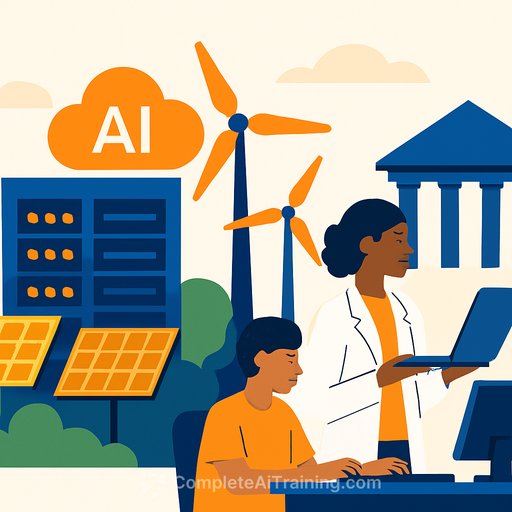
Additionally, the waste heat from the data centres will contribute to TRU’s Low-Carbon District Energy System, a green energy project underway since last year. Utilizing waste heat for campus heating not only reduces costs but also supports sustainability goals.
Implications for Real Estate and Construction
- The development involves new construction on university-owned land, presenting opportunities for specialized infrastructure projects.
- Coordination between Bell, iTel, and TRU requires careful planning to meet technical specifications for AI data centres, including power and cooling systems.
- Integration with TRU's Low-Carbon District Energy System highlights the growing trend of combining data centre development with sustainable energy solutions.
- These projects could increase demand for skilled trades and construction workers familiar with high-tech facility requirements.
For professionals in real estate and construction, the TRU AI data centre initiative represents a notable example of how educational institutions and technology companies are collaborating on infrastructure that supports both innovation and sustainability.
To explore training programs relevant to AI and technology infrastructure, visit Complete AI Training.
Your membership also unlocks: