Is AI a Key Enabler in Managing Climate-Driven Natural Catastrophe Risks?
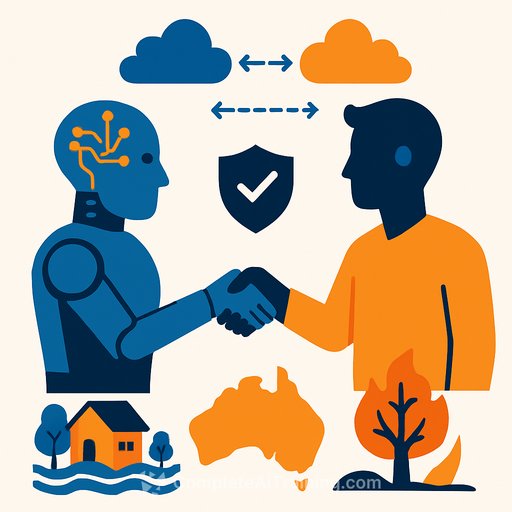
Insurers are increasingly integrating artificial intelligence (AI) into their risk management strategies, covering areas like motor, property, and cyber insurance. Beyond underwriting, AI offers brokers enhanced tools to help clients reduce exposure to risks. In Australia, some insurers and industry experts see AI as vital to countering natural catastrophes driven by climate change.
Vinod Sukumaran, head of Business Intelligence and Data Technology at Allianz Technology SE Australia, highlights that AI is more than just a risk assessment tool. “It’s about moving from hindsight to foresight,” he says. AI-powered systems deployed by Allianz, Suncorp Group, Insurance Australia Group (IAG), and QBE Insurance deliver early warnings of extreme weather and enable real-time supply chain monitoring.
This shift allows faster crisis response, personalized insurance coverage, and predictive damage mitigation. The result? Customers are empowered to make smarter decisions during emergencies, enhancing resilience.
Government Initiatives Supporting AI for Disaster Risk Reduction
The Australian government backs AI-driven disaster risk reduction through the National Disaster Risk Reduction Framework. This framework promotes shared information platforms, unified data standards, and advanced AI modelling tools.
A prime example is the National Joint Common Operating Picture (NJCOP). Its National Situation Room operates 24/7, providing situational awareness, impact analysis, and decision support during crises.
Additionally, the National Bushfire Intelligence Capability, developed by CSIRO and the Australian Climate Service (ACS), offers a scalable, nationwide view of bushfire risks. A Post-bushfire assessment app helps agencies rapidly survey affected areas to prioritize response.
Keir Garrett, regional vice president at Cloudera Australia and New Zealand, stresses that integrated risk platforms combining hazard, exposure, and vulnerability data are essential. These platforms, powered by AI and secure data architectures, support timely decisions across government and industry.
Such systems enable forecasting flood impacts using geospatial and rainfall data, allowing responders to pre-position resources effectively. Predictive models also estimate infrastructure damage and population displacement under various crisis scenarios.
Garrett believes these efforts position Australia to become a global example in responsible AI-enabled public services, provided the right data infrastructure is in place.
The Challenge of Transparency and Trust
Trust remains central to AI's success in disaster management. Garrett points out that transparency throughout the data lifecycle is non-negotiable. Metadata, data provenance, explainability, and strong governance frameworks form the foundation for confidence in AI-driven decisions, especially when stakes are high.
Data Consistency: A Barrier to AI Effectiveness
Despite AI’s potential, inconsistent data remains a significant hurdle. Andrew Stafford, operations manager for FM Australia, notes that varying data sources and lack of standardization make risk assessment challenging. This inconsistency hampers efforts to improve resilience and mitigation.
Stafford supports calls from the Insurance Council of Australia (ICA) for establishing a national flood database to unify data and enhance AI applications in natural catastrophe risk management.
Conclusion
AI offers insurers and emergency responders powerful tools to predict, monitor, and mitigate climate-driven natural catastrophes. However, success depends on consistent data sharing, transparency, and trust across agencies and industries.
For insurance professionals seeking to deepen their understanding of AI applications in risk management, exploring targeted AI training can be a valuable step. Relevant courses can be found at Complete AI Training.
Your membership also unlocks: