Deepfake Videos Impersonating Politicians Flood YouTube, Targeting South Korean Seniors
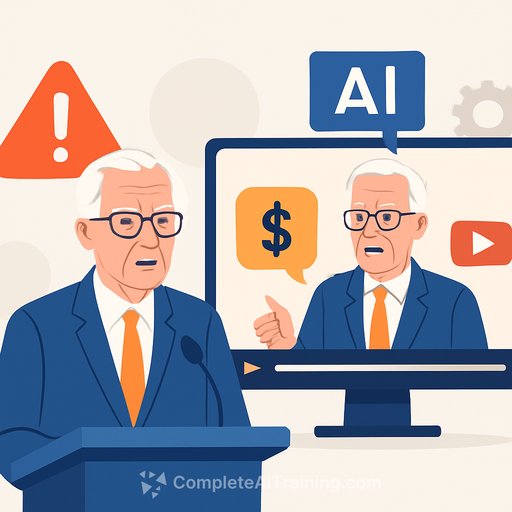
Fake promotional videos featuring AI-generated versions of prominent politicians are deceiving elderly citizens across South Korea. The videos falsely advertise non-existent government financial support programs, prompting visits to community centers and wasting staff time on corrections.
In early March, a 74-year-old man brought a smartphone video to a community center in Seoul's Mapo-gu district. The clip showed what appeared to be President Lee Jae Myung announcing 250,000 won in livelihood recovery support for seniors aged 65 and over. A staff member identified it as a deepfake. The government had distributed consumption coupons previously, but never age-specific cash transfers.
YouTube channels producing these videos are generating significant revenue. Accounts use thumbnails with terms like "basic pension" and "elderly support," paired with urgent language: "Application deadline approaching soon" and "This is the final application period." Videos receive 200,000 to 500,000 views each, triggering YouTube's monetization system that rewards watch time.
The videos are becoming harder to distinguish from legitimate content. One video featured a virtual official wearing a "Ministry of Health and Welfare" jacket explaining a 500,000 won support program for people aged 60 and over. The person does not exist. Generative AI can produce these videos in under a minute.
Community center staff are absorbing the operational impact. A 56-year-old employee at a Seoul center said more than half of daily visitors are seniors who came after watching fake videos. Staff spend significant time debunking claims and explaining actual policies.
One Seoul community center posted a notice at its entrance warning of false information on YouTube regarding bus fare support that does not exist.
Older adults aged 60 and 70 face particular vulnerability. Lee Kang-hyeong, a professor of media communication at Kyungbuk University, said this demographic is less familiar with digital environments. He recommended that local governments expand digital literacy education programs for elderly citizens.
No major social media platform currently filters these advertisements automatically.
For government workers, understanding generative video technology and its misuse is essential for policy response. The AI Learning Path for Policy Makers addresses governance concerns and intervention strategies for AI-enabled fraud.
Your membership also unlocks: