AI Detects Over 86,000 Hidden Earthquakes Beneath Yellowstone
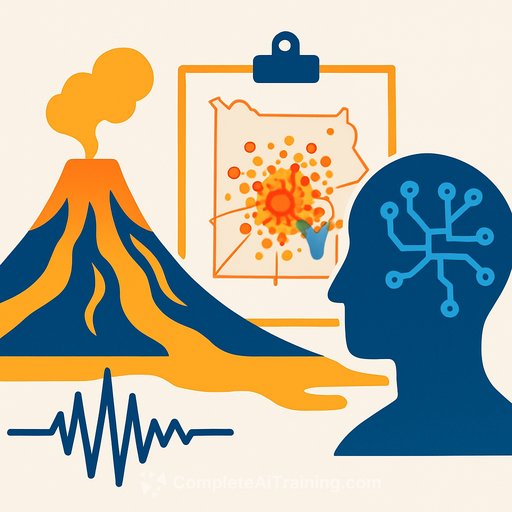
Researchers have identified more than 86,000 earthquakes beneath Yellowstone National Park—ten times the number previously recorded. This surge in detected seismic activity comes from applying machine learning techniques to historical data, revealing detailed patterns of earthquake swarms along young, rough fault lines beneath the caldera.
Re-examining Yellowstone’s Seismic Activity
Yellowstone, known for its geothermal wonders and as the first U.S. national park, sits atop one of Earth's most active volcanic systems. A recent study published in Science Advances used machine learning to analyze 15 years of seismic data from 2008 to 2022, uncovering nearly 86,300 earthquakes—far exceeding earlier counts.
The Yellowstone caldera spans parts of Wyoming, Idaho, and Montana. Unlike a volcanic crater formed by explosive eruptions, a caldera forms when a volcano’s magma chamber empties and collapses, creating a large depression. This makes monitoring seismic activity beneath it critical for understanding volcanic behavior and hazards.
Earthquake Swarms and Fault Roughness
More than half of the detected earthquakes occurred in swarms—clusters of small, interconnected quakes that move within a confined area over a short time. This differs from aftershocks, which follow a larger mainshock. The swarms appear to follow immature and rough fault structures beneath Yellowstone, differing from the more mature faults elsewhere, such as in southern California.
Researchers analyzed these faults using fractal geometry, identifying self-similar patterns in their roughness. This fractal approach helped characterize how fluid movements underground—slow water flow mixed with sudden fluid bursts—might trigger these swarms.
Machine Learning: A Scalable Approach to Seismic Detection
Traditionally, earthquake detection relied on experts manually reviewing seismic records, a time-consuming and limited process. Machine learning enables automated, large-scale analysis of waveform data, dramatically increasing the number of detected events and improving magnitude assignments.
"If we had to do it old school with someone manually clicking through all this data looking for earthquakes, you couldn't do it. It's not scalable," said Bing Li, the study’s lead engineering professor.
This enhanced seismic catalogue allows for new statistical analyses, helping scientists identify previously unknown swarms and better understand seismic triggers. These insights could inform public safety measures and guide geothermal energy projects to safer locations.
Implications for Volcanic Hazard Management
Understanding detailed seismic patterns beneath Yellowstone is essential for assessing volcanic risk. The improved earthquake catalogue supports more accurate hazard evaluation and could enhance early warning systems for volcanic and geothermal events. It also offers a model for applying machine learning to other volcanic regions worldwide.
- Yellowstone’s seismic activity is far more complex and active than earlier records showed.
- Earthquake swarms occur along rough, immature faults influenced by underground fluids.
- Machine learning dramatically increases detection efficiency and data quality.
- Findings contribute to improved volcanic hazard prediction and geothermal development safety.
For those interested in machine learning applications in geoscience, exploring AI-based data analysis methods can provide valuable tools for seismic research. More advanced courses and resources on AI techniques can be found at Complete AI Training.
Your membership also unlocks: