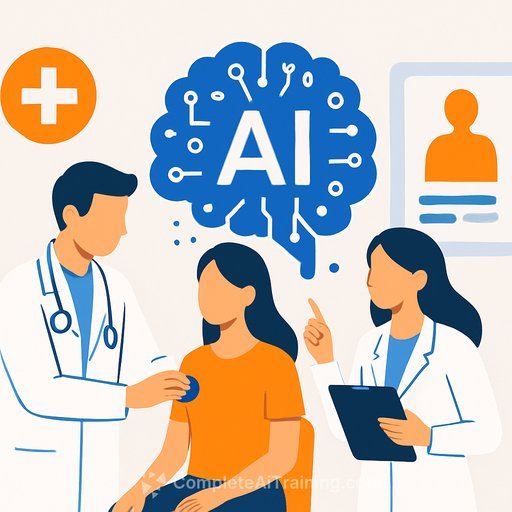
AI Diagnostics Are Shifting Healthcare From Repair to Prevention
Healthcare has operated like a repair shop for centuries. Something breaks. A patient arrives. A professional fixes it. AI is reversing that model. Instead of waiting for symptoms to appear, algorithms now scan for disease patterns months or years before a patient feels anything wrong.
Hospitals began experimenting with predictive diagnostic models about a decade ago. Early versions produced too many false positives. The concept remained sound: feed a system enough patient records, imaging scans, genetic markers, and lifestyle data, and patterns emerge that human reviewers might miss.
A cardiologist once leaned back during an AI demo and muttered, "Well, that's unsettling." The system had flagged heart risks from a scan that looked normal to the trained eye. It was right. That moment illustrates what AI diagnostics actually does: it gives doctors another set of eyes. Tireless ones.
Data Points Become Patterns
Preventive medicine depends on information. Blood results. Imaging. Wearable device data. Patient history. Lifestyle habits. Individually, each data point is noise. Together, they form a story.
Machine learning models analyze millions of patient records to find correlations. Some are expected-smoking and lung disease, for example. Others surprise clinicians: tiny biometric shifts that appear years before disease develops, or patterns across demographics that were previously invisible.
A doctor might review a few hundred patient files in a career. An AI model processes millions in a week. The more data it receives, the sharper it becomes.
Small Practices Are Adopting These Tools
This technology is no longer confined to major research hospitals. Primary care clinics are adopting diagnostic AI faster than most realize.
A GP in Malvern, Victoria, reported that AI-assisted imaging software cut diagnostic review time in half during routine screenings. Instead of manually scanning every potential anomaly, the software highlighted suspicious areas automatically. The physician still made the final decision-the system reduced fatigue and improved accuracy.
That's the real value: supporting judgment, not replacing it.
Early Detection of Nerve Damage
Peripheral nerve damage often goes unnoticed. Tingling fingers. Slight numbness. A burning sensation that comes and goes. Patients ignore it until it becomes serious.
Algorithms are now catching these signals earlier. Researchers train systems to analyze nerve conduction tests, gait data, and subtle movement changes captured through wearable sensors. One startup recently demonstrated that its system detected early warning signs months before a patient would typically seek help.
That early window changes outcomes. When clinicians identify nerve deterioration sooner, treatment can begin earlier. In many cases, early intervention improves long-term results for patients with neuropathy.
Radiologists Need Relief From Fatigue
Radiologists examine thousands of images weekly: X-rays, MRIs, CT scans. Fatigue creeps in. AI systems don't blink.
Modern diagnostic tools scan medical images for microscopic irregularities-tumor markers, vascular abnormalities, tissue density changes. They sometimes catch patterns that even seasoned specialists miss during long shifts.
A study in The Lancet showed that AI-supported mammography improved cancer detection rates while reducing false alarms. The key word is supported: the machine highlights possibilities, and the doctor makes the call. Think of it as having a second radiologist reviewing every scan instantly.
Predicting Chronic Conditions Years Earlier
Chronic conditions create the largest burden on health systems worldwide. AI is improving at predicting them.
Diagnostic models now combine blood markers, age factors, genetic data, and urinary patterns to flag potential prostate complications years earlier than traditional screening timelines. Physicians can then monitor those patients closely and begin management strategies if necessary.
Conditions like prostatic hyperplasia develop gradually. Early detection helps patients avoid severe symptoms and invasive procedures later.
Human Judgment Still Matters
AI diagnostics sounds impressive, sometimes even futuristic. Medicine still depends on human judgment.
Algorithms don't understand context the way doctors do. A patient's anxiety, family history, lifestyle habits, and cultural factors shape how symptoms present. Machines recognize patterns. Humans interpret them.
A physician once overrode an AI alert because she knew the patient personally. The model flagged abnormal results. The doctor recognized they came from a temporary medication reaction. She was right.
The balance between algorithmic analysis and human instinct is what makes AI for Healthcare effective. Not one replacing the other. Both working together.
Global Scale Improves Predictions
Healthcare systems worldwide face the same problem: rising patient numbers and limited clinical staff. AI Data Analysis helps bridge that gap.
Large datasets from hospitals in Europe, Asia, and North America now train shared medical models. These systems continuously refine their predictions as they absorb more cases. Each diagnosis improves the next one.
That scale was impossible ten years ago.
The goal isn't robots performing surgery or making medical decisions alone. It's simpler and arguably more valuable: catching disease earlier, helping doctors move faster, and giving patients more time to stay healthy before illness takes hold.
Your membership also unlocks: