AI Could Speed Drug Development by Simulating Patient Outcomes
Pharmaceutical companies are testing treatments on digital replicas of patients before moving to human trials. The approach uses AI trained on massive datasets to predict how individual patients will respond to drugs, potentially reducing the 90% failure rate that plagues clinical trials today.
Drug development has stalled despite rising investment. The number of new drugs approved per billion dollars spent has declined over the past few decades, a phenomenon known as Eroom's law-Moore's law in reverse. Meanwhile, healthcare demand continues climbing due to aging populations, lifestyle changes, and better diagnostics.
How Digital Twins Work in Trials
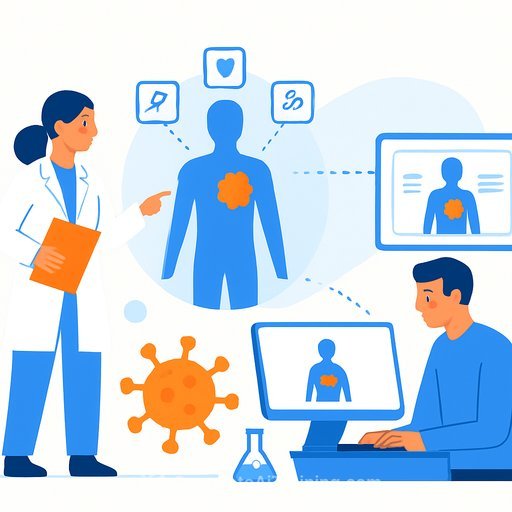
Researchers can now take tumor biopsies from cancer patients enrolled in clinical trials and use AI to simulate disease progression. Instead of assigning some patients to a placebo control arm, AI predicts what would happen to each patient without treatment.
These systems have been trained on billions of images and millions of genetic sequences. They can forecast which patients will respond to a drug and identify optimal populations for specific trials. This allows pharmaceutical companies to design better Phase 3 trials before investing years and millions of dollars.
The immediate benefit: higher trial success rates and faster decisions about which patient groups to test next.
The Constraints Are Real
AI typically improves through rapid feedback loops. In clinical trials, feedback comes slowly. After AI recommends testing a drug on a specific population, researchers must wait years to run the trial and see results. Only then can they tell the AI whether its recommendation was correct.
Training data also matters. AI trained on data from a single hospital often fails when applied elsewhere. Validation by independent groups is essential before deploying these systems in real clinical settings.
What Comes Next
Short-term impact will focus on accelerating drug discovery and reducing clinical trial risk. But a larger shift may be coming. As AI identifies new drug targets and biological pathways the scientific community hasn't explored, the bottleneck may shift from discovery to trial execution itself.
Clinical trials won't disappear soon. But if AI can generate far more viable treatment candidates than current methods allow, society may eventually need to rethink whether the traditional trial timeline remains acceptable-particularly for rare diseases and conditions with no existing treatments.
For now, the focus is narrower: using data analysis and foundational AI models to make clinical trials smarter and faster.
Your membership also unlocks: