
AI news ·
AI disclosure rules fail to stop hallucinated citations, attorney argues for mandatory case authentication at filing
Over 1,500 fake case citations generated by AI have been caught in court filings in three years. Disclosure rules aren't working-experts say courts should require attorneys to submit copies of every case they cite.
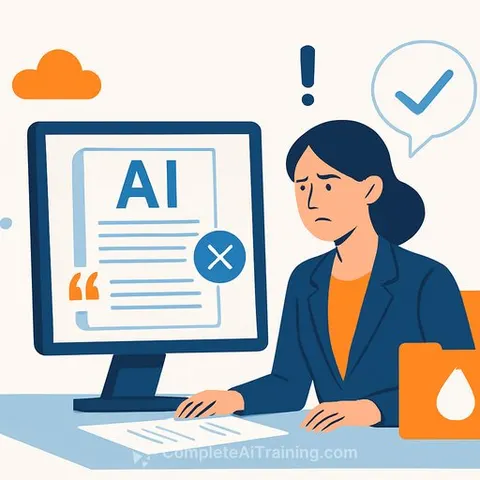
Disclosure Rules Aren't Stopping Fake Citations. Courts Need a Different Approach.
Courts across the country are handling AI-generated legal filings inconsistently. Some judges require attorneys to disclose any AI use. Others ban it outright. Still others treat it as just another research tool. The result: over 1,500 instances of AI hallucinations-fabricated case citations-have been caught in court filings over the last three years, with more than 650 caught in 2026 alone.
The fragmented approach has done little to stop the problem. Disclosure requirements, which many courts have implemented, are failing because they don't change attorney behavior.
How Courts Are Currently Responding
The "just another tool" camp argues existing professional conduct rules are sufficient. The Illinois Supreme Court released guidance saying judges should not require AI use disclosures, believing current rules govern attorney conduct adequately. But that guidance is nonbinding, and several Illinois judges require disclosures anyway-creating inconsistency within a single state.
The "novel technology" camp believes new rules are necessary. Some courts require attorneys to disclose AI use and certify output has been verified. Others ban AI entirely for specific tasks. The U.S. District Court for the Northern District of Illinois prohibits using AI to "draft memoranda," though the term remains vague enough that attorneys could use AI for research, then write the memo themselves while citing hallucinated cases.
Even district-wide policies in Nebraska and Hawaii require disclosure and verification but cannot prevent hallucinations from entering the record before filing. By then, the damage is done.
Why Disclosure Alone Fails
Disclosure requirements don't work because they add nothing beyond what Federal Rule of Civil Procedure 11 already requires. Rule 11 has required attorneys to certify their claims are "warranted by existing law" for decades. An attorney who recklessly submits unverified citations already violates Rule 11.
Adding another disclosure requirement doesn't change the underlying incentive structure. Attorneys who would ignore Rule 11 won't be deterred by a separate disclosure certification.
A Practical Alternative: Citation Authentication
A nationwide "citation authentication" requirement could prevent hallucinated cases from entering the record in the first place. Under this system, attorneys would submit a copy of every case cited alongside their filing-an "authentication folder."
Court e-filing platforms could be modified to automatically compare citations in the filing against the attached cases and reject any filing with unsupported citations. A hallucinated case cannot be produced, so it would fail authentication immediately.
This creates a second layer of protection that doesn't depend solely on attorney diligence. It makes Rule 11 obligations enforceable at the moment of filing, not after hallucinations contaminate the record.
Addressing the Burden Concern
The main objection is burden on litigants and courts. The requirement would increase filing time and record size. But attorneys already verify citations as part of their work-downloading each case as it's accessed during research and drafting is a straightforward additional step.
Courts can automate the process. Existing platforms like CM/ECF could be updated to compare citations against attached cases. Courts currently absorb significant administrative costs correcting records tainted by hallucinated authority. They also face reputational damage as public confidence in legal institutions erodes.
Preventing hallucinations before they enter the record would reduce both costs substantially.
What This Doesn't Solve
Citation authentication addresses one concrete problem: fabricated authorities. It doesn't solve every issue created by AI in legal practice. But by shifting from after-the-fact sanctions to front-end prevention, it creates a meaningful safeguard while preserving attorneys' ability to use AI responsibly.
Learn more about AI for Legal professionals, or explore how AI impacts paralegals who verify and manage filings.