
AI news ·
AI disrupts digital marketing jobs as pay for in-person roles rises
Generative AI is shrinking technical marketing roles. Field and event jobs are growing instead, with pay up 6.2% over six months.
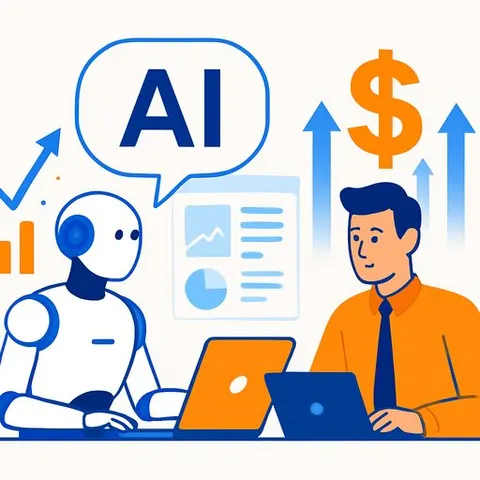
The marketing function is splitting in two. Generative AI is compressing demand for digital and technical marketing roles, while field and event marketing jobs - the ones that demand in-person execution and relationship-building - are growing, with pay up 6.2% over the past six months.
This division comes from an analysis of hiring momentum and role prevalence across more than 9,000 companies by compensation platform Pave. Their Hot Job Index scores roles from -100 (cooling fast) to +100 (heating fast), mapping precisely where organizations are investing right now.
The roles losing ground to AI
Marketing technology management ranks No. 5 on the Cold Jobs list, scoring -66 on Pave's index. The prevalence of new hires in martech has fallen from 0.08% to 0.05%, a decline that began in 2023 and shows no sign of reversing.
Two forces are driving this. First, the martech stack itself is consolidating - fewer tools, fewer hands needed to run them. Second, generative AI allows non-technical marketers to handle work that once required a specialist. The job family increasingly rolls into other functions, with senior leaders wearing multiple hats.
Digital marketing, content marketing, and related technology roles face similar pressure. These functions are time-consuming and routine by nature, which makes them prime targets for automation. Companies are finding they can deploy generative AI tools to produce work faster and at lower cost.
Where demand is climbing instead
Field and event marketing is moving in the opposite direction. These roles, which depend on face-to-face interaction, live event execution, and high-touch relationship management, are seeing employment growth. The pay bump of 6.2% in six months is a market signal: human presence carries a premium that AI cannot replicate.
"As AI usage grows, authentic human presence, relationship-building, and boots-on-the-ground execution are becoming even more important," the Pave data indicates.
Marketing was identified as the job function most exposed to automation and AI disruption. But exposure does not mean uniform impact. The work that can be templated, scheduled, and generated - the digital production layer - is contracting. The work that requires a human in the room is holding its value.
Why this matters for marketing professionals
This data rewrites the safe-career playbook. Investing exclusively in digital and technical marketing skills looks riskier now than it did two years ago. The roles growing in both headcount and compensation are the ones that put marketers in front of customers, partners, and prospects - not behind a dashboard. If your work can be summarized as managing a tool stack or producing a content calendar, the market is signaling that a pivot toward execution-heavy, relationship-driven functions may be worth planning now, before the next round of hiring data arrives.