
AI news ·
AI-driven headcount cuts expose the flaw in per-seat SaaS pricing
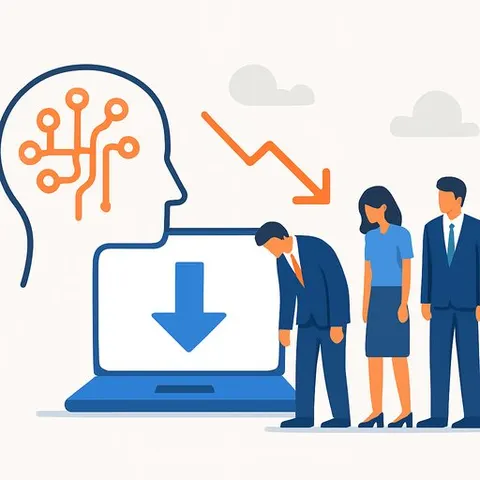
Block cut 4,000 jobs in early 2026, citing AI productivity gains - a 40% headcount drop that directly shrinks software seat counts vendors depend on. Outcome-based pricing may replace per-user models as AI breaks the headcount-growth assumption.
The Headcount Problem Nobody's Pricing For
AI is no longer experimental. It's embedded in how work gets done across organizations, and it's breaking a fundamental assumption that software vendors have relied on for two decades: that headcount grows, and therefore software seats grow with it.
Customer service representatives are being replaced by AI assistants that evaluate insurance needs and process claims without human intervention. Sales teams use AI to identify leads and generate outreach at scale. Developers write code faster with AI assistants. The pattern is consistent across functions-output per person increases, tasks that required teams now require fewer people.
Leadership teams focus on the immediate benefits: higher productivity, shorter cycle times, better margins. What they're not yet modeling are the second-order consequences.
When productivity becomes workforce reduction
In February 2026, Block announced it would cut roughly 4,000 jobs, reducing headcount from 10,000 to 6,000. Leadership attributed the move directly to productivity improvements from "intelligence tools" paired with "smaller and flatter teams."
This matters because Block, like most companies, relies on enterprise software priced per seat or per user session. HR systems, sales platforms, collaboration tools, analytics software-all of them charge based on headcount.
A 40% reduction in workforce means a 40% reduction in required seats. What looked like stable recurring revenue for software vendors can shrink overnight. Vendors that forecast steady seat growth suddenly face declining user counts inside their customer base. Revenue resets faster than cost structures can adjust.
The underlying assumption was simple: more employees meant more revenue. AI has broken that link.
The real value isn't in the seats
Most AI initiatives are framed as optimization-faster workflows, more accurate forecasts, higher productivity. But organizations don't buy HR software because they want more seats in the system. They buy it to attract talent, improve onboarding, increase retention, strengthen performance management, and make better workforce decisions.
These outcomes reflect organizational capability. If AI changes how many people are needed to run a function, should pricing still be tied to headcount? In many cases, the answer is no.
Align pricing with outcomes
Slowing AI adoption is unrealistic given competitive pressure. The better move is to rethink how pricing reflects actual value delivered.
Take HR software. Many platforms still charge per employee or per user. But as AI reduces headcount or limits the need for human interaction, that model disconnects from where value is created. Instead, ask a more fundamental question: How does the product drive outcomes for the customer?
If the primary use case is recruiting, value may be tied to metrics like job postings, applicants processed, or successful hires. If the focus is employee development, value could be linked to performance reviews completed, goals achieved, or retention improvements.
Shifting pricing in this direction aligns cost with outcomes. Customers see clearly what they're paying for. Providers capture value based on impact, not just access.
AI can support this shift. The same tools that drive efficiency can generate deeper insights into customer behavior, usage patterns, and results. These insights make it easier to design pricing models grounded in real economic value.
Despite fewer users interacting with the software, strategic companies will understand the software's actual value and price accordingly.
Learn more about AI for Executives & Strategy and how organizational changes reshape business models.