
AI news ·
AI-driven personalisation becomes central to modern omnichannel marketing strategies
AI-driven personalization now requires unified customer profiles across every channel, not just synchronized messaging. Marketers who build that data foundation see better results than those optimizing channels in isolation.
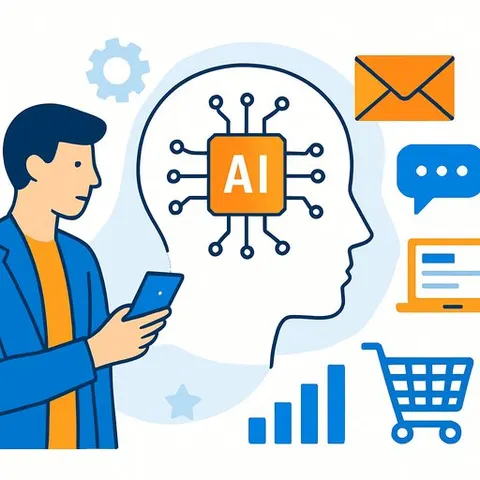
Marketers are shifting from broad audience segmentation to AI-driven personalisation that follows individual customer journeys across every channel. The approach depends on unifying data from websites, apps, email, and social media into coherent profiles that anticipate what a customer needs next. As consumers increasingly expect consistent interactions wherever they engage with a brand, the gap between connected and fragmented experiences is becoming a competitive issue.
Modern omnichannel personalisation is not simply synchronised messaging across platforms. It requires merging data, insights, and actions so every interaction feels part of one continuous relationship. Advances in data processing and machine learning have made it possible to move beyond segment-based methods toward targeted communication based on specific behaviours and preferences.
Building unified customer profiles
A critical element of modern omnichannel frameworks is the establishment of unified customer profiles that aggregate behavioural, transactional, and contextual data from every touchpoint. These profiles serve as the foundation for consistent personalisation, enabling marketers to understand not just what customers do, but why they do it and what they're likely to need next. Without this consolidated view, personalisation efforts remain fragmented, leading to disconnected experiences that can frustrate users and diminish brand perception.
Organisations that invest in robust identity resolution and profile unification capabilities position themselves to deliver the seamless experiences that today's consumers demand across their entire journey. This foundation matters because it determines whether AI-driven personalisation can actually function at scale or remains limited to isolated channel optimisations.
How AI changes each channel
On websites and mobile apps, AI systems can suggest next-best content, create dynamic user journeys, and adjust page experiences in response to live user behaviour and contextual signals. These capabilities guide users through more relevant pathways, which can increase engagement and conversion rates.
Email marketing and lifecycle messaging benefit from AI through send-time optimisation, personalised sequencing, and tailored content recommendations. In digital advertising, AI is used to model audiences and optimise creative assets for relevance, while social platforms leverage AI tools to identify interests and prioritise responses for better engagement.
For marketing teams looking to build these skills, structured training in AI for Marketing covers campaign optimisation and personalisation techniques. Marketing managers specifically can find practical implementation guidance through the AI for Marketing Managers learning path.
Data quality and governance requirements
Effective AI-driven personalisation depends on high-quality first-party data and accurate identity resolution processes. Strong consent management and compliance with privacy regulations are foundational, giving marketers clear guidelines about what data may be used and how it is collected. Data integrity and well-structured event instrumentation support the success of personalisation efforts, making governance and validation processes essential.
Real-time data allows marketers to make immediate adjustments based on user behaviour, powering responsive content recommendations and dynamic product suggestions. Batch data processes remain important for analytics and audience modelling. Balancing these methods helps ensure the personalisation program operates with the optimal speed, scalability, and reliability.
Measuring what actually drives value
Measuring the effectiveness of AI-driven personalisation becomes more complex as campaigns and interactions scale across touchpoints. To address attribution challenges, marketers often use holdouts and incrementality testing to assess which initiatives drive real value. Standard KPIs such as clicks or opens may no longer be adequate; measurement approaches now commonly move beyond transactional metrics toward customer satisfaction and lifetime value.
As personalisation practices deepen, governance and privacy controls gain importance to maintain user trust. Common practices include minimising data exposure, enforcing access controls, and providing preference management. Effective marketing tech strategies also prioritise transparency and ethical use of AI to help prevent user experiences from feeling invasive or unfair.
Why this matters for marketing professionals
The practical takeaway for marketers is that AI personalisation success depends less on choosing the right tools and more on getting the data foundation right. Teams that invest in unified customer profiles, clear consent management, and incrementality testing will see better results from their AI investments than teams that focus only on channel-specific optimisation. Start by auditing whether your customer data is actually unified across touchpoints, then build personalisation capabilities on that base.