AI Impact Analysis on US Joint All Domain Command and Control (JADC2) Market Industry
The Promise of AI Driven Joint All Domain Command
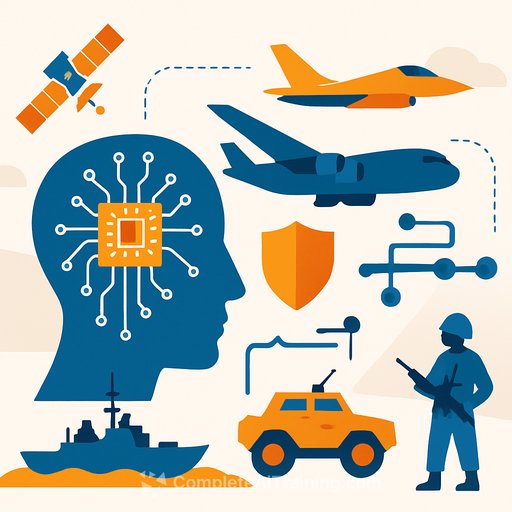
Joint All Domain Command and Control (JADC2) is changing how the U.S. Department of Defense coordinates operations across land, air, sea, space, and cyber domains. At its core, artificial intelligence enables the integration of diverse sensor data, predictive threat analysis, adaptive decision support, autonomous actions, and strengthened cyber defenses. This shift allows commanders to plan and adjust missions in real time with improved speed and accuracy.
AI Enabled Real Time Multi Domain Data Fusion
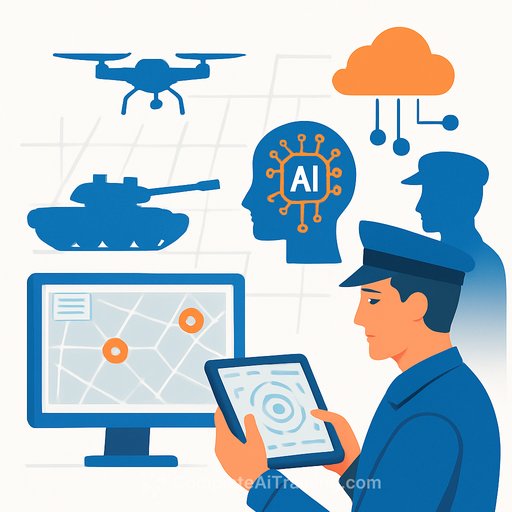
Data from radars, electro-optical sensors, signals intelligence, satellites, and cyber feeds are often fragmented and complex. Traditional methods rely on analysts working in isolation, which slows response and risks missing critical connections. AI and machine learning fuse these multi domain inputs into unified situational pictures. For example, in live operations, AI correlates data from drones, satellites, and weather stations to confirm hostile activities like UAV incursions or missile launches, giving commanders a clear, consolidated view.
AI Powered Decision Support for Commanders
Even with clear data, making fast and optimal decisions remains challenging. AI-powered decision support tools analyze operational factors including threats, resource status, and geographic constraints. They simulate outcomes using war gaming models and probability assessments, offering ranked recommendations on deployment, risk levels, and potential collateral effects. This reduces cognitive load and enhances mission flexibility as adversaries change tactics.
Predictive Threat Detection and Anomaly Recognition
Early identification of unusual patterns is key to proactive defense. AI systems trained on historical threat data—such as signal bursts, abnormal flight paths, or cyber footprints—generate alerts when anomalies appear. Within JADC2, these warnings help detect irregular warfare activities or supply line threats. Machine learning continuously refines detection thresholds, supporting analysts by reducing false positives and alert fatigue.
AI Enhanced Autonomous Sensor to Shooter Networks
Fast target engagement requires autonomous action when hostile intent meets engagement criteria. AI links sensor data with shooter systems, considering location, rules of engagement, asset availability, and collateral risk to propose lethal or non-lethal responses. Once approved, commands securely reach missile platforms or artillery. In contested radio frequency environments, this autonomy ensures critical actions continue even if communications degrade.
Natural Language Processing for Multi Level Command Communication
JADC2 networks span multiple command layers. AI-driven natural language processing (NLP) interprets dispatches, reports, emergency messages, and foreign language inputs quickly. NLP extracts intent, urgency, and condition levels, enabling voice interfaces to summarize battlefield reports or issue verbal commands. It can also detect stress or hesitation in voice channels, flagging them for review or immediate action.
AI in Cybersecurity for JADC2 Networks
Security is vital for distributed JADC2 networks. AI monitors network activity to identify malware, anomalous access, and zero-day threats. Autonomous agents can isolate compromised nodes or reroute data through secure paths without human intervention. Continuous AI-driven red team simulations test defenses and adapt to evolving threats, making cybersecurity a foundational aspect of JADC2 resilience.
AI Driven Data Prioritization and Bandwidth Management
Bandwidth constraints are common in mobile, contested, or remote settings. AI manages data flows by prioritizing critical commands, threat alerts, and surveillance feeds over routine communications. Techniques like compression, caching, and edge federation reduce latency, ensuring essential information reaches decision points first. This intelligent data triage is crucial in congested environments such as naval fleets and contested airspace.
Human Machine Teaming in Tactical Operations
In JADC2, humans and AI collaborate within shared command spaces. AI handles analysis, forecasting, and administrative tasks, while operators maintain strategic judgment and final approvals. This partnership speeds operations without removing human control. Tactical teams supervise aerial or unmanned assets remotely, with AI managing sensor retasking, threat matching, and coordination updates. Transparent trust frameworks keep commanders informed and in charge.
AI for Wargaming, Training, and Operational Simulation
Effective JADC2 training requires realistic simulations replicating dynamic threat environments. AI generates opposing forces, logistic chains, and real-time adversarial behaviors. Reinforcement learning adapts enemy tactics based on trainee actions. These simulations produce detailed after-action reviews, enabling continuous, adaptive training that prepares personnel for complex multi domain operations.
Challenges and Future Outlook for AI in JADC2
Integrating AI across all domains presents challenges. Data biases can affect model accuracy. Edge devices often face limits in power, bandwidth, and computing capacity. Explainable AI is necessary to ensure clarity during critical operations. Ethical frameworks must guide lethal autonomous actions to comply with international law. Policies and testing standards for AI in JADC2 are still developing. Emerging technologies like quantum optimization, federated learning, and digital twins promise more autonomous and reliable systems.
An Intelligent Future for Joint All Domain C2
AI is central to JADC2’s evolution. From fusing sensor data to autonomous decision-making, AI shortens decision timelines and enhances operational clarity. Commanders benefit from improved situational awareness and agility while AI manages analysis and coordination tasks. Despite challenges in trust, ethics, and infrastructure, ongoing investments in AI security and oversight will support wider JADC2 adoption. Over the next decade, these intelligent networks will power U.S. defense capabilities across every domain.
Your membership also unlocks: