AI Email Marketing in 2025: From Broadcasts to Data-Driven Conversations
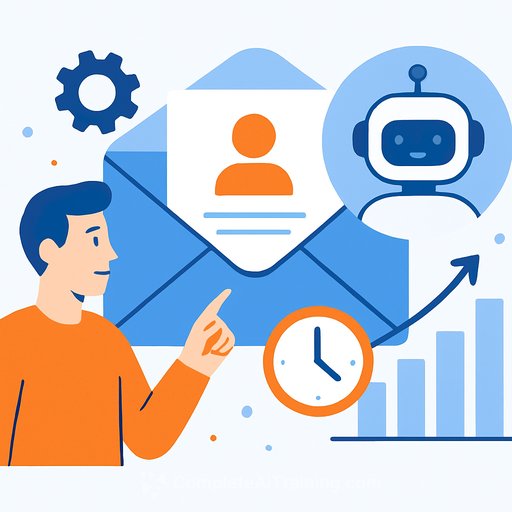
Email is having a moment. As of November 2025, over 70% of companies are using AI in their email programs, seeing 10-30% higher opens and returns around $36 for every dollar invested. This isn't noise-it's a shift from guesswork to decisions grounded in behavior, context, and timing.
Tools like Klaviyo, Brevo, and Salesforce make it possible to scale campaigns and keep the human touch. The result: fewer "delete" swipes, more useful messages, and consistent revenue impact.
The Dawn of Hyper-Personalization
AI reads behavior-opens, clicks, browsing, purchases-and builds emails for the individual, not a broad list. With CRM data flowing in real time, teams report 20-40% more engagement and smoother shopping experiences directly in the inbox.
Brands like Shopify use dynamic recommendations that shift with every interaction. That's how you stay relevant without adding headcount.
- Map key events (viewed product, added to cart, lapsed 30/60/90 days).
- Sync CRM and product feeds so content updates automatically.
- Set guardrails: exclude recent buyers, cap frequency, protect high-value segments.
Subject Lines That Earn the Open
Generative tools (e.g., Phrasee, Jasper) test tone and phrasing at scale and typically add 5-10% to open rates. Keep a human in the loop to protect voice and context.
- Generate 10-20 options per send; shortlist 3-5 for testing.
- Codify brand voice rules (tone, banned words, CTA style) inside your prompt.
- Score for spam triggers before launch.
Send-Time Optimization That Feels Personal
Machine learning predicts when each subscriber is most receptive. Seventh Sense and Brevo automate delivery windows, often driving up to 19% more opens and less fatigue.
- Start with a 2-4 week learning phase; then flip to per-user delivery.
- Respect user chronotypes: early birds vs. night owls.
- Throttle bulk promos after engagement dips to protect sender reputation.
Smarter Segmentation and Lead Scoring
AI uncovers micro-segments: churn risk, deal-ready leads, discount-seekers, repeat buyers. Platforms like Encharge and ActiveCampaign use behavior-based scoring to prioritize sales and retention, with reports of outsized impact in B2B pipelines.
- Score by recency, frequency, value, and content engagement.
- Build plays for each score band (nurture, accelerate, save, win back).
- Route high-intent users to sales with alerts and short-path sequences.
Lifecycle Automation That Adapts in Real Time
Welcome, onboarding, re-engagement, and cart recovery can now be built from simple prompts and adjusted on the fly. Teams are cutting build time in half while keeping messages relevant minute-to-minute.
- Define milestones and "if/then" pivots (clicked but didn't buy, viewed pricing, inactive 14 days).
- Use content blocks that switch based on live attributes and stock.
- Review weekly: prune steps that stall, double down on those that convert.
Predicting Churn and Finding Upsell Windows
With tools from Twilio and Optimove, marketers flag at-risk users early and trigger save plays-targeted offers, helpful tips, or product swaps-retaining up to 20% more customers. The same models spot upsell timing based on usage and order patterns.
- Track early signals: shrinking session time, fewer opens, longer reorder gaps.
- Offer value first (education, use cases), then incentives.
- Suppress aggressive promos for frustrated or support-heavy users.
Testing at Scale (Without Guesswork)
AI runs multivariate tests on subject lines, CTAs, layouts, and content blocks-fast. Insights roll in as the send progresses, and the system can shift traffic to the winner automatically.
- Predefine success: revenue per recipient, lead response, trial starts.
- Limit variables per test; compound wins over time.
- Feed learnings into your prompt library and component templates.
Interactive Emails That Drive Action
AMP, polls, quizzes, and live data inside the email boost click-to-action rates-reports point to gains around 35% for B2C. Keep it light, fast, and accessible.
- Use interactivity for one clear action (vote, pick a product, book a slot).
- Provide HTML fallbacks; test across clients and devices.
- Rotate modules to fight fatigue; keep load times tight.
Deliverability: Catch Issues Before ISPs Do
Anomaly detection can spot drops in engagement or spam flags in minutes. SendGrid's neural protections and similar tools adjust sending to keep inbox placement near 99% while policies and filters keep changing.
- Monitor by segment, not just account-wide.
- Pause underperforming sends and warm back up slowly.
- Use double opt-in, sunset policies, and consistent From domains.
See how leading platforms apply AI in marketing
Ethical Data Practices (Trust Is a Growth Lever)
Zero-party data from preference centers and chat surveys gives you permission-based insights without crossing lines. Be transparent, provide clear opt-outs, and align with GDPR/CCPA.
- Explain how data improves the email experience.
- Offer frequency controls and content topics users can pick.
- Audit data retention and minimize what you store.
Review EU data protection rules
Implementation Roadmap (Quarter by Quarter)
- Q1: Clean data, set baselines (open, click, revenue per send, spam complaints). Pilot one area: send-time optimization or subject line generation.
- Q2: Deploy lifecycle automation for new users and cart recovery. Add basic lead scoring.
- Q3: Roll out hyper-personalized content blocks and micro-segments. Introduce anomaly detection for deliverability.
- Q4: Expand predictive churn and upsell. Move to multivariate testing with automatic traffic shifting.
Keep a human editor in the loop. Protect voice, tone, and values. For e-commerce, bias toward revenue plays (recovery, cross-sell, replenishment). For B2B, bias toward pipeline velocity (nurture depth, meeting creation, trial activation).
Emerging Tools and What's Next
Roundups highlight a growing stack of AI email tools, from content to analytics, with free and paid options. Sustainability is also entering the conversation-smarter targeting, fewer sends, higher outcomes.
Multi-agent systems are starting to build and manage entire flows from a single prompt, pulling from CRM, product feeds, and social data. Expect more of your stack to think for itself while you set the strategy and constraints.
Challenges to Watch
- Data privacy: Use preference centers, clear consent, and regular audits.
- Integration sprawl: Favor tools that connect to your CDP and CRM without custom glue.
- Over-automation: If it feels generic, it is. Add editorial judgment and brand nuance.
Quick Start Checklist
- Define success metrics and guardrails.
- Pick one AI use case and ship in 30 days.
- Test small, scale winners, document learnings.
- Review deliverability weekly and sunset non-engagers.
- Keep permissions clear and value-exchange obvious.
Level Up Your Team
If you want a structured path to upskill, explore AI programs made for marketers. Start here: AI Certification for Marketing Specialists.
AI isn't replacing marketers-it's removing busywork and surfacing what works. The teams that win in 2026 will be the ones who test faster, respect the inbox, and keep the experience personal.
Your membership also unlocks: