
AI news ·
AI erodes junior lawyers' judgment but simulation offers a way to rebuild it
Firms use AI simulators to train junior lawyers as automation replaces traditional grunt work. Over 50% of senior leaders suspect this shift erodes critical thinking.
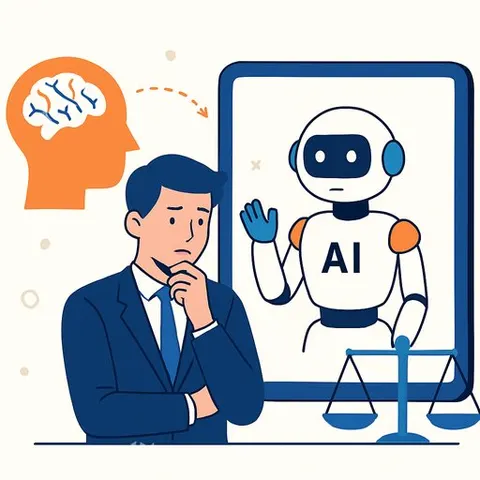
The tasks once considered the grunt work of legal training-document review, contract drafting, discovery-are disappearing into AI tools, and with them, law's apprenticeship model. The same technology that is automating away the formative experiences of junior lawyers is also creating a new kind of training: AI-powered simulators that let early-career attorneys practice cross-examination, negotiation, and other high-stakes skills before they ever face a real client. The shift is already underway at firms like Three Crowns, which has deployed an AI cross-examination simulator called Atelier for its associates.
The disappearing apprenticeship
For decades, law firms trained new lawyers through the work itself. Reviewing thousands of documents taught a young litigator to recognize a real fact pattern before it was shaped into a narrative. Drafting near-identical agreements taught a corporate associate to spot an off-market indemnity cap or a limitation-of-liability carve-out that no client should accept. The tedium was the pedagogy. As Bridgewater Associates CEO Nir Bar Dea put it: "You do the tough work that then leads you to be able to do the higher-level, more-conceptual things."
AI now compresses that work from weeks to minutes. The productivity gains are real, but the developmental losses are cumulative and will not surface until the professionals who missed those experiences reach the ranks where judgment is the job. More than half of senior leaders already suspect that AI is eroding critical thinking in their organizations, according to a study by Russell Reynolds Associates. The concern is not theoretical. A field study of consultants at Boston Consulting Group found that more than a quarter became "Self-Automators"-delegating entire workflows to AI without developing new skills or deeper domain expertise.
AWS CEO Matt Garman addressed the risk directly, calling proposals to replace junior employees with AI "one of the dumbest things I've ever heard," and warning: "How's that going to work when ten years in the future you have no one that has learned anything?"
How simulation fills the gap
The same generative AI that can draft a contract can also build a realistic adversary. Atelier, developed by Stanford's Legal Innovation through Frontier Technology Lab and Three Crowns, lets a lawyer upload witness statements and case materials. The platform then creates AI-powered witnesses that operate within the bounds of what that witness would plausibly know. The examination unfolds in real time: the AI witness evades, hedges, and adapts to the examiner's strategy. A feedback agent afterward assesses the session, flagging leading questions, missed opportunities, and whether the examiner controlled the narrative.
At Three Crowns, the tool is now part of the firm's internal training program. Junior associates can rehearse cross-examination-a skill traditionally reserved for advocates years into practice-dozens of times before ever doing it live. The same architecture applies to negotiation. A platform spun off from the lab allows associates to sit across from multiple AI counterparties, each briefed on their own objectives, pushing back, anchoring high, and exploiting information asymmetries as real counterparts would.
These simulators do not replace the socialization that comes from working alongside partners or the unwritten rules learned in the room with a client. But they specialize in the parts of apprenticeship the old tasks taught inefficiently. AI-powered simulation can target specific instincts-recognizing a key document, sensing when an indemnity cap is off-market-more directly than waiting for a late-night drafting session. The same deliberate practice with feedback that pilots have used for decades is now available to lawyers.
Deployment requires a strategy
Organizations that invest in productivity tools without simultaneously investing in development tools are building a judgment deficit that will compound quietly. Larger firms with longer promotion cycles will find it especially difficult to repair. The solution is a deliberate deployment strategy, not a one-off purchase. Steps include:
- Take stock of what has changed. Compare what junior lawyers spent their time on three years ago with what they spend it on today. The gap is often wider than leadership assumes because displacement happens task by task.
- Translate that inventory into the specific judgment capabilities those experiences built. Interview senior professionals to identify the lessons they still rely on from their junior years. That taxonomy becomes the simulation curriculum.
- Measure whether simulation is working by testing retention weeks later, not satisfaction on the day. Training that feels difficult and produces struggle often produces the strongest long-term retention.
- Build the organizational conditions for adoption. A simulation curriculum will fail if employees are handed a platform without protected time, links to advancement, and leadership signaling that the investment matters.
For legal professionals seeking to build these skills in a structured way, AI for Legal Professionals Courses offer guidance on integrating AI tools while preserving the critical thinking that practice demands.
Why this matters for lawyers
The lawyer who never learned to spot an off-market term because AI drafted the contract will not suddenly develop that instinct at the partnership level. The litigator who never conducted a document review will struggle to distinguish a strong fact pattern from a weak one when a client's case depends on it. Simulation-based training can compress the gap, giving early-career lawyers deliberate practice in high-stakes judgment years before they would otherwise encounter it. Firms that pair their AI adoption with mandatory simulation curricula will develop leaders with sharper instincts, sooner. Those that wait may discover the deficit only when the lawyers who missed their apprenticeship are the ones running the firm.