AI Fears Weigh on Financial Stocks: What's Ahead for Financial ETFs?
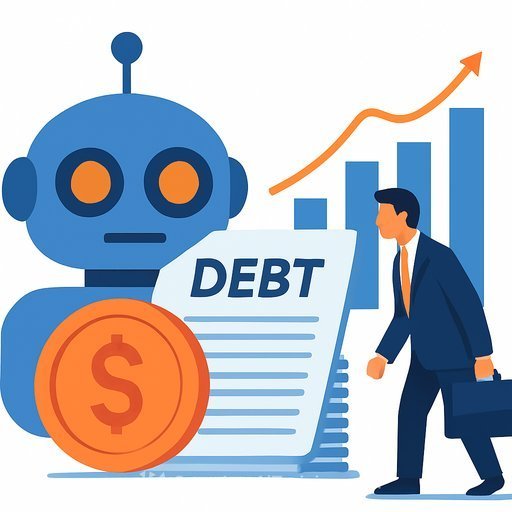
Financials took a hit as AI disruption fears spilled into the sector. By the close, financial ETFs were softer: KBWB -1.80%, XLF -1.51%, FNCL -1.54%, and VFH -1.55%. The move tracked an early slide in the Dow Jones U.S. Financials Index of about 1.6%, which later rebounded roughly 0.7% intraday.
Why the Sell-Off Happened
Headlines did the heavy lifting. A new AI-driven tax planning tool from Altruist, reportedly delivering results in minutes, stoked worries about fee compression and the relevance of traditional advisory models. That fed a "sell first, ask questions later" impulse already building across software and data services.
At the same time, investors are questioning Big Tech's rising AI capex. More spending without clear ROI spooks markets, and financials got pulled into the crossfire as investors reassessed who's at risk if AI compresses margins across advice, banking, and data-heavy functions.
Signal vs. Noise
There's a difference between disruption risk and a broken business. Analysts still point to durable moats in established advisory and banking franchises. The latest move looks more like nerves and some panic selling than a wholesale reset of fundamentals.
If that view holds, the drawdown could prove overdone. Expect ongoing pressure where pricing is exposed (advice, payments, select data services), but diversified banks and platforms with scale, deposits, and cross-sell still have tools to defend returns.
Macro Setup Matters
Looking out, anticipated Fed rate cuts in 2026 would lower funding costs and support loan growth. Banks finished 2025 on solid footing and, per recent surveys, expect stronger business loan demand as rates ease and investment picks up. Lobbying spend by U.S. banks also jumped last year, reflecting intense focus on policy and rulemaking that could affect profitability.
Keep an eye on the Federal Reserve's Senior Loan Officer Survey for early reads on credit demand and standards, and on earnings calls for comments about deposit betas, credit costs, and AI-enabled efficiency gains.
ETFs to Watch
- XLF - Financial Select Sector SPDR: Broad, mega-cap tilt across banks, insurance, capital markets.
- VFH - Vanguard Financials ETF: Broad coverage with a deeper bench of mid-caps.
- IYF - iShares U.S. Financials ETF: Core exposure with a mix of banks, insurers, and asset managers.
- KBWB - Invesco KBW Bank ETF: Concentrated bank exposure; higher beta to loan growth, credit, and regulation.
- FNCL - Fidelity MSCI Financials Index ETF: Low-cost, wide net across U.S. financials.
Practical Takeaways for Finance Pros
- Separate tech headlines from cash flows: Pressure-test revenue lines tied to hourly advice, static pricing, or commoditized products.
- Watch cost levers: Firms embedding AI for operations, underwriting, and service may offset fee pressure with lower unit costs.
- Listen for pricing strategy: Subscription or outcome-based pricing can defend margins if advice becomes faster and more standardized.
- Focus on deposit quality and credit: In banks, deposit beta, reserve builds, and NCO trends matter more than any single AI headline.
- Regulation is a swing factor: Policy on capital, consumer data, and AI use will influence winners and laggards. Track commentary from regulators and large banks.
To build practical skills for these shifts, finance teams and leaders can follow targeted training: AI Learning Path for Finance Managers, AI Learning Path for CFOs, and for IT leaders overseeing deployments, the AI Learning Path for CIOs.
Positioning Ideas (Not Advice)
- Core beta via diversified funds: XLF, VFH, IYF for broad exposure if you believe fundamentals hold and loan demand improves.
- Higher-octane banks: KBWB for a more direct read on NIM, credit, and operating efficiency improvements.
- Quality bias: Tilt toward franchises with low-cost deposits, fee diversity, and credible AI-enabled cost programs.
What to Monitor Next
- Big Tech AI capex and ROI commentary - does spend moderate or get tied to clear payback?
- Fintech launches targeting taxes, advice, onboarding, and underwriting - where do clients actually switch?
- Fee compression in advisory and wealth - any change in take rates or bundling strategies?
- Credit quality and reserves - especially in CRE, small business, and consumer cards.
- Policy moves - capital rules, data portability, and AI governance that could shift cost or risk.
Want a Practical Edge on AI in Finance?
If you're assessing where AI helps rather than hurts, a quick scan of current tools can clarify what's noise. See a curated list of AI tools used in finance to benchmark capability vs. hype.
For broader market context, Reuters maintains up-to-date sector coverage: Markets and companies.
Your membership also unlocks: