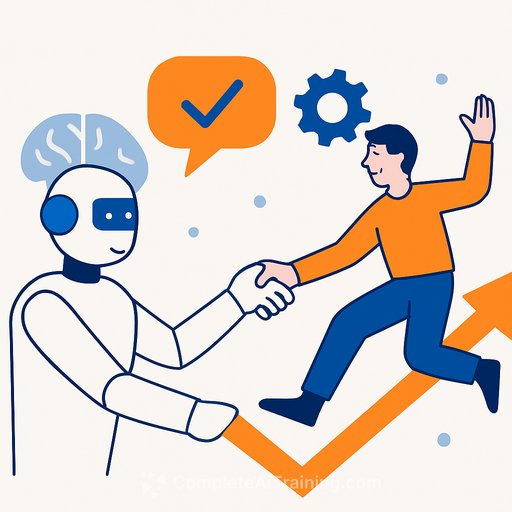
AI won't replace the creative process - it will expose it
AI has been writing books for decades. The difference now is speed, scale, and how tightly it touches daily decisions - from what we eat to which headlines win clicks. For creatives, that's not a death sentence. It's a clarity check.
AI is a consensus machine. It predicts what's most likely given the data it has. That's useful for options and drafts. It's weak at taste, intent, and the non-obvious leap that makes work unforgettable.
What AI is (and isn't)
- Good: generating variations, research summaries, structure, quick "first passes."
- Bad: deciding what matters, setting taste, taking the right risk at the right time.
- Truth: garbage in/garbage out still applies. Feed it bland input, get bland output.
The consensus trap
Most models average across what already exists. That's why AI output can feel beige: it leans toward what's most common. Breakthrough work is an informed jump away from the average - guided by intent and taste, not randomness.
Think of landmark ideas and artworks that bent the frame rather than filled it. That spark doesn't come from probability alone. It comes from choice, constraint, and the guts to be wrong in public. For a quick study in intent under pressure, revisit Picasso's Guernica at the Reina Sofía museum.
Use AI without losing your voice: a practical playbook
- Start with intent: Write a one-paragraph brief. Who is this for? What must they feel or do? List 3 non-negotiables.
- Prompt for parts, not finished work: "Give me 20 non-obvious metaphors for [theme]." "List clashing references that could produce tension in a headline about [topic]."
- Generate wide, then compress: Ask for 10-20 options. Pick 1-2 with edges. Rewrite them in your voice. Kill the clichés.
- Force novelty: Add constraints: "No buzzwords. One unexpected analogy. Max 12 words." Constraints create shape; shape creates originality.
- Reference collisions: Combine unlikely influences - a finance memo + street photography tone; a medical abstract + noir rhythm. Let AI propose pairings; you decide.
- Use AI for grunt work: Outlines, competitive scans, alt versions for A/B tests. Keep the final line, visual, and pacing human.
- Bias check: Ask the model to list its blind spots for your topic. Adjust sources and prompts to counter them.
- Feedback loop: Share early with a small audience. If the reaction is "nice," push further. "Nice" doesn't spread.
- Protect IP: Don't paste sensitive briefs into public tools. Keep a private knowledge base for your voice, clients, and references.
Where AI shifts the creative job
- More leverage, fewer gatekeepers: Small teams can produce big-agency volume. The gap moves from production to taste and distribution.
- Direction > execution: The premium is on concept, taste, and editing. Execution gets cheaper; picking the right hill gets pricier.
- Proof of value: Tie ideas to outcomes: saves time, drives sign-ups, lifts retention. Creativity that moves a number wins budget.
- Productize your edge: Templates, style systems, visual packs, micro-courses. Ship assets that compound, not just hours.
Signals worth watching
- AI in decision loops: As more choices run "with AI," the default becomes "prove why your human choice beats the model." Have the receipts.
- Data hunger: Tools will track more. Be deliberate about what you share, where it's stored, and which vendors you trust.
- Audience fatigue: There's already too much content. Distinctive POV and honest voice cut through; generic polish does not.
A weekly routine to keep your edge
- 1 hour: concept sprint. 30 prompts, 3 angles, 1 keeper.
- 30 minutes: "anti-consensus" rewrite. Remove the safest sentence. Add one sharp claim you can defend.
- 45 minutes: produce one asset your future self can reuse (template, hook bank, mood board).
- 15 minutes: log what worked and why. Build your personal style guide.
Bottom line
AI expands what's possible. It doesn't choose what's worth doing. Your moat is intent, taste, and the willingness to take a smart risk that averages can't see.
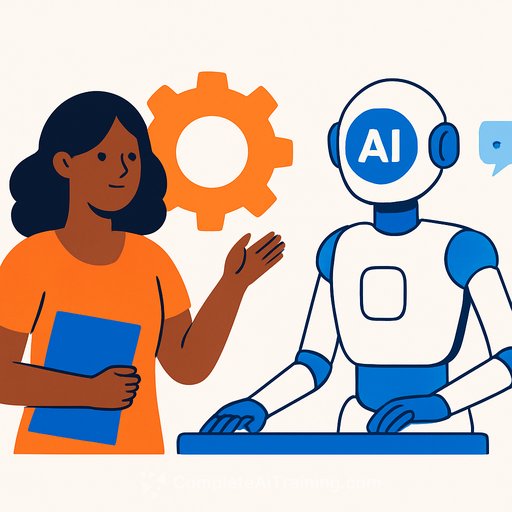
Use AI like an intern with infinite stamina - helpful, fast, replaceable. Keep the authorship where it belongs.
Next steps
- Explore practical AI workflows for creatives and builders: Courses by job
- Build prompt skills that avoid bland outputs: Prompt engineering resources
Your membership also unlocks: