Government to publish 'AI for Care' strategy to cut waiting times and sharpen resource planning
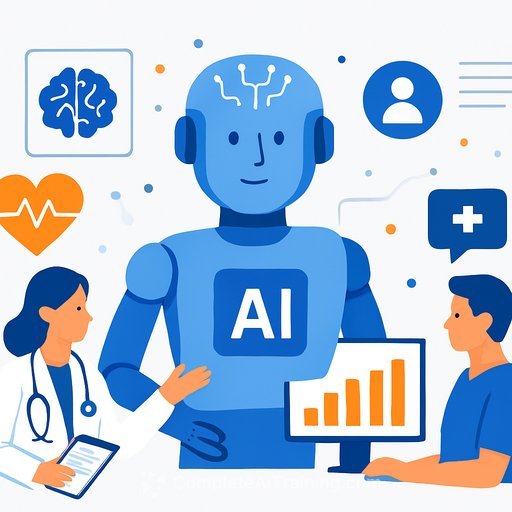
The Department of Health will shortly publish 'AI for Care', a new strategy outlining how artificial intelligence will be used across the health system. The plan focuses on practical wins: reducing waiting times, improving resource planning, and speeding up diagnosis so patients get the right care at the right time.
"Artificial Intelligence (AI) is beginning to transform care delivery," said Department of Health Assistant Secretary Derek Tierney. "From predictive analytics that identify patients at risk earlier, to AI-powered decision support tools that help clinicians make faster, safer choices, these technologies are unlocking new possibilities for personalised care."
What's in scope
- Predictive analytics to flag at-risk patients earlier.
- AI decision support to help clinicians make faster, safer calls.
- Shorter waiting lists through smarter scheduling and capacity planning.
- Quicker diagnostics and more consistent triage.
- Better matching of patients to the right care setting.
Tierney added that as digital infrastructure expands, AI will be a core component of service improvement across the system.
Governance and delivery
At an Oireachtas Health Committee hearing on digitising the health service, HSE Chief Technology and Transformation Officer Damien McCallion outlined steps to prepare for AI at scale. "To get ahead of the curve on AI adoption, I appointed the HSE's first Chief Data & Analytics Officer earlier this year," he said.
"One of his priorities was to develop an AI Strategy for Healthcare, an AI Framework to support implementation, and to prioritise services where AI could make a difference. The strategy and framework are now completed, and I expect these to be launched shortly."
Digital for Care 2030: progress to date
- Electronic health records rolled out across six maternity hospitals.
- HSE patient app downloaded over 190,000 times since February.
- Virtual acute wards to be expanded to all six health regions within the first three months of next year.
- All public hospitals to connect to the HSE's Imaging Record in the same timeframe; final two acute hospitals by Q1 2026.
- In 2026, the imaging system will be upgraded, private radiology providers commissioned by the HSE will be connected, and AI will be introduced to support clinical decision making.
What this means for health leaders
- Data foundations: clean, accessible, secure data will decide where AI succeeds. Map data sources, set quality baselines, and address interoperability gaps early.
- Clinical governance: define approval pathways, model validation, and clinician oversight. Establish clear accountability for AI-assisted decisions.
- Procurement: prioritise explainability, integration with EHR/PACS, audit logs, and vendor support for ongoing model monitoring.
- Workforce: train clinical and operational teams on safe use, escalation paths, and limits of AI recommendations.
- Safety and evaluation: run pilots with outcome measures (wait times, diagnostic turnaround, safety events) and publish results.
- Public trust: ensure transparency on where AI is used, data use policies, and how patients can raise concerns or opt out where applicable.
For ethical and safety considerations, see the WHO guidance on AI for health (WHO: Ethics and governance of AI for health).
Timeline at a glance
- 'AI for Care' publication: shortly.
- Q1 next year: virtual acute wards in all regions; all public hospitals connected to the HSE Imaging Record.
- Q1 2026: final two acute hospitals connect to Imaging Record.
- 2026: imaging upgrade, connection of commissioned private radiology providers, and AI-enabled decision support within imaging workflows.
Next steps
If your team is planning AI pilots or scaling proven tools, align with the forthcoming HSE AI framework, document clinical governance early, and prepare procurement criteria that reflect safety, integration, and measurement. Upskilling will matter; targeted training shortens the learning curve and reduces risk.
For role-specific learning paths and certifications, see Complete AI Training: Courses by Job.
Your membership also unlocks: