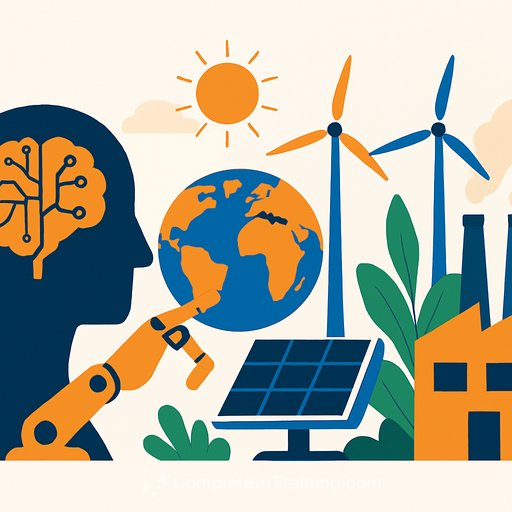
UN Highlights AI's Role and Challenges in Climate Action for Developing Countries
The United Nations has outlined both opportunities and risks associated with using artificial intelligence (AI) to tackle climate change, especially in developing nations. Their new technical paper, Artificial Intelligence for Climate Action: Advancing Mitigation and Adaptation in Developing Countries, focuses on least developed countries (LDCs) and small island developing states (SIDS), emphasizing the support these regions need to deploy AI effectively.
AI offers practical tools to reduce greenhouse gas emissions and enhance climate adaptation efforts. For instance, it can analyze transportation data to optimize traffic flow and reduce fuel use, improve energy grid efficiency by forecasting demand, and optimize solar and wind energy deployment. It also helps predict extreme weather events like floods and hurricanes, supporting proactive disaster management and infrastructure planning.
Key Challenges for Developing Countries
Despite AI's potential, the UN paper points out significant hurdles. Many developing countries struggle with limited digital infrastructure, including unreliable internet and insufficient computing power. There is also a shortage of skilled professionals capable of developing and maintaining AI systems.
Data limitations pose another challenge. Without comprehensive, reliable datasets and clear data-sharing frameworks, AI outputs risk being inaccurate or vulnerable to misuse. Additionally, the environmental footprint of AI—namely its energy and water consumption—raises concerns about its sustainability in resource-constrained regions.
Recommendations for Effective AI Adoption
The UN paper proposes 14 recommendations grouped into six focus areas to address these challenges:
- Expand digital infrastructure and AI capacity-building: Invest in reliable internet, computing resources, and training programs to develop local AI expertise.
- Enhance climate data collection: Strengthen efforts to gather accurate and comprehensive climate-related data to improve AI model reliability.
- Implement governance frameworks: Establish policies that ensure responsible, transparent, and ethical AI use.
- Address social inequalities: Design AI models with inclusive approaches to mitigate gender bias and promote equity.
- Manage AI’s resource consumption: Develop energy-efficient AI systems and promote sustainable operational practices.
- Promote multi-stakeholder cooperation: Foster partnerships among governments, UN agencies, private sector, and civil society to support AI adoption and fill regulatory gaps.
Following these steps will enable developing countries to use AI as a practical tool for scaling climate action. Improving infrastructure, data quality, governance, and sustainability can boost local capabilities and encourage innovation. This will help these countries actively engage in global climate initiatives while addressing their specific challenges.
For those interested in further developing AI skills relevant to climate action and beyond, exploring comprehensive AI training programs can be beneficial. Resources such as Complete AI Training's latest courses offer practical learning paths tailored to various skill levels and job roles.
Your membership also unlocks: