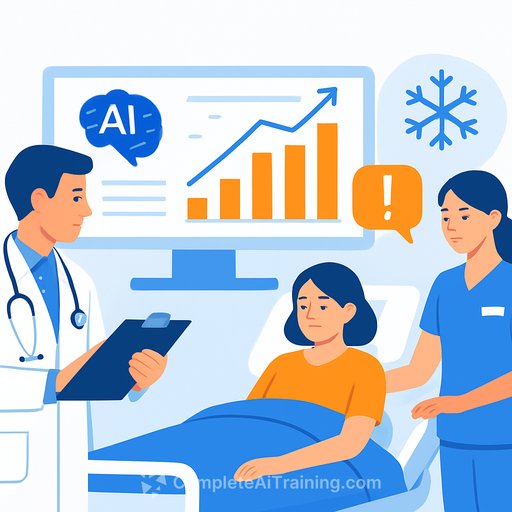
AI forecasts to cut A&E waiting times in England this winter
Hospitals across England are using an AI forecasting tool to predict when A&E demand will spike. The goal is simple: plan staffing and bed space earlier, reduce queues, and move patients through the system faster.
The algorithm is trained on historical data such as weather patterns, school holidays, and rates of flu and Covid. With more accurate demand signals, trusts can match resources to pressure points before they hit.
How the tool helps day to day
Ian Murray, the minister for digital government and data, said the tool gives teams a clearer view of the days and times when A&E will be busiest. "If you put that into context and see seasonal trends, along with how busy days are going to be, you can then put your resources in the right place."
That might mean deploying more consultants in certain specialties, increasing nursing cover in specific areas, or freeing up beds downstream by accelerating safe discharge. The intent is to let clinicians focus on care rather than paperwork and reactive firefighting.
Practical actions trusts can take from the forecasts
- Adjust rosters early: add senior decision-makers to predicted peak hours and days.
- Pre-book bank or agency shifts for high-demand periods rather than last-minute calls.
- Expand assessment and same-day emergency care capacity to reduce admissions.
- Trigger discharge pathways sooner to free beds ahead of evening surges.
- Coordinate with ambulance services to manage handovers during predicted spikes.
- Align specialty on-call cover with case-mix forecasts (e.g., respiratory, paediatrics).
- Plan elective activity and escalation protocols around forecasted pressure.
What leaders are saying
Murray described A&E as "the front door of the NHS," where demand is hard to predict without analytics. The tool helps teams anticipate weekends, seasonal pressures, and exceptional events like heatwaves.
Prof Julian Redhead, national clinical director for urgent and emergency care at NHS England, said: "Early and efficient planning is key to managing busy periods like winter, and new tech like the AI tool has the potential to make a real difference to the way we manage care for patients."
Availability and early results
The forecasting tool is available to all NHS trusts in England. Around 50 NHS organisations are already using it and, according to Murray, they are seeing strong results from better planning and faster patient flow.
The tool is part of the prime minister's AI Exemplars programme, which aims to bring proven AI use cases into frontline services at pace.
Make it work locally
Forecasts are most useful when they trigger clear actions. Set thresholds that automatically prompt staffing changes, bed moves, and discharge accelerators. Build the tool into daily operational huddles and site control processes so it informs decisions, not just dashboards.
Pair the predictions with rapid PDSA cycles: test a staffing tweak on a peak day, measure the impact on door-to-clinician time and 4-hour performance, then iterate. Keep the data flowing between A&E, wards, community teams, and social care so beds open up when the model says they're needed.
Learn more
For background on AI in health and urgent care planning, see:
If you're building AI skills across clinical and operational teams, explore practical training options: AI courses by job role - for teams responsible for logistics, bed and resource planning, see the AI Learning Path for Supply Chain Managers.
Your membership also unlocks: