Faster treatments and support for health workers as AI tackles A&E bottlenecks
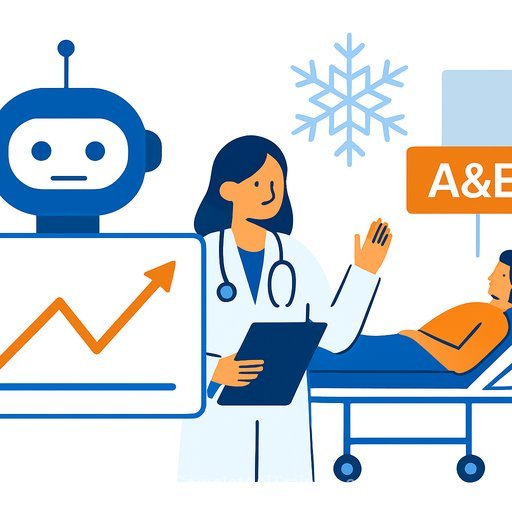
Hospitals across England are using an AI forecasting tool to predict A&E demand and manage winter pressures with fewer last-minute scrambles. The tool is already live in 50 NHS organisations and available to all NHS Trusts through the NHS Federated Data Platform. Trusts looking to build forecasting and bed-capacity planning skills can draw on training such as the AI Learning Path for Supply Chain Managers.
The goal is simple: get patients seen quicker and give staff clearer plans for beds, staffing, and flow. Better foresight means less firefighting.
What this means for government leaders
- Sharper demand planning across emergency care, especially during winter surges.
- Stronger operational resilience from clearer forecasts and earlier interventions.
- Faster progress on NHS recovery commitments with practical, data-led tools.
How the forecasting works
The tool analyses historical patterns and real-time signals to predict daily and weekly A&E attendances. It is continually trained on seasonal health data to adapt to current trends.
- Inputs include Met Office temperature forecasts, recent hospital admissions, and day-of-week patterns.
- Outputs are forward-looking forecasts that inform workforce rosters, bed capacity, and escalation plans - approaches covered in the AI Learning Path for Production Planners.
Early feedback from hospital managers has been positive, with clearer decision-making on staffing and capacity. That translates into shorter waits and smoother patient flow.
Why now
Winter brings predictable pressure points: record flu cases this season, icy falls, and seasonal illnesses. More than 18 million flu vaccines have already been delivered this autumn, hundreds of thousands more than the same point last year-yet demand remains high.
With better forecasting, hospitals can place staff where they're needed most before queues form.
Impact on staff and patients
- Smarter shift planning powered by demand forecasts rather than last-minute rota changes.
- Proactive bed management to reduce bottlenecks and delays in admissions and discharge.
- Shorter waiting times for patients during peak periods.
Where it's already in use
Local users include NHS Coventry and Warwickshire Integrated Care Board, and NHS Bedfordshire, Luton and Milton Keynes Integrated Care Board. There are currently 170 active users each month across 50 organisations.
Part of the Prime Minister's AI Exemplars programme
This tool sits within a wider government push to apply AI where it delivers clear public value across health, justice, tax, and planning. Other examples include:
- The Education Content Store: A pooled dataset to help AI produce accurate lesson materials and reduce admin for teachers.
- AI Diagnostics: Tools that help clinicians spot conditions such as lung cancer from scans, speeding up diagnosis and easing backlogs.
- AI Assisted Discharge summaries: Drafting support that helps patients leave hospital faster, with clinicians retaining final control.
- GOV.UK Chat: An AI-enabled assistant that uses GOV.UK pages to answer public queries in plain language.
How to make it work in your Trust
- Access: Enable access through the NHS Federated Data Platform and confirm data feeds from admissions and operational systems.
- Ownership: Assign clear responsibility across operations (site and flow teams), data/analytics, and clinical leadership.
- Cadence: Run daily huddles around forecast outputs; set trigger thresholds for extra beds, escalation areas, and surge staffing.
- Governance: Log decisions tied to forecasts to support audit, learning, and continuous improvement - and consider governance and accountability training such as the AI Learning Path for CFOs.
Measures to track
- A&E 4-hour performance and time to initial assessment
- Left Without Being Seen rate
- Bed occupancy and average time to admission
- Overtime usage and agency spend during surges
Key details
- Available to all NHS Trusts in England via the NHS Federated Data Platform.
- Designed to predict A&E attendance and identify pinch points ahead of time.
- Supports planning; clinicians and managers retain decision-making authority.
What leaders are saying
Technology Secretary Liz Kendall: AI is already improving healthcare by speeding up diagnosis and unlocking new treatments. Now we are going a step further. By helping to predict demand, this AI forecasting tool is getting patients the care they need faster while supporting our incredible NHS staff. That means easing pressure by ensuring the NHS is at the forefront of the latest technology during the busiest time of year.
Health Innovation Minister Dr Zubir Ahmed: The AI revolution is here and we are arming our NHS staff with the latest technology to help slash A&E waits for patients this busy winter period. Innovations like these will help hospitals manage winter pressure and prioritise resources over the coming months as we continue to battle a tidal wave of flu. This is part of our 10 Year Health Plan to shift healthcare from analogue to digital as we build an NHS that is fit for the future.
Further reading
Your membership also unlocks: