
AI news ·
AI-generated cookbooks flood the market with errors as real authors push back
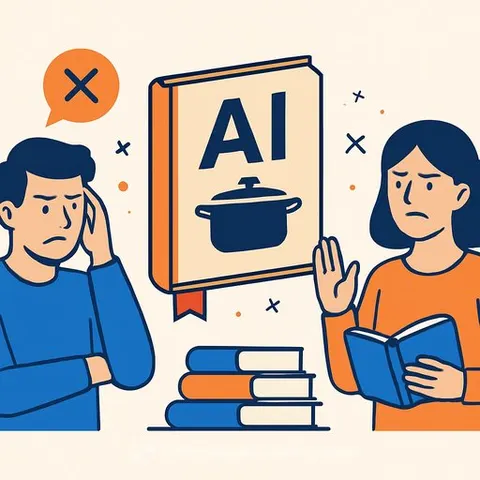
AI-generated cookbooks with broken recipes are flooding Amazon, undercutting authors who spent years developing their work. Vegan titles call for eggs and beef; gnocchi recipes skip sauce entirely.
AI-Generated Cookbooks Are Flooding Amazon With Broken Recipes
Real cookbook authors are watching their work copied by AI-generated imposters that undercut years of research and testing. The knockoffs often contain fundamental errors - vegan recipes that call for eggs, instructions that skip crucial steps, dishes that end without sauces.
Joanne Lee Molinaro, whose "The Korean Vegan Cookbook" won the 2022 James Beard Award, found dozens of AI-generated copies on Amazon. One listed "Banana Bread" with eggs and milk. Another called "Korean Ground Beef" required ground beef, despite claiming to be vegan.
She managed to get the worst offender delisted. Adam Erace, co-author of "Dinner at the Club," bought a copy of an AI knockoff of his own book and tried to cook from it. A gnocchi recipe told him to bake them, cool them, and serve them - with no sauce, no seasoning instructions, nothing. He spent the evening in his kitchen salvaging the "spongy, underseasoned innards" with brown butter and rosemary while his wife watched in disbelief.
The problem exists because recipes cannot be copyrighted. But Molinaro drew a distinction between inspiration and theft. "I don't mind if people draw inspiration from me and create their own video, story, book, or some combination thereof based upon something they saw in my work," she said. "But, they do need to put in the work, instead of simply capitalizing off of mine."
Real cookbook authors often spend years developing their work. Molinaro spent five years on her first book. Arnold Myint drew on a lifetime of learning from his late mother for "Family Thai," which incorporates textile patterns she collected. Ifrah F. Ahmed absorbed recipes from generations of Somali cooks for her recently released "Soomaaliya: A Cookbook."
Cookbooks Remain Steady Despite Digital Alternatives
The AI cookbook problem arrives as the publishing industry watches cookbook sales remain steady. U.S. sales reached 17.2 million units in 2023, according to BookScan data, with global revenue hitting $4.2 billion. Baking cookbooks show particular strength, with 2025 sales up about 80% over the past year.
Cookbook readers have long faced competition from online recipe sites and social media influencers. Now some consumers are turning to generative AI for menu planning. An editor at a major food publication said she inputs ingredients from her cupboard into an AI tool and asks it to generate menus rather than opening a cookbook after reading all day for work.
Yet cookbook readers use them differently than most books. Most people flip through pages, scan photos, and try just two or three recipes from any single purchase. They rarely read cover to cover.
What Cookbook Authors Say to Read First
During a recent book festival, several cookbook authors shared which recipes readers should try first:
- Joanne Lee Molinaro, "The Korean Vegan Homemade": Start with spicy celery soup. "Celery has a bad rap. And I'm telling you, if you make spicy celery soup you're going to fall in love with celery."
- Arnold Myint, "Family Thai": Learn to cook rice first. "Everybody needs to know how to cook rice. And once I have your trust, you can lean into cooking noodles from scratch."
- Ifrah F. Ahmed, "Soomaaliya: A Cookbook": Make Bariis Isku Karis, a one-pot goat meat and rice dish. "Super aromatic."
- Roxana Jullapat, "Morning Baker": Start with chocolate morning muffins. "They are quite easy to execute and very rewarding."
- Claire Wadsworth, "La Copine Cookbook": Try fried eggplant. "People who hate eggplant love the fried eggplant. I could eat it every day."
As AI for writers becomes more common, the cookbook world illustrates a larger problem: AI systems can reproduce the surface of creative work without understanding its substance. The tools generate plausible-looking text that fails when tested against reality - much like those vegan recipes calling for beef.