
AI news ·
AI-generated inventions expose gaps in global intellectual property law
AI-generated work can void copyright and patent protections if no human author or inventor is named. Companies in pharma, software, and marketing face immediate exposure as legal systems lag behind.
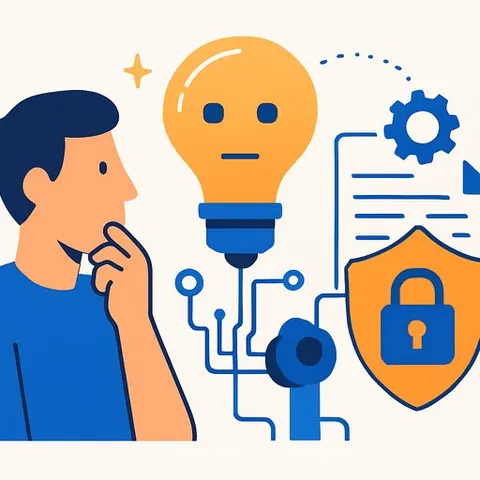
AI-Generated Work Threatens Copyright and Patent Protections
A software engineer finishing code for a bank launch. A pharmaceutical researcher identifying drug compounds. A marketer writing ad copy. These scenarios once required human creativity and effort. Now, AI handles much of the work-and legal systems have no clear answer for who owns what.
Patent offices and courts across the US, UK, Europe, China, and Japan all agree on one thing: AI cannot be named as an inventor. A patent application with no human inventor fails. But the moment AI-generated work enters the marketplace without clear human authorship, intellectual property protection collapses.
Three Industries Face Immediate Risk
Life Sciences. AI now drives drug discovery. It identifies targets, designs molecules, and optimizes clinical trials-compressing development timelines that once took years. The problem: pharmaceutical companies rely on long-term patent protection to recoup research costs. If an AI automatically generates a compound and no human can be named as inventor, the patent application gets rejected. The drug then faces generic competition as soon as regulatory exclusivity expires.
Software. AI writes code, tests it, monitors systems, and analyzes incidents-often with minimal human involvement. An employee who walks out with an AI-written trading algorithm or a competitor who obtains proprietary code may face limited copyright infringement liability. Trade secrets offer little protection once code is made public or reverse-engineered. Copyright protection disappears entirely if human creative input is absent.
Marketing. AI generates taglines, social media posts, images, and entire campaigns. In many jurisdictions, this content lacks copyright protection without substantial human creative input. The risk deepens when competing brands use similar prompts and receive nearly identical outputs, diluting brand distinctiveness.
Courts and Regulators Are Split
The US, EU, and Japan all require human authorship or human creative contribution for copyright protection. The US Supreme Court reinforced this in 2025 by declining to hear a challenge to a pro-human-authorship ruling.
But jurisdictions are diverging on solutions. The UK grants a 50-year copyright to whoever arranged for the computer-generated work's creation-potentially the person who wrote the prompt or curated training data. New Zealand and Hong Kong have similar systems. This provision has never been tested in UK courts under generative AI rules, and repeal is being discussed.
Ukraine took a different path in 2023, creating a standalone right for AI-generated outputs lasting 25 years. China's courts have recognized copyright in AI outputs when users proved sufficient creative control through iterative prompting and parameter tuning.
These differences create a fragmented landscape. A protection strategy that works in one country may fail in another, complicating cross-border enforcement.
What Businesses Should Do Now
Keep humans visibly and evidentially in the creative loop. Document human decision-making, iteration, and selection at every stage.
Review contracts immediately. Employment agreements, agency deals, and AI platform licenses should explicitly address ownership of AI-assisted outputs. Legacy work-for-hire and IP assignment clauses may not automatically cover machine-generated material.
Where copyright and patents fall short, use alternative protections: trade secrets, trademarks, and design rights. Each has limits and fits different outputs better than others.
For AI for Legal professionals, understanding how generative code and other AI outputs interact with existing IP frameworks is now essential.
The Broader Question
Policymakers face a choice. The purist approach-requiring human authorship-may not survive the pace of AI adoption. But legal systems are moving slowly while businesses need answers now. Until reform arrives, companies must bridge the gap through contracts, governance, and careful documentation of human involvement.