
AI news ·
AI-generated political content raises new legal questions in Indian elections
India's Election Commission and MeitY have issued new rules on labelling AI-generated political content, but no single law governs it. Legal advisors must now weigh intent and harm under the ECI advisory, 2026 IT Rules amendments, and electoral laws.
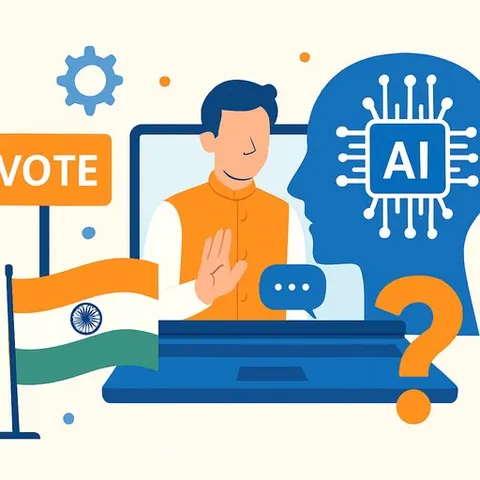
The Election Commission of India and the Ministry of Electronics and Information Technology have each issued new guidance in the past year on how synthetic media must be labelled and handled when used in political campaigns. But no single law currently governs AI-generated political content, leaving creators, platforms, and voters to navigate a patchwork of electoral rules, IT regulations, and defamation statutes.
For legal professionals, the question is not whether AI-generated content is inherently unlawful - it is where the line sits between permissible political expression and deliberate fabrication meant to mislead voters.
What the Election Commission now requires
The Election Commission of India addressed synthetic content directly through its January 2025 advisory on labelling AI-generated material. The advisory told political parties to prominently label such content and include disclaimers wherever synthetic material appears in election campaigning.
That guidance operates alongside the Representation of the People Act, 1951 and the Election Commission's Model Code of Conduct. As the ECI put it, if AI-generated material is presented as the genuine statement or action of a political leader, the circumstances in which it is created and circulated may become legally significant.
The 2026 IT Rules amendments
Indian law has begun to address synthetic content directly. On February 10, 2026, MeitY notified amendments to the Information Technology Rules, 2021 regarding obligations tied to synthetically generated information and due diligence. The amendments strengthen the framework for intermediaries in relation to synthetic content, covering both user identification and platform obligations.
The underlying reason for this is practical. EY reported in 2025 that 68 per cent of consumers worry that AI-generated false information could be taken seriously.
Who bears responsibility
When AI-generated political content goes viral, responsibility is hard to pin down. One person may create synthetic content, another may upload it, a political campaign may use it, and thousands may share it. The key issue is not the technology itself but intent and impact.
Protection will be limited to cases where AI was intentionally misused to fool voters, impersonate an elected official, or disseminate information that causes legally recognisable harm. At the same time, regulations must protect freedom of expression, including satire and criticism of political matters.
Legal professionals advising political campaigns, platforms, or media clients will increasingly need to assess each piece of AI-generated content on its own conduct, intent, knowledge, and harm. That includes determining whether the person who created it, authorised its publication, or knowingly distributed it bears the primary liability.
Not every AI-generated image, video, or audio clip is illegal, the source article stressed. Material used for political satire, parody, commentary, or creative campaigning does not necessarily establish an intention to deceive. The distinction, it said, lies "distinguishing deliberate deception from legitimate political expression."
The procedural challenge remains simple to describe and heavy to solve. Synthetic content can be replicated and shared nearly instantly, while traditional legal remedies take longer. Early detection, clear labelling, and effective grievance redressal are the only realistic counterweights.
Why this matters for legal job professionals
Lawyers and compliance officers advising clients on political content will be asked to apply three overlapping regimes: the ECI advisory, the IT Rules' synthetic content notifications, and electoral and criminal laws. The narrow but essential task is naming, with a deadline, which rule applies to a specific piece of synthetic content - and whether the client's conduct, intent, and knowledge can be defended as legitimate expression rather than deception.