AI Models Move From Chat to Lab Bench
Artificial intelligence systems are generating scientific hypotheses that researchers are now testing in organoids, animal models, and early-stage clinical trials. The shift marks a change in how AI contributes to research-moving beyond conversation tools to active participants in hypothesis development and validation.
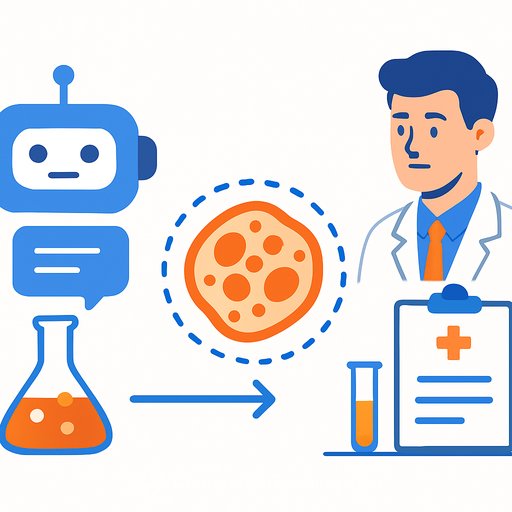
AI models trained on scientific literature and experimental data can identify potential connections between biological processes that human researchers might miss. These connections become testable predictions. When validated through wet-lab experiments or clinical work, they produce results that feed back into the models, refining their accuracy.
Where Testing Happens
Organoid systems-miniature tissue structures grown in the lab-have become a standard first step for validating AI-generated hypotheses. They allow rapid testing without moving directly to animal models. Successful organoid results then advance to animal studies, and promising findings enter early clinical trials.
This workflow compresses the timeline between prediction and evidence. A hypothesis that might have taken months to design manually can be generated, tested in organoids, and evaluated within weeks.
The Validation Problem
Not all AI predictions hold up. Some reflect patterns in training data rather than biological reality. The lab work-the experiments themselves-acts as a filter. Only hypotheses that survive experimental scrutiny inform the next round of model development.
This creates a feedback loop. Each failed prediction teaches the system what doesn't work. Each successful one strengthens the model's ability to recognize genuine biological relationships.
What Researchers Need to Know
The bottleneck isn't generating hypotheses anymore. It's running experiments fast enough to test them. Labs with high-throughput capabilities can validate dozens of AI predictions monthly. Others move more slowly.
Researchers should understand that AI co-scientists work best in domains with substantial existing data. Fields like drug discovery and protein structure have benefited most. Emerging areas with sparse literature or limited experimental datasets see less reliable output.
The legal and intellectual property questions around AI-generated discoveries remain unsettled. Who owns a finding that an AI system predicted but a human team validated? Different jurisdictions are developing different answers.
For working scientists, the practical reality is straightforward: AI can propose experiments worth running. Whether those experiments succeed depends on the lab work, not the prediction. The models are tools that accelerate idea generation, not replacements for experimental rigor.
Learn more about AI for Science & Research or explore AI Research Courses designed for scientists integrating these systems into their work.
Your membership also unlocks: