AI Goes Offline: Why Billboards, Pop-ups, and IRL Moments Are Winning Budget
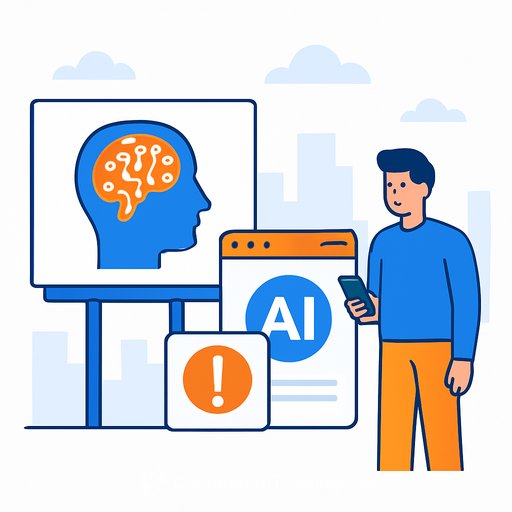
The AI race may be digital, but the marketing frontlines are increasingly physical. Between October 2024 and October 2025, top AI companies pushed more than $300 million into ads, with a noticeable slice hitting streets, stations, parks, and airports. The goal isn't clicks. It's trust.
Out-of-home is the signal in a noisy feed. It says, "We're here, we're stable, and you can put a face to the name." That matters when products feel abstract and competitors sound the same.
Who's Spending What
- Salesforce (Agentforce): ~$77 million
- Microsoft (Copilot): at least $59 million
- OpenAI (ChatGPT): ~$30 million
- Anthropic (Claude): $14.8 million
- Google (Gemini): nearly $17 million
OpenAI alone spent $2.2 million on outdoor ads in October, up from $870,000 in September, per MediaRadar. Source
Beyond Billboards: The IRL Push
Some of the most effective moves were tangible experiences. IBM staged a large Madison Square Park activation during the U.S. Open to spotlight Watsonx and its USTA partnership. Google took over the Las Vegas Sphere during F1 to give Gemini a skyline-sized moment.
Startups are playing the same game with scrappier formats. Cursor hosted global "Cafe Cursor" meetups for coders. Anthropic went all in on its "Keep Thinking" platform with pop-ups that felt deliberately analog-hand-drawn signage, film photography, and a "poetry camera" that turned portraits into AI-generated poems. No screens. No demos. Just people.
Anthropic's Playbook: Calm > Hype
The creative for "Keep Thinking," developed with Mother, positioned Claude as a thinking partner, not just a productivity shortcut. Warm tones. Real people. Sparse copy like "Keep thinking" and "If there's no solution, code one." The tone: confidence without chest-thumping.
To make it tangible, Anthropic built "thinking spaces." About 5,000 people showed up in New York during the first weekend, and more than 2,000 attended in London weeks later. "We are deciding to bring things in person, to speak to humans," said Anthropic's Sam McAllister. The London lines even had Victorian-era carolers. It worked because it slowed people down and respected their attention.
The Strategy Shift: From CAC to Credibility
Marketers are reallocating toward brand. In a 2025 survey of large-org marketing leaders, roughly 46% of brand budgets went to awareness initiatives, according to Gartner. That mirrors the move we're seeing in AI: fewer hard sells, more shared experiences.
There's a cost story here too. Digital acquisition has gotten pricier-up to 60% over five years-thanks to weaker targeting and content overload. As Gartner's Nicole Greene put it, "There are increasingly two worlds": the data-heavy online feed and the physical world where people want fewer screens and more human contact. For OOH effectiveness benchmarks and formats, see the OAAA.
Case Study in Risk: Friend's Subway Blitz
Friend, a wearable AI startup, flooded New York City subways with more than 1,000 station posters and 11,000 in-car placements starting in August, spending around $1 million on transit alone (MediaRadar estimates ~ $1.29 million total over three months). The creative promised companionship: "I'll ride the subway with you."
The response was loud-graffiti, ripped posters, and brand parodies. Founder Avi Schiffmann called it a calculated bet: "Chaos is a ladder." He says the campaign burned through most of the company's cash but put a stake in the ground before expanding to other cities. Lesson: provocation can buy awareness, but not always trust.
What Marketers Can Borrow Now
1) Treat IRL as a Trust Channel, Not a Conversion Channel
- Use OOH and experiential to make the product feel real and stable. Focus on clarity and tone over feature lists.
- Keep creative calm and human. Avoid shouting. Invite reflection.
2) Build "Slowing Mechanisms" Into Your Creative
- Analog cues-handwritten elements, tactile materials, print photography-signal care and intention.
- Design for linger time: short copy, visual breathing room, and a single idea per unit.
3) Activate, Don't Just Advertise
- Pop-ups, meetups, and "brand-in-residence" moments spark conversations that billboards alone can't.
- Curate experiences around your product's mental model: thinking spaces for Claude, coding cafes for Cursor.
4) Measure Without Killing the Mood
- Use unique short URLs, scannable QR codes, and city-level search lift to attribute impact.
- Run pre/post brand lift studies in exposed ZIP codes; track branded search, direct traffic, and demo intent.
5) Plan for Polarization
- AI triggers strong reactions. Pressure-test your message with skeptics before you go wide.
- Have a response plan for vandalism, parodies, and pushback. Decide what you'll ignore vs. engage.
6) Right-Size the Spend
- Anchor big moments to big calendars (sporting events, cultural tentpoles) to concentrate attention.
- For startups: pilot with a micro-geography (one city, one format) before scaling.
Creative Checklist for AI OOH
- Positioning: Who is this for, and what job do they hire you to do?
- Single idea: One message per unit. Kill the rest.
- Proof of care: Analog touches, craftsmanship, community presence.
- Invite participation: Prompts, live workshops, or simple on-site activities.
- Bridge online: QR to a lightweight, mobile-first landing page that extends the feeling, not just the funnel.
Metrics That Matter
- Unaided and aided awareness lift in exposed markets
- Brand search and direct traffic indexed to flight dates
- Engagement rate on IRL prompts (QR scans, RSVP, sign-ups)
- Sales proxy: demo requests, trials, or waitlist adds by DMA
The Takeaway
AI brands are learning a simple truth: trust is earned face to face. Billboards, cafes, park installations-these aren't stunts. They're the fastest way to make an abstract product feel real, credible, and worth a second look.
Plan one physical moment this quarter. Keep it calm. Make it useful. And measure the shift in attention where it counts.
If you want a structured path to sharpen your AI marketing skill set, consider this resource: AI Certification for Marketing Specialists.
Your membership also unlocks: