AI, Ethics, and Media Integrity: What PR and Communications Teams Need to Do Now
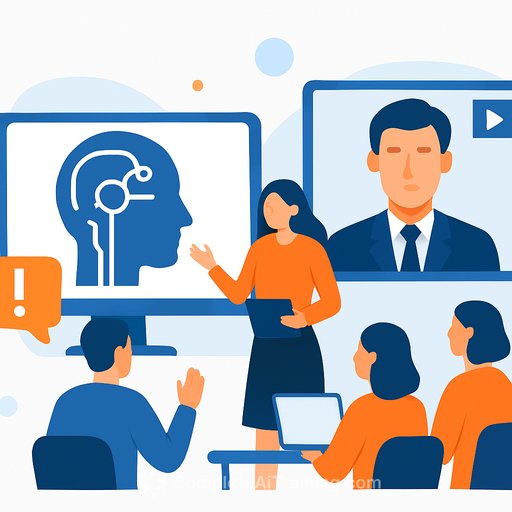
A major workshop hosted by the Union of OIC News Agencies (UNA) and the International Center for AI Research and Ethics (ICAIRE) brought more than 350 journalists together to unpack how AI affects news and media content. The discussion focused on ethics, bias, hallucinations, data privacy, and intellectual property - all of which directly affect PR and communications work.
Two themes stood out. First, AI outputs may look automated, but they're built on human decisions: data selection, labeling, and algorithm design. Second, those human choices can introduce bias, privacy risks, and credibility issues that carry real consequences for brands and media partners.
Key risks flagged by UNA and ICAIRE
- Bias baked into datasets and algorithms that can skew content and framing.
- Hallucinations that produce false or misleading claims with confident tone.
- Deepfakes in images, audio, and video that can trigger rapid reputational damage.
- Privacy and compliance gaps when sensitive data is pushed into prompts or tools.
- IP exposure as models store or reuse inputs; unclear rights around generated content.
Policy moves PR leaders should implement now
- Define content classes: human-only, AI-assisted, and AI-generated. Set approval rules for each.
- Label AI-assisted or generated content when it reaches external audiences or regulators require it.
- Ban feeding confidential, client, or personal data into public models. Use approved, compliant environments.
- Require source backing for all factual claims from AI. No unverified facts go live.
- Establish a corrections SLA and public process for AI-related errors.
Editorial safeguards that cut hallucinations
- Force citation: prompts must request sources, dates, and links. If missing, treat as unverified.
- Two-layer review: subject-matter check + compliance check for sensitive topics.
- Red-team prompts: test for political, cultural, and historical bias across regions before campaigns.
- Maintain a "claims log" for high-stakes materials with evidence and reviewer sign-off.
Deepfake risk control
- Authenticate origin for visuals: request originals, check metadata, and use content credentials where possible. See the C2PA standard.
- Run a secondary verification path (subject confirmation, trusted third-party tools) before amplification.
- Stand up a rapid response path: takedown requests, legal review, and a pre-approved public statement.
IP and rights management
- Review model and tool terms for training use of your inputs; opt out where available.
- Clear rights for any generated assets used in paid campaigns or syndication.
- Keep a record of prompts, models, and datasets used to establish provenance if challenged.
Bias checks that fit real workflows
- Run the same prompt across multiple contexts (countries, communities) and compare outputs.
- Add a short bias checklist to approvals: representation, stereotyping, political framing, cultural nuance.
- Escalate sensitive topics (religion, conflict, elections) to human-led drafting.
Data privacy and consent
- Prohibit uploading personal data without explicit consent and a defined legal basis.
- Limit retention: strip PII from prompts, disable logs where possible, and set retention windows.
- Vendor assessments must cover encryption, access controls, data residency, and subprocessor lists.
Disclosure and transparency
- Use clear labels like "This release was drafted with AI assistance and human-edited."
- Publish an AI use note on your newsroom or press page describing tools, review steps, and contact for concerns.
- For public-interest topics, cite sources and dates inline or in an end note.
Crisis communications for AI mistakes
- Triggers: unverified facts, synthetic media concerns, misattributed quotes.
- Actions: pause distribution, investigate sources, correct or retract, and notify partners.
- Messaging: short summary of what happened, what changed, and how you're preventing repeats.
Training and accountability
- Train teams on prompt hygiene, verification, and privacy-safe workflows.
- Track metrics: correction rate, time-to-correct, percentage of AI-assisted pieces, and verification passes.
- Assign owners: editorial, legal, security, and comms each have defined roles in the AI process.
For broader ethical guidance, review global frameworks such as UNESCO's recommendations on AI ethics: UNESCO AI Ethics. Aligning media workflows to clear standards reduces risk and builds trust with audiences and partners.
If your team needs structured upskilling on safe, effective AI use in communications, explore targeted programs here: AI courses by job.
Bottom line
AI can speed production, but it also amplifies bias, privacy, and credibility risks if left unchecked. Treat AI as an assistant, not an authority, and back every claim with verifiable sources. With the right policies and reviews, your team can move fast without putting brand trust on the line.
Your membership also unlocks: