
AI news ·
AI image of England footballers as Queen shows generative models rely on existing cultural icons
Viral AI mashups show image generators remix familiar pop culture in 30 seconds. Yet the tools rely on cultural nostalgia rather than inventing original work.
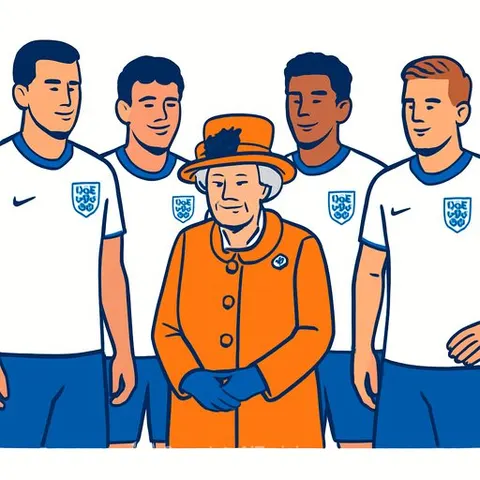
An AI-generated image depicting England footballers Harry Kane, Jude Bellingham, and others as the band Queen has spread across social media, racking up shares by blending two instantly recognisable cultural touchstones. The image is a sharp example of how generative AI can hijack attention spans, but it also exposes a limitation: AI's biggest creative wins still come from remixing what we already know, not from inventing something new.
The image places Kane in Freddie Mercury's iconic moustache and vest, and Bellingham with Brian May's bouncing curls, the whole group posed like a lost 1970s publicity shot. It is a joke that lands in a split second. The visual language of Queen is so embedded in pop culture that a single moustache and a cascade of hair is enough to trigger recognition. AI didn't build a new visual vocabulary here; it rebuilt one that's been legible for decades.
That formula is everywhere now. Footballers as rock stars, politicians as Pixar characters, movie casts painted by Rembrandt, Generative Art increasingly feeds on the mashup, and platforms reward it because the reference is instantly familiar. Someone still had to spot the right pairing-Kane as Mercury is a sharp call-but the heavy lifting is done by borrowed cultural baggage.
The remix engine and the missing original
Image generators have become remarkably good at answering "what if this looked like that?" The idea that might once have taken an afternoon in Photoshop, six YouTube tutorials, and a flattened layer disaster now arrives in 30 seconds. Yet the output rarely feels like a new cultural object. The last time AI felt genuinely original, it was failing-Will Smith eating spaghetti with impossible fingers-and in those failures, a weird, distinct visual texture emerged. Now, AI is pop culture's greatest tribute band, flawless at covers but not yet writing the hits.
That isn't an accident. The models are trained on the culture we've already made, so they naturally lean on familiar ideas. They reflect us back at ourselves. We click on England as Queen because we know Queen, Harry Kane, and Jude Bellingham. We share Studio Ghibli-style images because we grew up with Ghibli. The algorithms know that nostalgia is a reliable engagement trigger, and the current flood of retro game remakes and vintage music revivals confirms the appetite.
Is the limit AI, or us?
The question worth asking is whether the limitation sits with the technology or with the audience. Original ideas lack the instant emotional hook of a recognised reference. They need time to settle and become part of culture, which is difficult in a feed that rewards the joke you understand immediately and scrolls past the unfamiliar. AI for Creatives has become a powerful tool for rapid prototyping, but its most visible wins remain tethered to yesterday's icons.
Even the England vs Argentina match that prompted the image is often framed through memories of 1986's Hand of God, 1996's "It's Coming Home," and 1966's World Cup win. We are so conditioned to reward recognition that we might be forgetting how exciting it is to see something we've never seen before.
Why this matters for creatives
For designers, artists, and art directors, generative AI excels as a remix engine-it can quickly visualise a mashup that would take hours to sketch, and it's useful for mood boards, concept pitches, and social content that leans on shared cultural references. The risk is that the tool's ease of producing lookalikes can pull work toward the familiar, making it harder to sell clients or audiences on something genuinely new. The smartest use of AI right now might be to treat it as a sketchpad for raw ideas, then push the output toward a visual language that doesn't already exist. If generative AI is going to become a seriously creative partner, it needs to help write new songs, not just play the greatest hits.