AI in Advertising: Bias and Misinformation Are Brand Risks You Can't Ignore
AI is now writing copy, building segments, and optimizing spend. Useful-until bias creeps in or misinformation slips through and your brand pays the price.
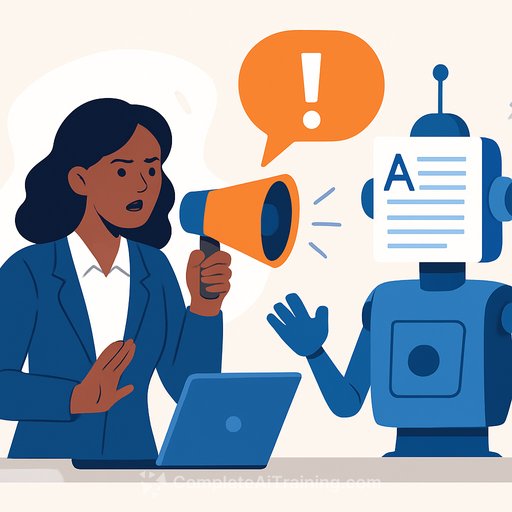
If you lead PR or communications, you're the last line before public trust takes a hit. Treat AI like a high-visibility spokesperson: brief it, monitor it, and hold it accountable. For senior marketing leaders, consider the AI Learning Path for Vice Presidents of Marketing to build governance and risk-management chops.
Why this matters for PR and communications
- Bias isn't abstract-it shows up in targeting, tone, and who gets excluded.
- Misinformation spreads faster than corrections. One flawed ad can seed a narrative you'll battle for months.
- Regulators are watching AI claims and advertising practices. Overpromising "AI magic" is a legal and reputational risk.
Where bias sneaks into AI-driven campaigns
- Training data that overrepresents certain groups, tones, or cultural cues.
- Lookalike audiences that entrench historical patterns.
- Optimization loops that reward engagement even when it skews negative or sensational.
- Prompts and guardrails that reflect internal blind spots.
Misinformation risks to watch
- Synthetic or outdated facts in AI-generated copy, captions, or product claims.
- Deepfakes or altered visuals used in influencer content or UGC-style ads.
- Hallucinated citations or fake "studies" that slip into long-form assets.
- Third-party tools auto-generating headlines that overstate benefits.
Practical guardrails you can implement this quarter
- Set a "human-in-the-loop" rule for all public-facing AI content. Nothing ships without review.
- Create a banned claims list and a proof checklist (source, date, approvals) for every factual statement.
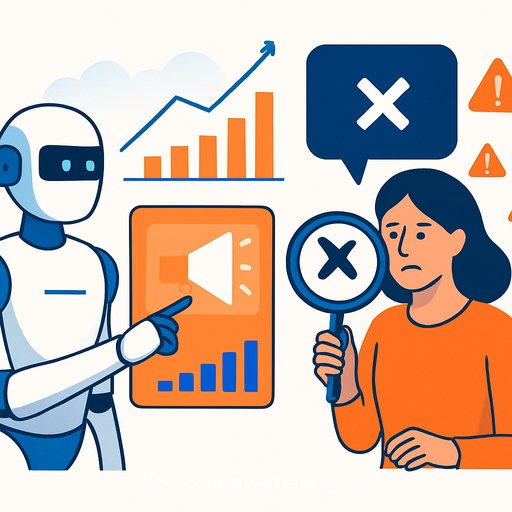
- Run bias checks on headlines, imagery, and audience segments. Compare outputs across demographics and geographies.
- Use content provenance. Prefer assets with signed metadata and add disclosures for synthetic media.
- Throttle engagement-optimized variants that lean on fear, outrage, or stereotypes.
Policy checklist you can share with Legal and Media
- Disclosure: Clearly label synthetic voices, faces, or visuals when material to understanding the ad.
- Claims: No "AI guarantees." Substantiate benefits like any other claim.
- Data: Prohibit use of sensitive categories unless there's explicit legal basis and brand approval.
- Review: Two-person review for high-risk content (health, finance, safety, kids).
- Escalation: Predefined Slack/phone tree for pausing spend and issuing statements within hours, not days.
For regulatory context on claims and AI marketing, see the FTC's guidance on AI-related advertising claims here. For content authenticity standards, review the C2PA specification here.
Vendor questions to add to your RFP
- What training data sources power your models? How do you test for demographic bias?
- Can we audit prompts, variants, and decision logs for specific campaigns?
- Do you support content provenance (e.g., C2PA) and watermarking for synthetic media?
- What's your takedown speed and process for problematic outputs?
- Do you offer brand-safety and factuality filters we can tune?
Metrics that keep you honest
- Factual error rate per 1,000 assets reviewed.
- Bias variance: CTR/CVR deltas across protected groups (investigate >20% gaps).
- Complaint rate and sentiment swing within 24 hours of launch.
- Time-to-pause and time-to-correct after a flagged issue.
Prompt and review guardrails for your team
- Prompts: Specify audience, tone, geographic context, banned claims, and required sources.
- Validation: Require two credible sources for any statistic or medical/financial statement.
- Red-team: Ask the model to find its own weak points and biased phrasing before approval.
- Localization: Check idioms, cultural references, and imagery suitability per market.
Labeling and disclosure tips
- For synthetic voices/faces: "This ad uses AI-generated media." Place near the asset, not in fine print.
- For edited UGC: "Scenes enhanced with AI."
- For chat-based experiences: "Responses may be AI-generated and reviewed."
Crisis playbook for AI missteps
- Freeze spend, pull assets, and post a holding statement acknowledging the issue.
- Share what changed: the control you added, the vendor you paused, or the dataset you replaced.
- Offer a clear path for feedback and reporting (email and form link).
- Close the loop publicly once fixed. Silence signals indifference.
30-day quick wins
- Draft a one-page AI ad policy and socialize it with agencies and creators.
- Implement a preflight checklist in your project management tool.
- Run a bias audit on your top three AI-assisted campaigns from last quarter.
- Add provenance labels to all new synthetic visuals and voiceovers.
If your team needs structured upskilling on safe, effective AI for marketing and comms, explore this practical certification for marketing specialists and additional resources on AI for Marketing.
Bottom line
AI can scale creative and media, but it also scales mistakes. Your job is to set the guardrails now-so you don't spend the next quarter cleaning up a preventable mess.
Your membership also unlocks: