AI and the legal profession in Bangladesh: useful, imperfect, and already here
Artificial intelligence has moved from novelty to everyday utility in many Bangladeshi chambers. It helps lawyers find case law faster, locate clauses in long contracts, and clean up drafting. As one Advocate of the Supreme Court puts it, "If it is a 200-page contract, and I need to find something specific, I'd use AI to guide me to that portion of it."
Others use it to proofread submissions and summarise judgments, while keeping privileged material off public tools. Manupatra's AI summaries are saving hours for many practitioners. "You can get single-paragraph summaries encapsulating entire judgments," notes one Barrister and Advocate of District and Sessions Judge Court. For practical guidance on deploying AI in legal workflows, see AI for Legal.
The competitive baseline
"AI is becoming a part and parcel of the practice itself," says a Head of Chamber. "You need to be well-versed in its uses to do your cases properly because your opponents might be using it as well."
The brakes: hallucinations, gaps, and local constraints
Lawyers are unanimous on one point: use AI with caution. "The main risk is false or misleading information - especially fictitious case references," warns a Supreme Court Advocate. Another Barrister adds, "AI does not have access to all our laws or bylaws," which increases the chance of wrong conclusions. For approaches to validating AI findings and improving research workflows, see AI Research.
The risk isn't theoretical. One associate recalls an intern who submitted 15 "cases" after two weeks of research - only two were real; the rest were AI hallucinations. The rule of thumb is clear: treat outputs as leads, not answers, and verify everything.
Client trust and drafting realities
Some seniors discourage using general AI for drafting legal documents due to client perception and reliability. "If a client gets the impression that you are dependent on AI, they won't want to come to you again," notes an Advocate of the Appellate Division. For common legal notices with standard templates, the marginal benefit of AI is limited.
That same senior, however, supports research platforms like HeinOnline and Manupatra, including their AI features - with human oversight. The line is use AI to speed research, not to outsource your judgment.
System-level potential vs. ground reality
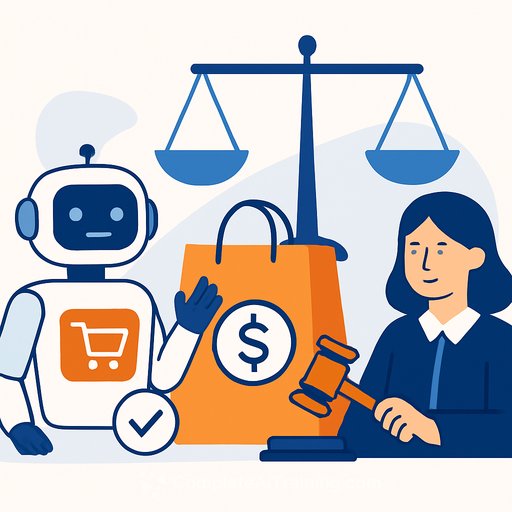
Global justice systems are testing structured adoption. The UK's policy paper, "AI action plan for justice," aims to "drive the responsible adoption of AI to enable our people to deliver world-leading public services." See the plan on GOV.UK: AI action plan for justice.
Bangladesh needs efficiency gains even more. Courts carried 45,16,603 pending cases as of December 2024, according to a Supreme Court report published in 2025. The challenge: lower courts still run mostly on paper, and the infrastructure and training for AI are thin.
There are bold ideas on the table, such as judge-operated systems that could help generate draft judgments across domains. Even advocates of this approach estimate it would take a decade or more to build, and only if foundational data, workflows, and guardrails are put in place.
Advocacy stays human
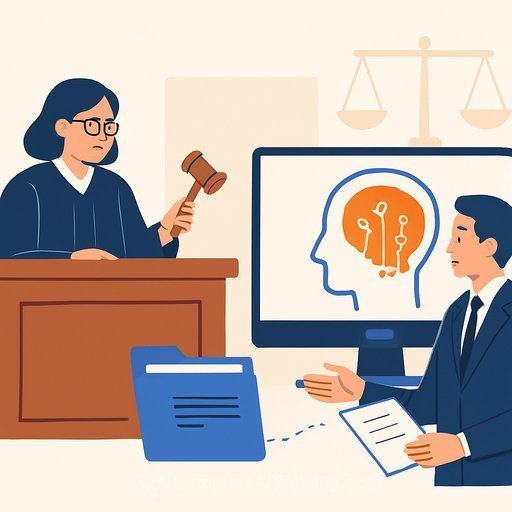
Advocacy is more than reciting authorities. It demands empathy, live judgment, and an instinct for courtroom dynamics. "AI may well crack the bar exam, but to do a case, you need to understand what the judge would appreciate," says one Barrister and Head of Chamber.
AI can still assist: drafting cross-examination outlines, surfacing contradictions, and summarising submissions for refinement. But as another Supreme Court Advocate notes, the decision-maker is human - and so is persuasive advocacy.
Ethics, confidentiality, and governance
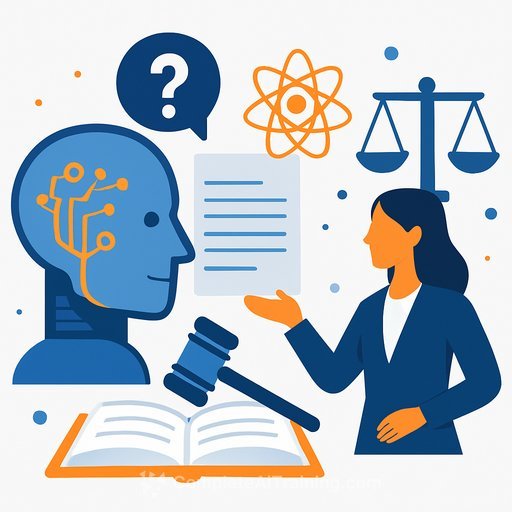
Ethics will decide whether AI makes practice better or worse. Uploading client facts to public tools can breach confidentiality. How long data is retained and how it's reused remain open questions that should concern every chamber.
Several practitioners call for uniform regulations: what is allowed, what is prohibited, and how usage should be monitored. Education must sit beside policy. Untrained use is a risk multiplier.
A practical playbook for chambers
- Define "safe use" cases: clause-finding, proofreading, plain-language rewrites, judgment summaries, checklists.
- Ban uploads of confidential or privileged material to public models. Use redaction or closed systems only.
- Require source-backed answers. No citations, no trust. Cross-check with official reporters and databases.
- Adopt legal research platforms (e.g., Manupatra, HeinOnline) and enable their AI features with logging.
- Standardise prompts for common tasks (e.g., "spot issues," "compare clauses," "summarise holdings").
- Create an AI usage policy covering confidentiality, data retention, audit trails, and client disclosures.
- Run training for juniors and seniors; pair every AI task with a human review step.
- Pilot in back-office workflows first (knowledge management, first-draft research notes, templates).
- Measure outcomes: time saved per task, error rates, win-rate impact. Keep what works; drop what doesn't.
- Revisit the policy quarterly as tools, case law access, and local regulations change.
What's next
Bold predictions say lawyers could be replaced in a decade. Most practitioners disagree. As one industry voice put it, the winners will be lawyers who sharpen judgment and use every useful tool - without lowering the bar.
The honest status today: AI is the smartest intern in the room - quick, tireless, and sometimes wrong. Treat it that way, and it will make your practice faster and your thinking sharper.
Further reading: The UK's policy approach to AI in justice - GOV.UK.
Upskilling: For structured AI learning paths by job role, see Complete AI Training.
Your membership also unlocks: