AI In Canadian Courtrooms: Useful Tool, Real Risks, Rising Penalties
Clients are showing up with AI-written emails, briefs, and even full applications. Some are trying to run their entire case through a chatbot. The result: delays, inflated costs, and-more often now-sanctions.
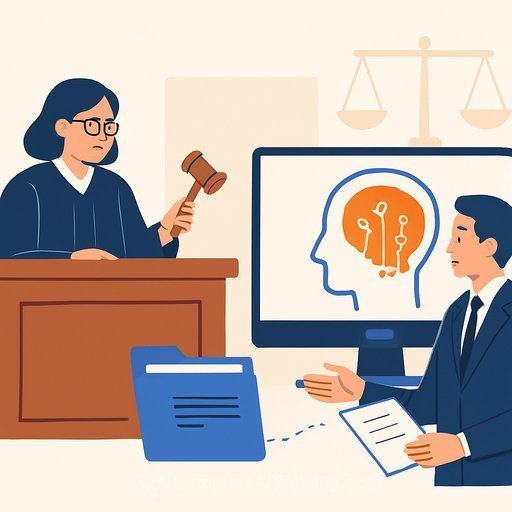
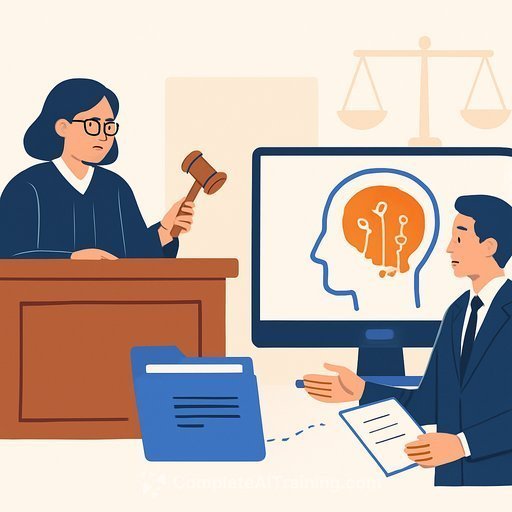
Across Canada, courts and tribunals are seeing AI-generated filings with fake citations, irrelevant law, and overlong submissions. Several courts have issued guidance, and the Federal Court requires disclosure when generative AI is used. The message is clear: use AI with care, and own the result.
What lawyers are seeing
Family counsel report weekly AI-written messages from clients-some helpful summaries, some overconfident instructions. One lawyer received pages of AI analysis on exclusive possession for a "married couple." The client wasn't married. Billable time wasted, no value delivered.
Self-represented parties are also filing AI-drafted materials that courts must sift through. That slows proceedings and increases costs for everyone involved. Judges are getting less patient with it.
Courts are responding with penalties
Recent matters include a contempt proceeding against a lawyer who filed AI-invented cases and denied it in court. A Quebec court hit a self-rep with a $5,000 sanction after AI-assisted filings included false authorities. Alberta's top court imposed additional costs after spotting fake citations and warned that stronger penalties are coming.
Guidance is rolling out across provinces. Some courts require a declaration when generative AI is used. Expect stricter enforcement on citation accuracy, length limits, and candour.
The hidden cost: privacy, trust, and noise
Immigration counsel are seeing clients "fact-check" their work with public AI tools. That can leak personal information into third-party systems and undermine the lawyer-client relationship. It also creates more back-and-forth to correct confident but wrong outputs.
Paid legal AI tools can help with organization and drafting, but they still need supervision. Open models are improving, but hallucinations, misapplied law, and privacy issues are real. Your name is on the filing-AI won't share the blame.
A practical playbook for legal teams
Set policy before tools: Put guardrails in your retainer letters and firm manuals. Define approved AI use cases (summaries, issue spotting, style suggestions) and banned ones (unverified citations, unreviewed filings, confidential data in public tools).
Add an AI disclosure step: If a court requires it, disclose. Even where it's not required, judges appreciate candour. Keep it short and specific.
Enforce citation hygiene: Verify every case in an official source before it hits a draft. Use neutral citations and check quotes line by line. Free sources like CanLII make verification fast.
Protect confidentiality: Don't paste client facts into public models. If you must, scrub identifiers or use an enterprise tool with data controls, logging, and a no-training guarantee. Get client consent if a third-party processor will touch their data.
Reduce "AI noise" from clients: Ask clients to send raw facts and documents, not AI-edited legal memos. If they use AI, request the exact prompts and outputs so you can triage quickly.
Track provenance: Keep a short audit trail: sources relied on, manual checks performed, and who reviewed the draft. If questioned, you'll have receipts.
Checklist: before filing AI-assisted materials
- Search and verify every citation in an official reporter or database.
- Confirm the case exists, is good law, and is quoted accurately.
- Re-check jurisdiction, dates, and procedural posture.
- Trim to court length limits; remove filler and repetition.
- Disclose AI use if required by that court's notice or practice direction.
- Reread for substance and tone as if no AI was used-because the court will.
- Remove any confidential data that isn't necessary to the record.
- Have a responsible lawyer sign off; no exceptions.
If you face AI-heavy self-reps
Expect long, citation-heavy filings with weak relevance. Stick to the record. Propose page limits and focused issues at case conferences. Where appropriate, seek costs for time spent addressing fake authorities or non-compliant materials.
Share the court's AI guidance with the other side early. It signals standards without escalating tone.
Firm implementation in one week
- Day 1: Pick approved tools; define banned uses; appoint an AI lead.
- Day 2: Draft a one-page client notice on acceptable AI use and privacy.
- Day 3: Create a two-step citation verification protocol with sign-off.
- Day 4: Add a short AI disclosure template to your precedents.
- Day 5: Run a 60-minute training with live examples of hallucinations.
What won't change
Judgment, ethics, and privacy duties. AI can summarize, structure, and suggest. It can't decide strategy, weigh facts, or carry your obligations. As one litigator put it: it's a tool-useful, but never a substitute for legal skill.
Resources
- CanLII for citation verification and neutral citations.
- AI Learning Path for Paralegals - practical modules on drafting, citation checks, and client communications.
- AI Learning Path for Regulatory Affairs Specialists - guidance on using AI in regulated environments, compliance, and audit trails.
Your membership also unlocks: