AI in education: a force multiplier-if we build the guardrails
Artificial intelligence is changing how schools work. Educationist Shishir Jaipuria calls it a force multiplier, with a clear warning: misuse for cheating and weak data practices will cost students far more than they gain.
His message lands on two fronts-use AI to boost learning and reduce busywork, and build real protections around privacy, assessment integrity, and teacher capability.
Where AI already helps
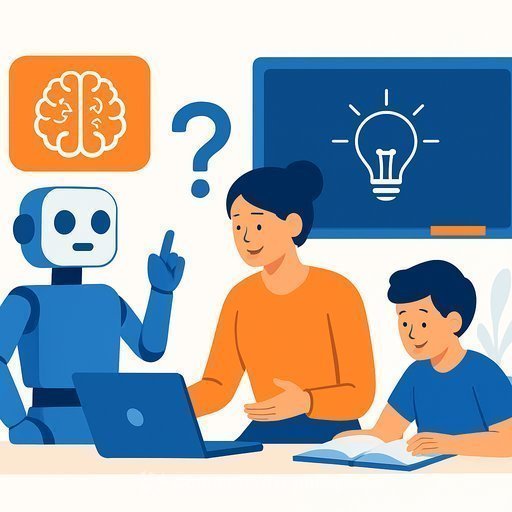
AI tools can map each learner's style, identify gaps, and personalise support. Teachers save time on routine tasks and put that time back into instruction and feedback.
In regions with too few teachers, intelligent tutors and open resources support self-learning. When used with intent, schools can create a more responsive learning ecosystem.
Risks we can't ignore
Cheating in online assessments is showing up across classrooms. That's solvable, but it asks us to rethink assessment design, not just add proctoring.
The bigger risk is privacy. Schools hold sensitive data; one breach can follow a child for years. Strong data practices are non-negotiable.
Practical guardrails to put in place now
- Assessment redesign: more oral defenses, project work, process logs, and in-class demonstrations.
- Clear AI-use policy for students and staff, with honest examples of acceptable and unacceptable use.
- Data minimisation: collect less, store less, restrict access, and enforce deletion schedules.
- Vendor due diligence: know where data lives, how it's encrypted, and how audits happen.
- Privacy by default: parental consent, student opt-outs, and local processing where feasible.
- Incident readiness: run breach drills, keep audit trails, and set a 72-hour response workflow.
If you work in India, map practices to the Digital Personal Data Protection Act, 2023 and track state guidance as it matures.
Teachers at the center
Jaipuria argues for targeted teacher training that builds digital competencies without piling on admin. Development should be hands-on, tied to live classroom use, and supported with coaching time; programs such as the AI Learning Path for Teachers show how training can be classroom-focused.
- Run short cycles: plan, test in class, reflect, iterate.
- Pair early adopters with colleagues as in-house coaches.
- Measure changes in student work quality, not tool usage stats.
NEP 2020: vision vs. execution
NEP-2020 points to competency-based education with an interdisciplinary approach, critical thinking, experiential learning, multilingualism, and research. The direction is right.
Execution lags. The three-language formula faces resistance in parts of the south, and public funding needs to move closer to the 6% of GDP target. For school-level implementation and curriculum-aligned AI use, secondary educators can consult the AI Learning Path for Secondary School Teachers.
The pressure cooker problem
On student suicides, Jaipuria calls it a societal and systemic issue. If school turns into a race for ranks, learners carry pressure that can break them.
Schools, parents, and communities need to reset what success looks like and intervene early.
- Broaden success metrics beyond marks: portfolios, exhibitions, and real projects.
- Train staff to spot early signs; set up clear referral pathways to counselors.
- Hold regular parent check-ins on workload, sleep, and social support.
What school leaders can do this quarter
- Publish an AI-use policy and a plain-language privacy notice for families.
- Pilot one AI-supported workflow that saves teachers at least two hours a week.
- Redesign two high-stakes assessments to reduce incentives for cheating.
- Run a data-protection tabletop exercise with your leadership team.
- Launch a teacher PD sprint focused on one classroom use case.
Expansion note
The Seth Anandram Jaipuria Group plans to scale to 50 schools by 2030, with a new NCR campus and entry into Rajasthan. Through its Saamarthya Teachers Training Academy of Research (STTAR), the group also aims to deepen teacher development and school leadership programs.
Further resources
- National Education Policy 2020 (Government of India)
- Digital Personal Data Protection Act, 2023
- AI Learning Path for Teaching Assistants
Your membership also unlocks: