
AI news ·
AI in classrooms risks repeating Norway's iPad mistake, columnist argues
Norway gave every child a digital device starting at age 5 in 2016. A decade later, 500,000 Norwegians can't read a text message, and Norway ranks last in children's reading enjoyment among 65 countries.
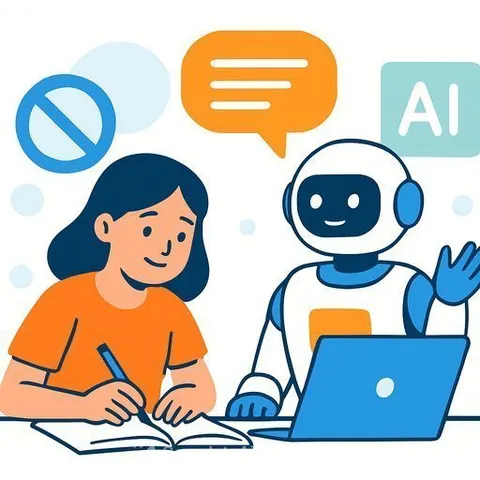
Norway's iPad Experiment Offers a Cautionary Lesson on AI in Schools
Norway gave every child in the country a digital device starting at age 5 in 2016. A decade later, the results alarmed educators and policymakers: around 500,000 Norwegians out of 5.6 million cannot read a text message or simple instructions. Among 65 countries measured for children's reading enjoyment, Norway now ranks last.
Norwegian Prime Minister Jonas Gahr Store launched a remedial program in August to address the problem. "Norwegian children used to be among the best readers in the world," he said. "But today, 15,000 pupils finish primary school without being able to read properly."
The Norway case study carries direct implications for educators now facing pressure to deploy AI tools in classrooms. If tablets undermined basic literacy skills, AI chatbots that answer questions for students could cause similar damage.
The Problem With Removing the Work
AI can make highly skilled workers more productive. But it removes the struggle that builds competence in the first place.
You cannot learn to ride a bike by reading instructions. You cannot benefit from reading by asking AI to read for you. The same principle applies to math, science, and computer programming. Skill develops through doing, not through outsourcing the thinking.
When calculators became cheap in the 1970s, educators learned this lesson. Students needed to master basic arithmetic before using calculators on advanced problems. They also needed to develop mathematical thinking. AI functions as a powerful calculator for nearly all mental tasks.
The difference between a student using AI to skip the work and a student cheating is educational distinction without a difference. Neither builds the mental muscle required for competence.
What Educators Should Prioritize
Education is basic training for citizenship. Its purpose is to build thinking skills and habits, not to deliver answers as efficiently as possible.
Keeping AI mostly out of classrooms will be difficult. Schools face pressure to adopt new technology, and the tools are increasingly available. But the task requires educators who can resist technological fads in favor of proven learning methods.
This means more practice, more testing, more repetition. Students need to develop the capacity to ask good questions-including why an AI tool gave the answer it did.
The skilled workers who use AI effectively today learned their skills in a pre-AI world. They built competence through traditional methods. The next generation deserves the same foundation.
For educators developing AI policies, consider exploring AI for Education resources and the AI Learning Path for Teachers, which address how to implement AI tools responsibly while protecting core learning outcomes.