AI in Education: From Proficiency to Mastery
Do you worry about AI in education? The question isn't going away. In Delaware, there's a push to bring AI into school plans with a goal that most of us can support: less test drilling, more mastery - deeper thinking, better transfer, stronger outcomes.
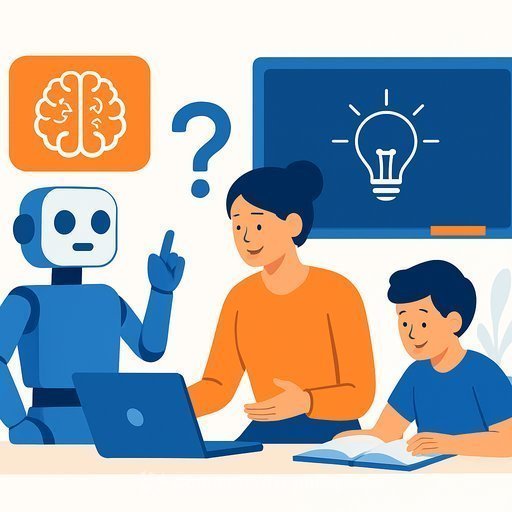
The core idea is straightforward: adapt content to each learner's needs and pace, while teachers focus on feedback, projects, and relationships. That promise is real. The risks are real, too.
What could improve right now
- Personalized practice: Dynamic pathways that adjust based on student responses.
- Feedback at scale: Quick, specific comments on drafts, code, and problem steps.
- Differentiation support: Multiple reading levels, multilingual summaries, alternative explanations.
- Teacher workflow: Draft rubrics, generate exemplars, convert lesson outlines into activities.
- Mastery tracking: Skills broken into observable targets with visibility for students and families.
Legitimate concerns you should raise
- Equity and access: Will every student and teacher have stable devices and broadband?
- Data privacy: What student data is collected, where is it stored, and who can use it?
- Bias and fairness: How are models audited for demographic bias and error patterns?
- Overreliance: Do students still struggle productively, or does the tool do the thinking?
- Assessment integrity: How will we verify original work and measure actual learning?
- Transparency: Can teachers see why the system recommended a path or a score?
- Workload creep: Will new tools add tasks without removing old ones?
- Total cost: Beyond licenses - PD, integration, security, and support.
From proficiency to mastery, practically
Mastery-based learning works when targets are clear, feedback is frequent, and students can revise. AI can help with the middle layer - quick checks, targeted practice, and timely hints - so teachers can spend more time on discourse and projects.
That shift fails without solid guardrails. Treat AI like any high-impact tool: define its job, measure its effects, and keep humans in charge.
District guardrails that prevent headaches
- Policy: Clear rules for acceptable use, data retention, and parent communication.
- Procurement: Require proof of efficacy, bias testing, and privacy compliance (e.g., FERPA/COPPA).
- Data governance: Restrict PII exposure, disable model training on student data, log access.
- Transparency: Provide explainability reports and educator-facing override controls.
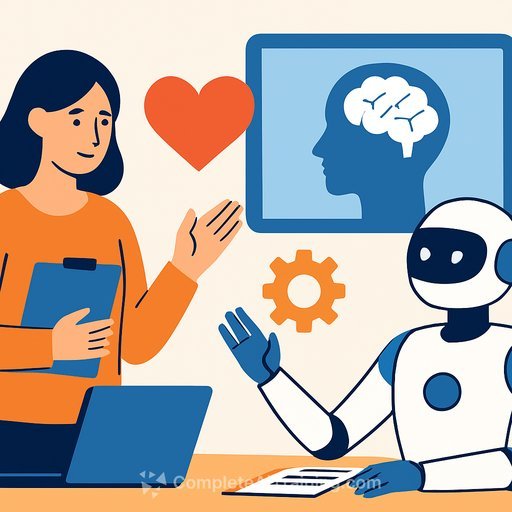
- Human oversight: Teachers approve final feedback, grades, and interventions.
- Accessibility: WCAG-compliant interfaces and offline/low-bandwidth options.
90-day pilot plan you can run
- Weeks 1-2: Define 2-3 mastery targets per course. Pick one AI tool. Get opt-ins, set norms.
- Weeks 3-4: Baseline data - short pre-assessments, student surveys on confidence and workload.
- Weeks 5-8: Use AI for practice, hinting, and feedback in one unit. Track time-on-task and revisions.
- Weeks 9-10: Post-assessment and writing sample without AI. Compare growth and error types.
- Week 11: Debrief with students and teachers. Keep what worked, cut what didn't.
- Week 12: Share a short report with metrics, teacher stories, and next steps.
Questions to ask any AI vendor
- Evidence: In similar grades/subjects, what gains did you see and over what timeframe?
- Bias: How do you test for disparate impact? Share your latest results and fixes.
- Privacy: Do you train models on our data? Where is data stored? For how long?
- Controls: Can teachers see and edit AI feedback, hints, and scores?
- Audit: Can we export logs of prompts, responses, and student actions?
- Integration: Do you support our LMS and rostering? What's the support SLA?
- Costs: All-in cost including PD, onboarding, and additional licenses after year one.
Teacher practices that make AI useful (and safe)
- Set boundaries: Define what AI can and cannot do on each assignment.
- Make thinking visible: Require outlines, drafts, and short process reflections.
- Assess without AI: Use cold writes, oral checks, and whiteboard problem solving.
- Use exemplars: Show high-quality work and annotated reasoning steps.
- Teach prompt hygiene: Guide students to ask better questions and verify outputs.
How to measure impact beyond test scores
- Revision quality: Are second drafts meaningfully better than first drafts?
- Error patterns: Are misconceptions dropping, or just the easy mistakes?
- Transfer: Can students apply skills to a new context without AI support?
- Engagement: Track completion rates, time-on-task, and voluntary practice.
- Teacher time: Minutes saved on grading and planning, repurposed for feedback.
Helpful guidance
- U.S. Office of Ed Tech: AI and the Future of Teaching & Learning
- UNESCO: AI in Education - policy and practice
Professional learning for your team
If you're building staff capacity, consider short, focused training that ties AI directly to lesson planning, feedback, and assessment. Start with one workflow, measure, then expand.
Your perspective matters
Would adapting content to individual needs through AI improve learning in your classroom or district? What concerns do you have about this approach?
Share your thoughts at civiltalk@iniusa.org or join the conversation on our Facebook page. Selected responses will appear in the Dec. 20 Daily State News.
Bottom line: AI can support a move from test proficiency to genuine mastery - if we keep students at the center, set clear rules, and measure what matters.
Your membership also unlocks: