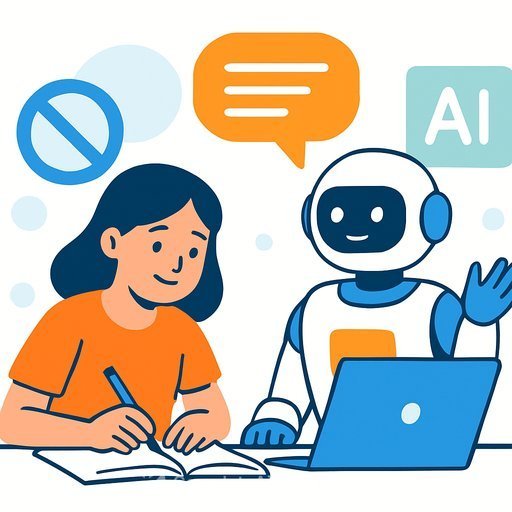
Future of AI in Education: Trends, Skills, and Job Impact
AI is no longer an experiment in schools. It's quietly becoming core infrastructure. The biggest changes start behind the scenes, then reach the classroom. That means the decisions you make now will set the tone for your staff, your students, and your outcomes in 2026 and beyond.
The point isn't to add more tools. It's to rethink systems, skills, and jobs. Here's what matters, what to change first, and how to prepare your team without losing focus on teaching and learning.
Key Trends You'll See Next
- AI as institutional infrastructure: Scheduling, admissions, student support, compliance, and reporting are being automated first. These areas feel safe, measurable, and cost-effective. They free staff time for student-facing work.
- From tools to systems: We're moving past "use a chatbot for writing." AI systems now guide pacing, suggest next steps, track progress, and support advising. Voice input is rising, which helps younger learners and students with disabilities.
- Assessment is being reworked: Take-home essays and routine quizzes are weaker signals of learning in an AI-available world. More schools are shifting to live tasks, projects, discussions, oral defenses, and process evidence.
- Governance matters: Clear rules for data, privacy, fairness, and accountability reduce risk and build trust. Expect audits, model usage logs, and procurement standards to become normal practice.
Skills Students Actually Need (Beyond "Using AI")
- Judgment and verification: Know when to use AI, when to hold back, and how to check outputs. Students should compare sources, cite what AI helped with, and explain the reasoning behind final answers.
- Critical thinking and communication: AI can produce content. Students must produce clarity-structured thinking, persuasive writing, and the ability to explain a process step by step.
- AI fluency: Baseline knowledge of how models work, their limits, and common failure modes. Students should keep prompt logs, version their work, and show how AI influenced the result.
- Adaptability: Roles change. Skills stack. The ability to learn fast, reskill, and transfer knowledge is now a core competency.
- Ethical use: Privacy, bias, consent, and accountability in real contexts. Not theory alone-applied judgment.
What to Change in Curriculum and Assessment Now
- Set clear AI-use policies in the syllabus: Define allowed tools and tasks, disclosure expectations, and consequences. Make it simple and consistent across courses.
- Require process evidence: Drafts, prompt logs, reasoning traces, citations, and reflections. Grade the thinking, not just the final product.
- Increase live components: In-class writing, whiteboard problem-solving, oral checks for understanding, and quick defenses of work.
- Update rubrics: Add criteria for reasoning quality, verification, responsible AI use, and communication clarity.
- Guarantee equitable access: Provide a common set of AI tools or built-in alternatives and training so all students can participate fairly.
- Protect data: Limit student PII in prompts, prefer institution-approved tools, and record consent where needed.
Job Impact Inside Education
- Teaching time shifts: Routine grading, progress tracking, and basic assessments will be automated. Educators focus more on discussion, mentoring, feedback, and motivation.
- New roles emerge: AI Coordinator (implementation and training), Learning Designer (AI-informed curriculum), Data Reviewer (quality and bias checks), and Ethics Lead (policy and audits).
- Career services evolve: Guidance will lean into skill-based pathways, micro-credentials, and real-time market data. Degrees still matter-skills matter sooner.
- Mind the gap: Unequal access to AI creates new inequities. Budget, devices, connectivity, and policy must close that gap, not widen it.
A Practical 90-Day Plan
- Weeks 1-2: Pick two low-risk operations to automate (e.g., appointment scheduling and standard reports). Draft a one-page AI-use policy for students and staff.
- Weeks 3-4: Run a pilot in 2-3 courses: add process evidence, one in-class assessment, and a short oral defense. Collect feedback.
- Weeks 5-6: Train faculty on prompt logging, verification workflows, and rubric updates. Provide a simple "allowed tools" list.
- Weeks 7-8: Stand up a small governance group (IT, legal/compliance, faculty, student rep). Define procurement standards and data rules.
- Weeks 9-10: Publish equity measures: access guidelines, lab availability, device support, and alternative paths for students with limited access.
- Weeks 11-12: Review pilot results, refine policy, and plan the next term's rollout across departments.
FAQ
1) How is AI currently being used in education?
Primarily behind the scenes. Scheduling, admissions workflows, student support triage, compliance reporting, and standard documentation are common. These improvements reduce administrative load so educators can spend more time teaching and supporting students.
2) Will AI replace teachers?
No. It will reduce routine tasks like grading and progress tracking. That frees teachers to focus on discussion, mentoring, feedback, and the human side of learning that tech can't replace.
3) What skills will students need?
Critical thinking, clear communication, and the ability to verify AI output. Students should question results, cross-check sources, and explain their reasoning-then use AI as a tool, not a crutch.
4) How will assessment change?
Expect more projects, in-class work, discussions, and process-based evaluation. The spotlight shifts from "Did you use AI?" to "How did you think, verify, and learn with support from AI?"
5) How will AI affect education-related jobs?
New roles will grow: AI Coordinator, Learning Designer, Data Reviewer, and Ethics Lead. Career guidance will move toward skill-based pathways tied to live labor-market data and shorter, stackable learning options.
Governance and Policy Resources
Build Educator Capability
If your team needs structured upskilling, explore practical AI courses by job role or skill area.
Final Thoughts
AI will change how institutions run, how students learn, and how educators work. The winners won't be the fastest adopters-they'll be the clearest thinkers. Start with policy, equity, and assessment design. Teach judgment and verification. Use AI to give teachers more time with students. That's the real upgrade.
Your membership also unlocks: