The Transformation of Education Through AI
Education is changing as artificial intelligence becomes more common in classrooms. AI-powered tools are no longer just experimental; students are actively using chatbots for brainstorming, writing, summarizing, and analyzing content. This shift challenges educators to consider what aspects of learning remain uniquely human when AI can create content and evaluate performance.
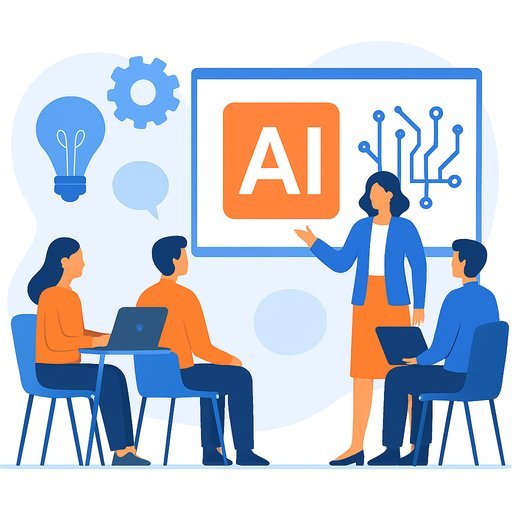
At a recent gathering of digital learning advocates, the focus was on how AI is reshaping education. The key message was clear: technology should keep humans at the center. While AI speeds up and supports learning, human qualities like judgment, empathy, and ethics must guide its application.
Benefits and Challenges of AI in Education
AI offers many advantages: personalized learning experiences, real-time feedback, language translation, support for learners with disabilities, and automated content creation. However, these come with challenges educators can no longer ignore. Entry-level jobs such as research, transcription, scheduling, basic writing, and social media management are increasingly handled by AI. These roles traditionally helped young professionals develop critical thinking, communication, and decision-making skills.
Educators face a pressing question: how can schools prepare students when these early career stepping stones might disappear?
Focusing on Human Skills Beyond AI
Instead of shielding students from AI, education should empower them to develop skills that machines cannot replicate. These include collaborative problem-solving, ethical reasoning across cultures, persuasive communication, relationship building, and compassionate leadership. Such skills will define the human advantage in environments where AI is common.
Responsible Use of AI in Learning
Keeping humans involved means guiding educators and learners to use AI responsibly. AI is not here to replace teachers but to enrich education. Teachers must review and contextualize AI output, teach students to ask critical questions, and verify information. Integrating AI literacy into subjects like digital citizenship and media ethics is essential.
For students, AI should be a starting point, not the final answer. By rewriting chatbot-generated content for clarity and empathy, students sharpen their communication skills. They also learn to compare responses from different AI tools and recognize biases or errors.
Custom AI Tools and AI Resilience
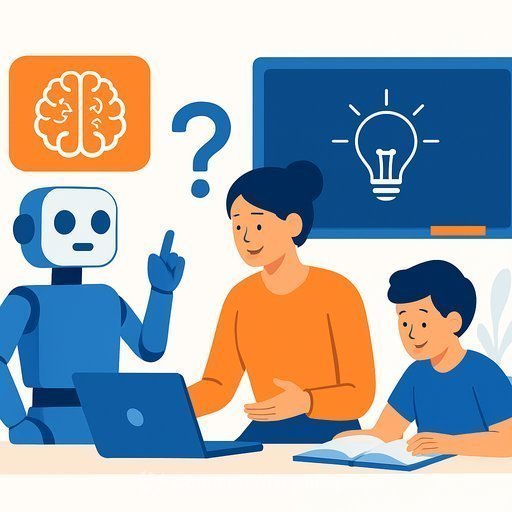
Some schools are developing custom AI chatbots trained on local curricula, school values, and teaching styles. These AI models encourage inquiry rather than just delivering answers. This approach promotes deeper understanding while allowing schools to monitor usage and align AI tools with educational goals.
Preparing students for success means going beyond digital literacy to build AI resilience. This involves helping learners adapt, reskill, and thrive as automation changes the job landscape. Curriculum development should emphasize project-based learning, real-world simulations, mentoring, creative entrepreneurship, and scenario-based AI training. These experiences foster originality, accountability, and leadership—traits machines cannot replace.
Balancing AI and Human Strengths
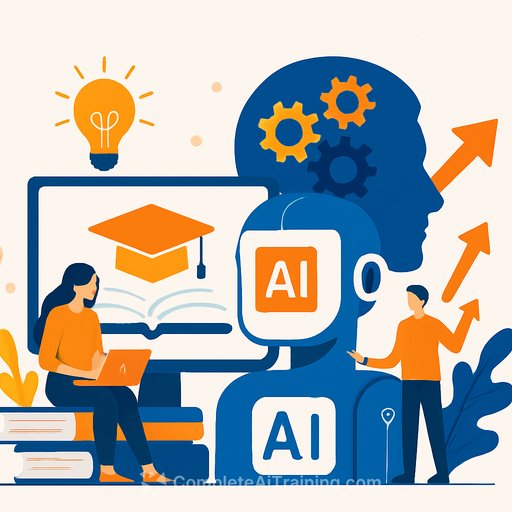
The future of education is not about choosing between humans and machines. It’s about using AI to amplify human strengths like creativity, compassion, and critical thinking. Teaching students how to use AI tools is important, but teaching them how to lead with AI will make the difference.
For educators looking to deepen their understanding of AI in education and develop relevant skills, exploring AI courses tailored for education professionals can be a practical next step.
Your membership also unlocks: