The Health Care AI Shift: Surya Gummadi on Its Impact Across Providers, Payers, and Biopharma
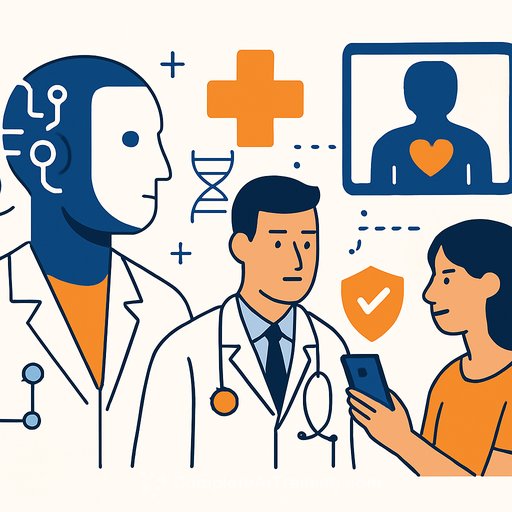
Artificial intelligence is becoming a familiar tool for both clinicians and patients in diagnosing illnesses and injuries. However, the growing use of AI in health care presents a mixed picture. While it offers new support for medical professionals, it also introduces challenges like misinformation that can affect patient outcomes.
Why This Matters
The global health care AI market was valued at over $26 billion in 2024, with projections exceeding $187 billion by 2030. Advances in generative AI technologies such as ChatGPT have expanded the range of AI-powered tools available to clinicians. At the same time, patients increasingly access AI-driven resources, which changes how health care is delivered and experienced.
Key Insights for Health Care Professionals
Elsevier's Clinician of the Future 2025 survey, involving 1,781 doctors and 425 nurses worldwide, highlights several trends in clinical care:
- 28% of clinicians report insufficient time to provide quality care for each patient.
- 69% are seeing more patients than two years ago, with 47% experiencing fatigue that affects care delivery.
- Patients increasingly turn to AI-powered chatbots and diagnostic tools for health information.
- 51% of health care professionals believe that within 2-3 years, most patients will self-diagnose using online AI tools instead of consulting a clinician.
These shifts bring new challenges. Medical misinformation is a growing concern, with 74% of U.S. clinicians stating it hinders patient compliance. Over half (53%) spend part of their appointments correcting false or misleading information patients have acquired.
Clinicians are also not adopting AI as quickly as patients. Although 95% see benefits in generative AI for clinical tasks, only 16% currently use AI in direct decision-making. Nearly half (48%) want to increase AI integration, but just 32% feel their institutions provide adequate AI access, and only 30% report sufficient training.
Patients mostly rely on public AI chatbots that lack clinical oversight, which can contribute to inaccuracies. Despite this, engagement with AI tools continues to rise, with 75% of clinicians emphasizing the importance of factual accuracy in AI applications.
Voices from the Field
Jan Herzhoff, president of Elsevier Health, stated: "As the health care industry faces increased demands and limited resources, clinicians have identified many ways AI can improve care quality and patient outcomes more quickly. This is a transformative period, and collaboration with the health care community is essential to maximize AI’s benefits for patients."
Looking Ahead
Health care organizations are expected to increase investments in AI integration, governance, and training for clinicians. Addressing the gap between patient use and clinician adoption will be critical to ensuring AI supports accurate diagnoses and effective treatment.
For health care professionals interested in expanding their AI skills, exploring specialized courses can provide valuable knowledge on how to effectively incorporate AI tools in clinical practice. Consider visiting Complete AI Training's healthcare courses for targeted learning opportunities.
Your membership also unlocks: