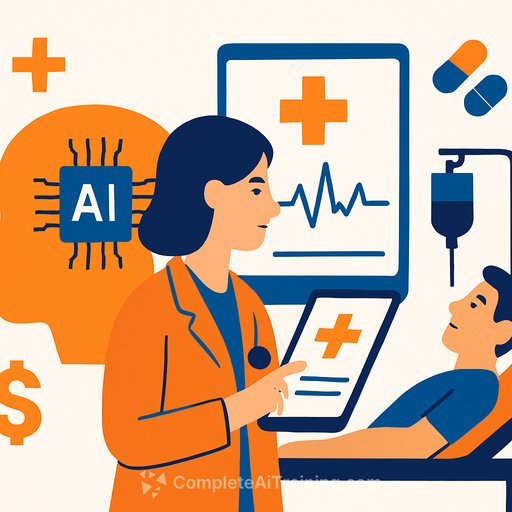
AI in Health Care: Potential Benefits and Real-World Challenges
Artificial intelligence (AI) promises faster diagnosis by instantly analyzing a patient's medical history, genetic data, and wearable devices. This speed could save countless lives and reduce costs significantly. A 2023 study estimated that wider AI adoption in health care might save up to US$360 billion annually.
Despite AI's widespread presence in everyday technology, its impact on health care remains limited. A 2024 survey by the American Medical Association showed 66% of U.S. physicians used AI tools, mostly for administrative tasks rather than direct medical decisions. While 43% of health care organizations expanded AI use, many efforts are still in early stages, especially regarding diagnosis and treatment.
Challenges with Accuracy and Bias
AI’s strength lies in detecting patterns in large data sets, which can help identify diseases early or suggest treatments based on similar patient outcomes. Hospitals can also use AI to optimize scheduling and resource use, reducing administrative workload and freeing clinicians to focus on patients.
However, AI systems are not infallible. They can give incorrect diagnoses, especially when faced with cases that differ from their training data. This is known as algorithmic drift, where AI performs well in controlled environments but struggles in real-world settings.
Racial and ethnic bias is another serious concern. If training data lacks diversity, AI recommendations may be less accurate for underrepresented groups, increasing the risk of misdiagnoses. Evidence suggests this has already occurred in some cases.
Data Privacy and Transparency Issues
Integrating AI into health care workflows is complicated. Introducing AI tools disrupts established routines and requires staff training. Many health care providers lack the time, personnel, or budget to implement AI effectively.
Another hurdle is the "black box" nature of many AI systems—they provide recommendations without clear explanations. This lack of transparency conflicts with medical standards where decisions must be justified. Developers often keep algorithms proprietary to protect intellectual property, which deepens practitioners' skepticism and slows regulatory approval.
Privacy is also a major concern. AI systems require vast amounts of patient data, raising risks of breaches or misuse. Laws like HIPAA impose strict rules on health data handling, so AI developers must implement strong safeguards. Patients who worry about data misuse may hesitate to share information or accept AI-guided care.
Unrealistic expectations add to the challenge. AI is often hyped as an instant fix for all health care problems, which can lead to disappointment when progress is slower and more incremental.
Gradual Adoption and Practical Uses
Currently, AI is making the most headway in administrative tasks. Over 20% of physicians use AI to draft clinical notes or discharge summaries, cutting paperwork and freeing up time for patient care. AI chatbots handle appointment scheduling, patient triage, and language translation in some facilities.
Clinical applications exist but are still limited. AI assists radiologists by highlighting possible disease markers, but only about 12% of physicians rely on AI for diagnostic decisions. The health care industry is adopting AI step by step, balancing innovation with safety and effectiveness.
Developing reliable AI tools requires extensive testing and continuous adjustments as they encounter new data and scenarios. This measured approach ensures patient safety remains the priority while AI demonstrates its value over time.
Looking Ahead
AI holds promise to improve diagnosis speed, personalize treatment, and reduce costs in health care. But it faces significant technical, ethical, and practical barriers before widespread clinical adoption can happen. For health care professionals, staying informed about AI’s capabilities and limitations will be essential as these tools become more common.
For those interested in expanding their AI skills in health care, exploring specialized training can provide practical knowledge and keep you prepared for future developments. Visit Complete AI Training's courses by job for resources designed specifically for professionals in the medical field.
Your membership also unlocks: