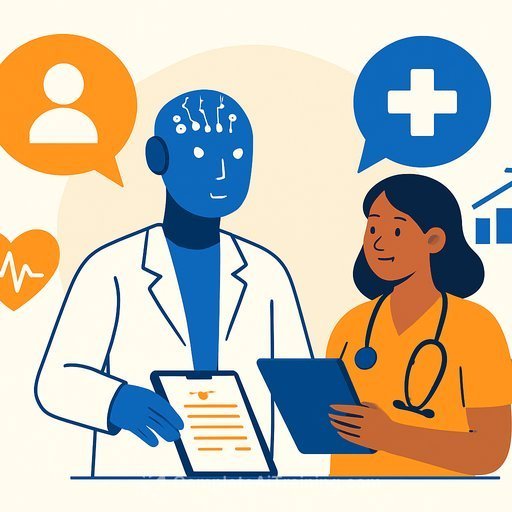
AI and healthcare: useful innovation and collaboration or just another tech tool?
AI, for this discussion, is the ability of a machine to communicate, reason, and operate independently, similar to a human. In healthcare, that matters only if it reduces risk, saves time, or improves outcomes. The difference between "useful innovation" and "just another tool" comes down to the way we implement it, govern it, and integrate it into clinical workflows.
What changed after COVID-19
The pandemic pushed digital health forward. Teleconsults, home-visit bookings, and infection-control workflows became normal, especially across Asia, and then spread globally. Data sharing across borders supported surveillance and response. That same data flow made AI a serious contender for everyday healthcare work.
From data to action: DIKA in practice
Think DIKA: Data → Information → Knowledge → Action. AI speeds that path. It organizes complex records, surfaces real-time signals during surgery and recovery, and flags what matters so clinicians can act.
- Administration: intake, scheduling, triage routing, documentation, and claims processing.
- Clinical decision support: imaging reads, risk scores, treatment suggestions with citations.
- Patient monitoring: early warnings from vitals and labs, fall-risk alerts, medication adherence.
- Perioperative and ICU support: real-time updates, checklist compliance, supply readiness.
- Research enablement: cohort building, literature synthesis, and data abstraction from notes.
Where AI adds value you can measure
- Time saved on documentation and admin, freeing capacity for direct care.
- Shorter wait times and better throughput in imaging and outpatient clinics.
- Earlier detection of deterioration and sepsis risks with continuous monitoring.
- More consistent notes and coding, which reduces denials and rework.
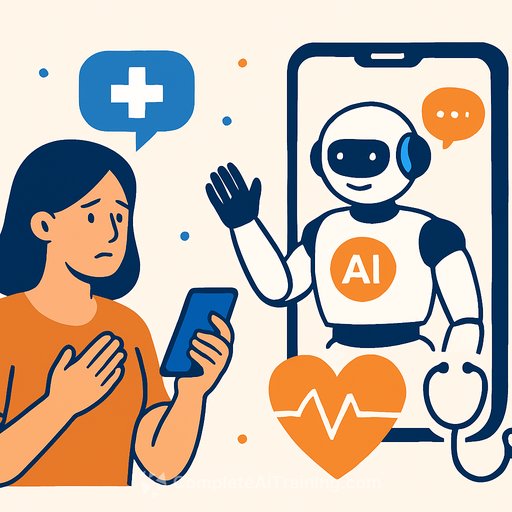
- Improved access via language support and after-hours triage.
Risks you must control (ethics, data, and safety)
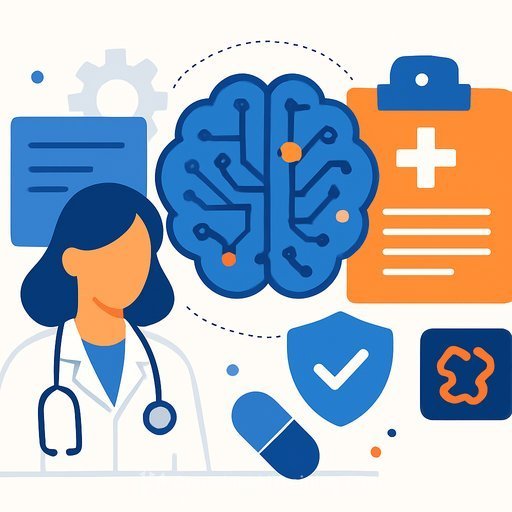
AI relies on big data. That means consent, data rights, privacy, and security are non-negotiable. It also means clear guardrails on what models can use and how results are audited.
- Data governance: define purpose, data minimization, access controls, retention, and audit trails.
- Privacy and security: de-identification where possible, encryption, and breach response plans.
- Bias and fairness: test across subgroups; track performance drift and retrain when needed.
- Clinical validation: compare against standard of care; monitor in production with clear KPIs.
- Transparency: document sources, limitations, and instructions for use.
- Human oversight: confirm critical outputs, enable easy clinician override, and capture feedback.
For reference frameworks, see the WHO guidance on ethics and governance of AI for health and the FDA's page on AI/ML-enabled medical devices.
Implementation playbook for healthcare leaders
- Start with one high-friction use case (e.g., discharge summaries, imaging triage, or no-show reduction).
- Check data readiness: quality, labeling, privacy basis, and interoperability.
- Run a risk screen: clinical severity, failure modes, escalation paths, and human checkpoints.
- Decide build vs. buy; require model cards, validation data, and a post-deployment monitoring plan.
- Pilot in one unit; measure baseline vs. post-implementation; review weekly with front-line staff.
- Integrate into workflow (EHR buttons, order sets, alerts) and remove extra clicks.
- Set metrics that matter: safety events, turnaround time, staff minutes saved, patient satisfaction.
- Formalize governance: approval gates, change control, drift monitoring, and incident reporting.
- Train staff and refresh regularly; gather feedback and iterate.
Collaboration that actually works
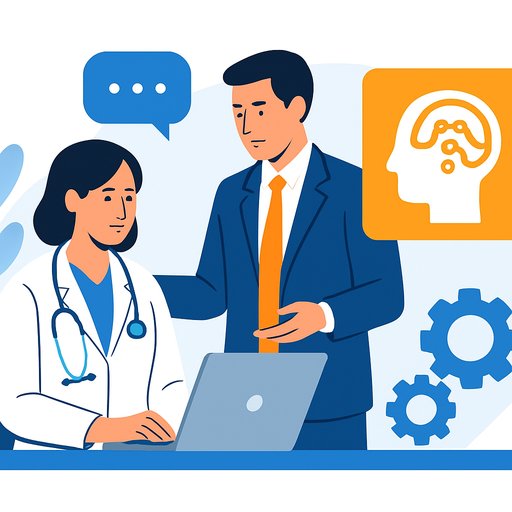
AI succeeds when clinicians, data teams, operations, and vendors work as one unit. Clinicians define the problem and acceptable risk. Data teams validate models and watch for drift. Operations make the workflow stick. Legal and compliance keep the system safe.
What AI is-and what it isn't
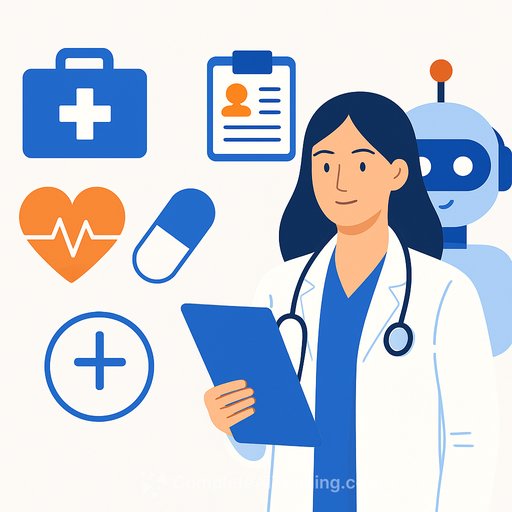
AI is a force multiplier for repetitive tasks and complex pattern recognition. It turns messy data into usable signals. It is not an autopilot for clinical judgment. Final accountability stays with your care team.
Skills your teams need
- Clear prompting and review skills for clinical and admin tasks - see Coding resources.
- Knowing when to trust, verify, or escalate AI outputs.
- Documentation, traceability, and incident reporting for AI-assisted decisions.
If you're building internal skills, you can explore job-specific upskilling paths here: Complete AI Training - courses by job.
Conclusion: more than a tool, if we make it so
AI in healthcare is more than a shiny add-on. With the right governance and real workflow integration, it can support better outcomes, broader access, and more personalized care while reducing cost and waste. The future depends on collaboration between people and technology-and steady, thoughtful fine-tuning to keep it safe and effective.
Your membership also unlocks: