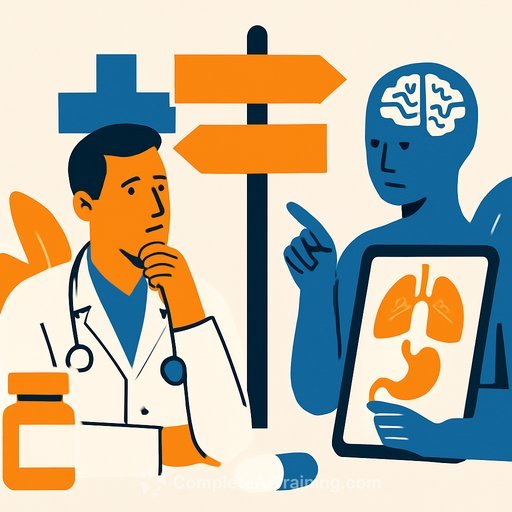
Artificial Intelligence (AI) in Healthcare: Benefits, Challenges, and Real-Life Use Cases
AI is moving fast in healthcare. Reports project the market to exceed $200 billion by 2030, fueled by advances in machine learning, natural language processing, and predictive analytics.
Clinically, it means earlier detection, tighter risk management, and smoother operations. The upside is real, but so are the questions around privacy, bias, and how to make all the tech work with the systems you already use.
What Is AI in Healthcare?
AI in healthcare uses algorithms and machine learning models to support clinical decisions, analyze data, and improve patient care. It augments clinician judgment with speed and pattern recognition.
- Analyze medical data quickly and at scale
- Detect patterns in imaging, labs, and EHRs
- Automate repetitive administrative tasks
- Support evidence-based decision-making
In short, it helps teams deliver care that's faster, safer, and more individualized.
Key Benefits of AI in Healthcare
1. Faster and More Accurate Diagnosis
AI can flag early signs of cancer, pneumonia, and stroke in CTs and X-rays, often within seconds. For example, Google's DeepMind reported over 94% accuracy for certain eye disease detections, helping clinicians prioritize the right cases sooner.
2. Personalized Treatment Plans
By combining medical history, genetics, and lifestyle data, AI recommends individualized therapies. Patients get plans that fit their risks, preferences, and likely response.
3. Predictive Analytics for Early Intervention
Risk models surface who is likely to develop heart failure, diabetes complications, or sepsis. That gives teams time to intervene before a small issue becomes a crisis.
4. Automation of Administrative Tasks
Scheduling, prior auth, and claims are prime targets for automation. Less time on paperwork means more time for patients and fewer errors across the revenue cycle.
5. Drug Discovery and Development
AI screens millions of compounds, predicts interactions, and informs trial design. It trims costs and timelines while focusing resources on the most promising candidates.
6. Enhanced Patient Engagement
Virtual assistants and chatbots answer common questions, guide symptom checks, and nudge medication adherence. Access improves without adding staff burden.
Real-Life Use Cases
- Medical Imaging and Diagnostics: Tools from groups such as Aidoc support radiologists by flagging anomalies in CTs, MRIs, and X-rays, reducing turnaround times and catching misses.
- Drug Discovery and Clinical Trials: Pharma leaders like Pfizer and Novartis use AI to spot viable molecules, model outcomes, and streamline protocols.
- Virtual Nursing Assistants: Platforms such as Sensely and Ada Health help patients triage symptoms, book visits, and follow care plans from home.
- Genomics and Precision Medicine: AI interprets genomic data to identify variants and guide targeted treatments for cancer and rare diseases.
- Hospital Operations: Predictive tools forecast bed occupancy, staff needs, and patient flow to reduce bottlenecks and delays.
- Remote Patient Monitoring: AI watches vitals in real time, detects deterioration, and alerts care teams before an ED visit is needed.
Challenges You Need to Solve First
- Data Privacy and Security: AI requires large volumes of PHI. Ensure policies and workflows align with HIPAA privacy and security rules.
- Bias and Accuracy: Models trained on unrepresentative data can miss key patient groups. Validate for fairness across demographics and care settings.
- Integration with Legacy Systems: Many EHRs and imaging systems aren't plug-and-play. Favor solutions with proven interoperability and clear implementation paths.
- High Implementation Costs: Budget for data pipelines, model monitoring, and change management-not just licenses.
- Ethical and Regulatory Considerations: Define accountability, transparency, and consent. Track evolving guidance such as the FDA's work on AI/ML-enabled software as a medical device (SaMD).
The Future of AI in Healthcare
AI won't replace clinicians; it will extend their reach. Expect tighter links between diagnostics and wearable data, smoother notes with voice tools, and smarter hospital operations.
- AI diagnostics connected to wearable streams for continuous context
- Voice-based clinical documentation with fewer clicks and cleaner notes
- Predictive bed, OR, and staffing management to reduce delays
- AI-supported public health surveillance for earlier outbreak signals
A Practical Start for Healthcare Teams
- Pick one high-value use case: Imaging triage, sepsis alerts, denials reduction, or no-show prediction. Keep scope tight.
- Do a data and governance check: Data quality, access controls, consent, and model monitoring plans.
- Build the right team: Clinician lead, data science, IT/EHR, compliance, and an ops owner with authority.
- Choose vendors carefully: Demand integration proofs, bias testing, and measurable outcomes.
- Pilot, then scale: Start small, measure clinical and financial impact, refine workflows, and expand.
- Upskill your staff: Short courses on AI basics, clinical validation, and prompt skills help adoption. See curated options by role at Complete AI Training.
Conclusion
AI is already embedded in modern care. It cuts diagnostic delays, speeds drug research, engages patients at scale, and lightens admin load.
The wins come with responsibilities: protect privacy, reduce bias, and make systems talk to each other. With clear governance and clinician-led pilots, AI can deliver safer, faster, and more accessible care for your patients.
Your membership also unlocks: