The Impact of AI on Higher Education
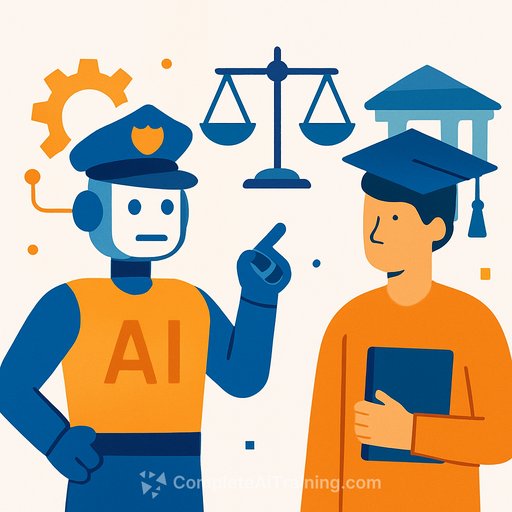
Artificial intelligence has made a significant entrance into higher education, stirring debate and reshaping expectations. Initially, educators expressed concern over students using AI tools like ChatGPT to complete assignments. This led to stricter policies and updated plagiarism detection software aimed at discouraging unauthorized AI assistance.
However, the conversation quickly shifted. Students started pointing out that teachers were increasingly relying on AI themselves. Some instructors, like Diane Gayeski at Ithaca College, openly use ChatGPT to review student papers and encourage students to use AI for proofreading. This raises the question: is AI merely a fringe tool or becoming a standard part of academic life?
University of Michigan Law School's Approach
The University of Michigan Law School offers an interesting case study. They’ve introduced an application essay that must be answered using generative AI. The question asks applicants to describe their current and expected future use of AI tools like ChatGPT throughout law school:
- Current Use of Generative AI Tools: How much do you use these tools now?
- Predicted Future Use: How much do you expect to use them by graduation?
- Reasoning: Why do you expect your usage to change?
This requirement stands out, especially since the law school restricts AI use in other application parts like personal statements. It’s a unique way to gauge applicant attitudes toward AI integration in legal education.
Potential Implications for Applicants
Applicants might hesitate to fully embrace AI in their answers. Admitting heavy AI use could raise concerns about the authenticity of other application materials. The safest path might be to provide measured responses, such as minimal current use and conditional future use based on school policies.
To illustrate, here’s a sample response generated by ChatGPT:
- Current Use: I occasionally use generative AI for brainstorming, summarizing legal concepts, and clarifying complex topics. While helpful for quick overviews or simplifying dense material, I rely primarily on traditional resources for deep study.
- Future Use: I expect to increase my AI use throughout law school, especially as tools improve and integrate with legal research platforms. Tasks might include drafting practice memos, issue spotting, and exam prep, always with a critical eye on accuracy and ethics.
- Reasoning: The legal profession is adopting AI tools, and staying proficient with them will be essential. AI can help manage large volumes of information, but legal standards must remain paramount.
This answer strikes a reasonable balance, acknowledging AI’s utility while underscoring caution and ethical considerations.
What This Means for Legal Education
Inviting AI-assisted responses on applications could signal a shift in how law schools view technology’s role in learning and assessment. While it may not be the ideal method to evaluate reasoning skills, it reflects the growing acceptance of AI in legal education.
For legal professionals and educators, this development underscores the need to understand how AI fits into academic and professional settings. It also points to the importance of clear policies that balance innovation with integrity.
Prospective law students applying to the University of Michigan or elsewhere should use AI thoughtfully and transparently. And for those interested in expanding their AI skills in legal contexts, exploring relevant AI courses can offer practical advantages.
For more on AI applications in legal work and training resources, visit Complete AI Training's legal courses.
Your membership also unlocks: