AI In Indian Classrooms: Implications For Pedagogy, Equity, And Systemic Reform
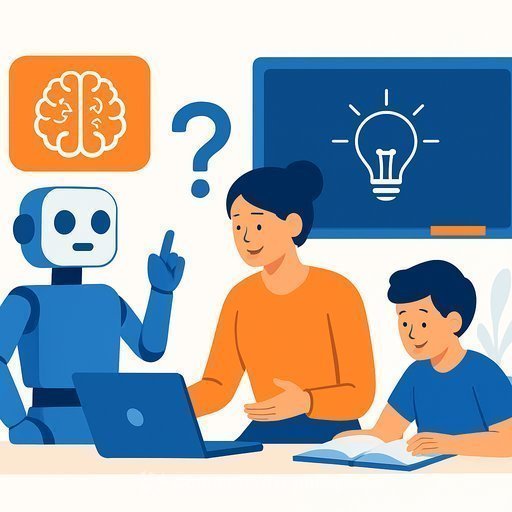
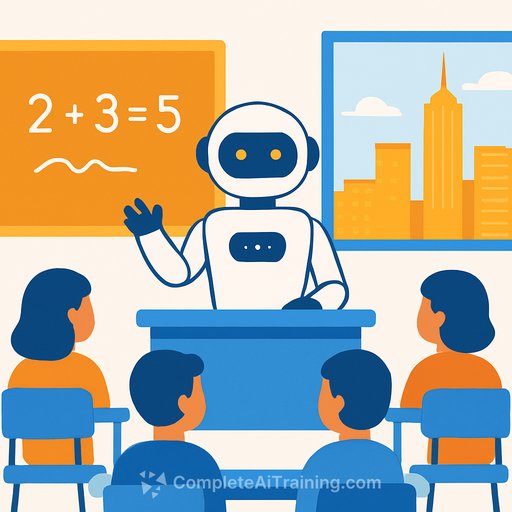
Generative AI has moved from novelty to daily habit for students. It drafts, explains, translates, and tutors on demand. The core question for Indian schools is simple: how do we stay relevant when information retrieval and basic writing are automated?
Ignoring this shift is not an option. The work now is to redefine what learning looks like in mixed online-offline lives, and to do it in a way that is fair, rigorous, and culturally grounded.
What's actually happening in classrooms
Students are already using AI for explanations, grammar checks, and quick problem hints-often outside a teacher's line of sight. Teachers are testing AI for lesson prep, assessments, and admin, but confidence and competence vary widely. That unevenness creates unpredictable classrooms.
If tasks stay recall-heavy or procedural, AI will ace them. That erodes assessment validity and widens gaps between students who can use AI and those who cannot. Schools risk becoming places that check memory instead of developing judgment, interpretation, and higher-order thinking.
The equity fault lines we can't ignore
- Connectivity: A large share of schools still lack stable internet, with deeper gaps in rural areas and government schools.
- Language: Most models perform best in English; Hindi support is uneven; many Indian languages get minimal coverage.
- Devices: Household access is unequal; girls in low-income or conservative settings often have less access to smartphones or personal devices.
Without deliberate action, AI will amplify existing divides. With the right Design choices, it can expand access-especially for students outside major urban centers.
Health, attention, and ethics
Extended screen use fragments attention and sleep; teachers report lower engagement across long sessions influenced by fast digital content. Data privacy, bias in models, and overreach from classroom surveillance tools are real risks.
Use AI, but with guardrails. Clear policies, minimal data collection, and transparent classroom norms are as important as the tools themselves. See global guidance for context: UNESCO's recommendations on AI in education.
The recalibration: what schools should prioritize
- Move from recall to interpretation, argument, design, and applied problem-solving.
- Blend AI with human reasoning: compare outputs, critique assumptions, and trace logic.
- Use local contexts and multilingual sources so tasks cannot be auto-completed by generic models.
- Make students show thinking: drafts, citations, reflection notes, and oral defenses.
Assessment that still means something
- In-class performance tasks with process evidence (outlines, rough work, voice notes).
- Open-resource assessments that require citation, comparison across sources, and personal justification.
- Short oral vivas to verify authorship and understanding.
- Project rubrics that reward reasoning, collaboration, and ethical use of AI-not just polished answers.
- Capstones tied to community data or school context, where originality is observable.
Infrastructure and access: minimum viable setup
- Shared device carts and offline-first content for low-connectivity schools.
- Indian-language-first tools; encourage bilingual outputs where relevant.
- Content filters, privacy defaults, and clear data-retention limits.
- Printed backups of key materials so learning continues during outages.
Teacher capacity and classroom norms
- Weekly micro-PD: test one AI feature, share results, and standardize what works.
- Classroom AI norms: what's allowed, when to disclose use, how to cite outputs.
- Model "AI as co-pilot": teachers demonstrate critiques, refinements, and verification.
- Template bank: prompts for feedback, rubrics, and formative checks that align with subject goals.
If you need a curated path to skill up, explore practical course collections by job role here: Complete AI Training - Courses by Job.
Policy and system moves that matter
- Set procurement and safety standards for AI tools used in schools, with privacy audits.
- Fund rural connectivity and device-sharing programs; measure access quarterly.
- Exam boards to define AI-allowed tasks, AI-restricted tasks, and disclosure rules.
- Invest in Indian-language datasets and evaluation benchmarks.
- Back Research-practice partnerships so classroom insights guide policy, not headlines.
National frameworks already encourage critical thinking, flexibility, and multilingual learning. Align AI use with those aims rather than bolt it on later. For reference, see India's policy overview: NEP 2020.
Starter kit for the next term
- Add a one-page AI use policy to your syllabus (allowed uses, disclosure, citation).
- Require process evidence on major tasks (drafts, outlines, sources, reflection).
- Convert one homework per unit into an in-class performance check.
- Run 5-minute oral spot checks on AI-assisted submissions.
- Adopt a simple rubric section for "quality of reasoning" and "ethical AI use."
- Assign one local-data project per term to reduce generic AI answers.
- Teach prompt-writing basics and verification steps (cross-check facts, cite sources).
- Set screen hygiene: no-phone blocks during deep work; short movement breaks.
- Create a shared staff folder of tested prompts, exemplars, and model pitfalls.
- Review privacy settings for every tool; collect minimal student data.
The choice ahead
AI can widen gaps or expand opportunity. The difference lies in task design, teacher capacity, assessment integrity, and access. Laws and labs will play their part, but the real work happens in classrooms, staff rooms, and school communities.
Treat this moment as a chance to renew how we teach. Keep what is uniquely human: judgment, empathy, cultural context, and the ability to make meaning together. Let AI do the routine work; let schools do the essential work.
Your membership also unlocks: