AI in Irish Manufacturing: Boosting Profits and Transforming Operations
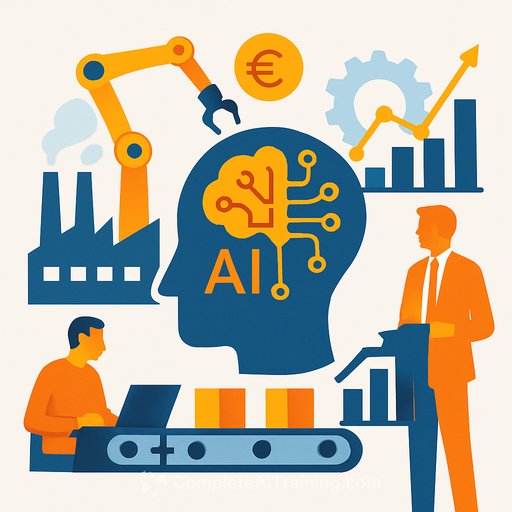
Artificial intelligence (AI) is set to change how manufacturing operates in Ireland. Recent PwC research shows 73% of Irish manufacturers expect AI to increase profits by 2030. This growth comes as the sector faces challenges like the green transition, supply chain disruptions, skills shortages, and rising inflation and energy costs.
However, most companies are still early in their AI journey. Only 3% report significant financial benefits so far, while 70% remain in pilot or scaling phases. This gap highlights the opportunity for growth and the need for clear AI strategies.
How AI Can Transform Manufacturing
AI can improve key manufacturing areas such as procurement, production, R&D, and supply chain management. It supports better decision-making, cost reduction, and profit growth. For supply chains, AI can optimise inventory, forecast demand changes, and streamline logistics.
In production, AI helps improve quality control, minimise downtime through predictive maintenance, and boost equipment efficiency. R&D benefits from faster product development and new problem-solving approaches. Beyond operations, AI can enable new business models, innovative products, and additional revenue streams.
Manufacturers that effectively apply AI will gain an edge in the global market.
Addressing Challenges in AI Adoption
Irish manufacturers face several hurdles in adopting AI. Half of the respondents highlight data quality and IT security as major concerns. Poor data quality reduces AI effectiveness, making data integrity essential. Strong IT security protects sensitive information and AI systems from cyber threats.
Another challenge is the shortage of AI expertise. Recruiting and retaining skilled professionals slows AI progress and limits benefits. Compliance with regulations, especially the EU AI Act, adds complexity. Manufacturers must ensure their AI systems are transparent and meet legal standards.
To overcome these barriers, businesses should:
- Develop a clear AI strategy aligned with business goals.
- Prioritise high-return AI projects for quick wins.
- Build solid technology and data infrastructure.
- Create strong organisational structures and governance for AI.
Success requires aligning people, processes, and systems into an AI-ready organisation.
AI Applications Vary Across Industries
Adoption rates differ by sector. Pharmaceuticals, life sciences, and med-tech use AI extensively in R&D and procurement. Retail and consumer sectors lag behind.
In pharmaceuticals, AI accelerates drug discovery, optimises clinical trials, and improves manufacturing. Med-tech uses AI to enhance diagnostics and personalise treatments. These examples show AI’s broad impact across manufacturing and product development.
What’s Next for AI in Manufacturing
AI’s influence on Irish manufacturing will grow with advances like generative and agentic AI. These technologies can automate complex tasks, create innovative designs, and make manufacturing systems more adaptive.
Realising these benefits demands ongoing investment in technology, people, and processes. Manufacturers must build cultures of continuous learning and adaptation to stay competitive.
With the right approach, Irish manufacturers can increase efficiency, drive innovation, and strengthen their global position. Those who integrate AI effectively will lead in the era of smart manufacturing.
Your membership also unlocks: