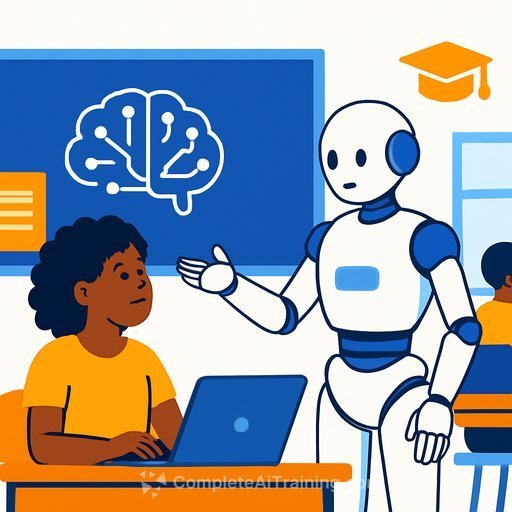
AI in Classrooms: Promise, Pitfalls, and a Practical Path Forward
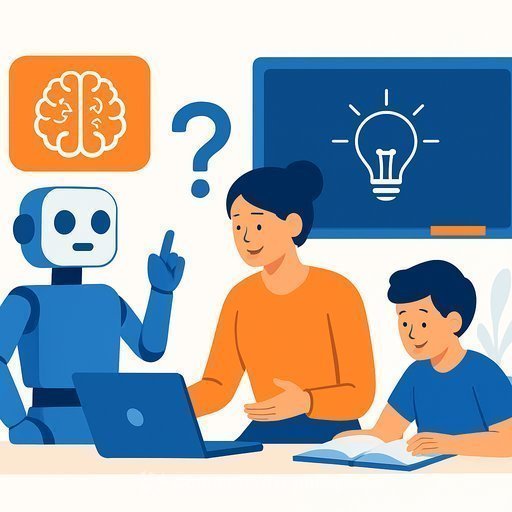
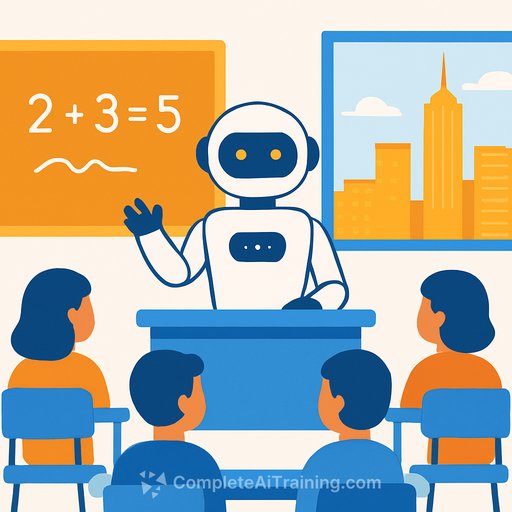
AI tools like ChatGPT, Gemini, and Copilot are moving fast through schools. The upside is clear: personalized practice, quick feedback, and workload relief. The downside is starting to show up in classrooms-reduced focus, weaker reasoning, and widening gaps for students without consistent access.
Recent analysis from the Center for Universal Education at the Brookings Institution warns that the risks can outweigh the benefits when AI use is unregulated or replaces core learning. The OECD echoes this, noting that uncritical use can blunt problem-solving and weaken student agency. In short: if AI drives the lesson, deep learning takes a back seat.
Brookings Institution - Center for Universal Education
OECD - Education
What the research signals (Research)
- Deep learning risk: Over-reliance can shortcut productive struggle, the very thing that builds durable knowledge.
- Weaker agency: If students outsource thinking, they stop making decisions and stop reflecting on how they learn.
- Equity gaps: Uneven access and variable guidance can create two tracks: those who learn with AI, and those who let AI think for them.
- Social development: Solo AI time can crowd out discussion, debate, and peer feedback-key drivers of comprehension.
How districts are responding
- Frankfort-Elberta Area Schools: A policy that centers literacy, ethical use, and responsible integration over bans.
- India's approach: The Prime Minister urged students to use AI for guidance-not dependency-reinforcing discipline and independent thinking.
- New York City: Public schools are developing regulations to balance innovation with oversight.
A practical framework you can apply this term
- Start with outcomes: Define the thinking skill first (analysis, synthesis, problem-solving). Only then decide if AI helps or hurts.
- Create an AI-use taxonomy: Prohibited (e.g., full-solution generation), Allowed with disclosure (idea prompts, outlines), Recommended (feedback on drafts, exemplars for critique).
- Require student disclosures: Short "How I used AI and why" notes keep metacognition front and center.
- Protect deep work: Set "no-AI" phases for reading, note-making, and first-draft writing.
- Use AI for coaching, not answers: Summaries, question generation, and alternative explanations are safer than solution dumps.
- Assessment redesign: Blend in-class writing, oral defenses, and process portfolios to check for genuine understanding.
- Equity guardrails: Provide in-class time, shared devices, and offline alternatives so access doesn't decide achievement.
- Teacher PD as routine: Weekly share-outs on prompts, pitfalls, and samples build practical wisdom fast.
Classroom routines that keep learning first
- First draft by hand, refine with AI: Students write, then use AI to identify gaps or generate counterarguments.
- Three-question check: What did the AI miss? Where is the reasoning weak? How would you test this claim?
- Time-boxed use: 10-15 minutes of AI support, then back to human thinking and discussion.
- Peer-first feedback: Students critique each other before asking AI for suggestions-then compare.
What to tell students
Use AI to stretch your thinking, not to avoid it. Ask better questions, compare explanations, and challenge outputs with your own reasoning. Guidance is good. Dependency erases the very skills you're here to build.
Leadership moves for this quarter
- Publish a clear policy: Age-appropriate guidelines, disclosure expectations, and examples of acceptable use.
- Fund quick-start PD: Short, practical sessions with classroom-ready templates and model lessons.
- Pilot and measure: Run small pilots with defined metrics (engagement, writing quality, problem-solving evidence).
- Align with families: Share the why, show examples, and set common norms for homework use.
- Monitor equity: Track access, provide instructional time, and support students who need structured scaffolds.
Bottom line
AI works in schools when it supports thinking, not when it replaces it. Keep the human work-reading, reasoning, discussion-at the center. Set guardrails, teach AI literacy, and hold the line on deep learning.
Want structured, classroom-ready training? Explore role-based AI courses and templates built for educators: Complete AI Training - Courses by Job. You may also find the AI Learning Path for Primary School Teachers useful for classroom-ready sequences and examples.
Your membership also unlocks: