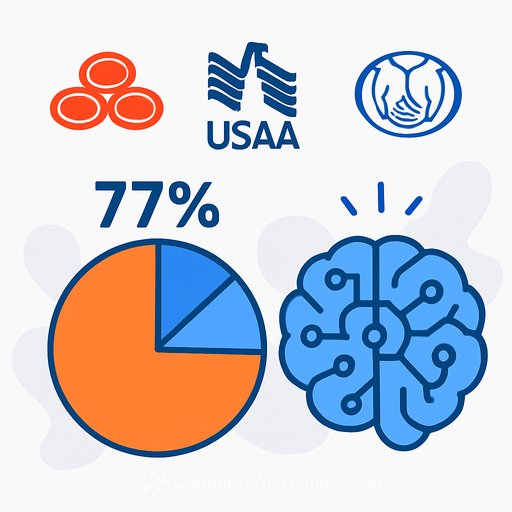
Insurers Increasing AI Investments for Growth and Efficiency
Insurers are boosting their use of artificial intelligence (AI) to improve growth and profitability. According to a new report by credit ratings agency Morningstar DBRS, AI technologies like machine learning and predictive analytics are becoming critical to staying competitive in the insurance market.
In North America, insurers plan to raise the share of their IT budgets spent on AI from 8% in 2024 to over 20% within three to five years, based on a Wipro Limited survey cited in the report.
AI Benefits Across the Insurance Value Chain
AI is delivering real value at multiple points in the insurance process. It enhances operational efficiency and improves core areas such as underwriting and claims management. By automating repetitive tasks and streamlining customer interactions, AI helps lower customer acquisition costs and delivers cost savings.
For example, AI-powered chatbots and virtual assistants simplify the insurance buying process. However, these tools sometimes struggle with complex, customized tasks like claims settlements.
- In property and casualty insurance, AI can assess damages and estimate repair costs using digital images.
- It helps quickly evaluate exposure to natural disasters.
- AI improves fraud detection by flagging suspicious claims and speeding up the approval of legitimate ones.
Operational and Regulatory Risks of AI Adoption
Despite the benefits, AI introduces significant operational risks. Mistakes or biases in underwriting and pricing can lead to costly errors, such as quoting premiums that don’t accurately reflect risk. These issues can directly impact an insurer’s profitability.
Claims processing AI systems are also vulnerable to errors and biases, which may result in regulatory fines or legal problems. Additionally, relying on large datasets to price risk increases exposure to cyber threats.
The regulatory environment for AI use in insurance is evolving, creating extra challenges, especially for smaller insurers with limited resources and data management policies.
The report stresses that while investing in AI is necessary to stay competitive, insurers must also develop strong risk management frameworks to handle the operational and regulatory challenges effectively.
Further Learning
Insurance professionals looking to expand their AI knowledge can explore specialized courses on Complete AI Training, which offers tailored programs for different insurance roles.
Your membership also unlocks: