The Impact of AI Within Crafting: Where Individuality Still Wins
AI made "creating" cheap. Creativity didn't get cheaper. That tension is hitting illustrators, animators, and craft vendors first-where style, process, and presence used to be the moat.
Generative Art tools can draft, mimic, and ship in minutes. What they struggle to do is carry lived experience, story, and hands-on craft through to the final piece. That's your leverage.
What artists on the ground are seeing
Murray, a Vancouver-based 2D animator who works in Clip Studio and Toon Boom, spells out the squeeze: "2D (hand drawn) animation does not really exist outside of independent productions anymore." Clients browse quick outputs and ask the hard question: "Why pay anyone for anything anymore? If you have something for free that can do it for you almost as well, why pay an artist?"
He's blunt: "I'm a pretty big AI hater. Not because it exists, but because of what people use it for." Yet the core belief remains: "Being human is making art and expressing yourself. I just don't get why you would have a robot do that for you."
Apsara, a design student exploring linocut alongside digital work, is seeing demand tilt: "A lot of people will be looking for more handmade things-it's getting harder and harder to distinguish between AI art and regular digital art." She also points out a key trend: "Generators are starting to feed themselves with their own slop." Translation: sameness compounds, and originality stands out.
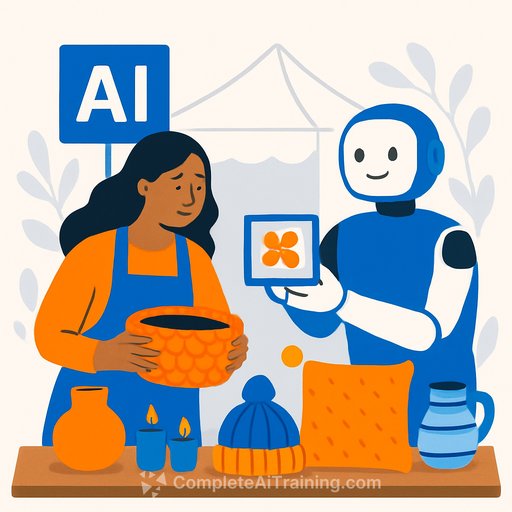
The craft fair squeeze
Booths are pricey. Materials and time add up. For many makers, the math barely works. Meanwhile, AI-generated prints cost almost nothing to produce and scale. Markets built to spotlight handmade goods risk being flooded by low-cost outputs with no provenance.
This isn't gatekeeping. It's quality control. If buyers can't trust what's on the table, the whole event loses value.
What still sets human work apart
- Provenance: You can show process shots, iterations, and the mess behind the piece.
- Texture and material: Linocut, gouache, thread, wood, metal-things that carry time and touch.
- Voice: The choices you make under constraints build a style that tools can't repeat with intent.
- Relationship: Buyers remember the person they met, not a prompt.
A practical playbook for creatives
- Make your process visible: Bring sketchbooks, blocks, plates, test prints, or time-lapse videos. Add QR codes to "see how this was made."
- Label clearly: Use "Human-made" and list materials, tools, and hours. Provenance sells.
- Create scarcity: Limited editions with numbering, signatures, and certificates.
- Price with honesty: Show what goes into a piece (materials + hours + overhead). Educate without lecturing.
- Strengthen style: Pick constraints (palette, toolset, subject) and commit for 90 days. Consistency compounds trust.
- Guard your originals: Post lower-res images, use tasteful watermarking, and offer print-only licenses when needed.
- Choose the right markets: Favor events that vet vendors, require process evidence, or restrict AI-generated work in "handmade" categories.
- Build a direct list: Collect emails at every show. Social platforms shift; your list is insurance.
Where AI fits-without replacing you
- Idea expansion: Moodboards, thumbnails, and composition studies-keep them upstream, not as the final deliverable.
- Admin: Product descriptions, booth checklists, inventory tracking, and customer emails.
- Research: Trends, color stories, and reference gathering-then filter through your taste.
- Ethics: Disclose when AI touched the process. Keep your hand the point of differentiation.
If you're auditing tools for ideation and pattern work, this curated list is a helpful starting point: AI tools for generative art.
For organizers: simple policies that protect makers
- Clear categories: Separate "handmade," "AI-assisted," and "AI-generated."
- Proof of process: Require build photos or short videos for handmade categories.
- Transparent labeling: Make disclosures visible on tags or placards.
- Provenance standards: Encourage content credentials and watermarking where relevant. See the open standard here: C2PA.
- Copyright awareness: Point vendors to current guidance on AI and authorship: U.S. Copyright Office AI resource.
What this means for your career
AI will keep producing volume. Your path is to produce value. Show the work behind the work. Lean into mediums that reward touch. Build a recognizable voice and a buyer base that cares about where their art comes from.
As Apsara put it, there's room for optimism. Saturation creates boredom. Boredom creates demand for the real thing.
Your membership also unlocks: