How AI is reshaping the fight over who pays US medical bills
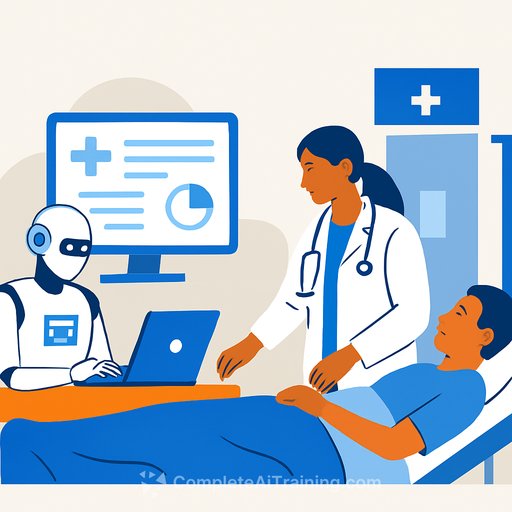
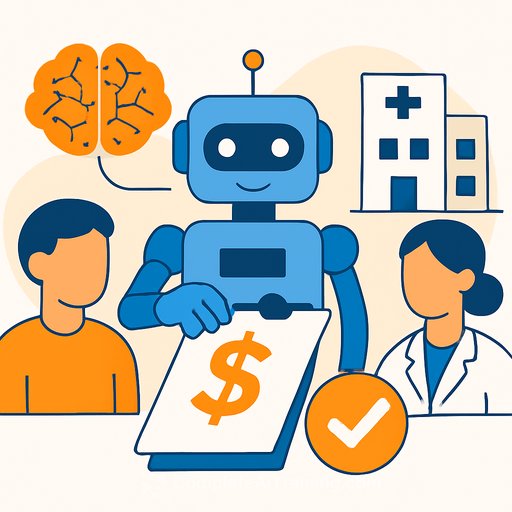
Hospitals and insurers are bringing AI to the front lines of billing and reimbursement. Providers are using AI to capture documentation and code with more precision, which can support higher payments. Payers are using AI to question medical necessity and flag outliers at scale. The result is a high-speed standoff over costs-faster, tighter, and harder to predict.
What's changing right now
Insurers have stepped up AI reviews to find treatments and claims they view as unnecessary. At the same time, health systems are deploying AI-driven clinical documentation and coding software that surfaces additional diagnoses, acuity, and billable services. Both sides say they're correcting the record. Both sides are also escalating denials and appeals.
The numbers worth tracking
- Blue Cross Blue Shield Association's review points to roughly $663 million in inpatient and at least $1.67 billion in outpatient spending linked to more aggressive coding enabled by AI tools.
- Healthcare is about 18% of US GDP, per federal estimates. Source: CMS National Health Expenditure.
- McKinsey estimates payers can save about $970 million per $10 billion in revenue using AI across claims, prior auth, and clinical support. Source: McKinsey.
- Morgan Stanley projects up to $900 billion in hospital-side savings by 2050 from AI-driven improvements in care and operations.
"Bot vs bot" is real
Experts call it an arms race with no guaranteed winner. As Christina Silcox put it: "The idea of (AI) bot versus bot is intrinsically a situation where no one's going to win." When both sides optimize, gains can cancel out and friction rises. That's more denials, more audits, and longer revenue cycles-unless guardrails catch up.
Provider play: defend revenue, tighten documentation
Hospitals say AI is necessary to counter rising denials and underpayments. HCA expects about $400 million in 2026 savings from AI across revenue cycle and clinical documentation. Systems like Providence report more complete records and more precise reimbursement when AI helps clinicians capture conditions and procedures accurately.
- Stand up AI-enabled CDI with clear coding guidelines (sepsis, malnutrition, AKI, heart failure specificity) and compliance review before submission.
- Adopt human-in-the-loop for all suggested diagnoses and code upgrades; require clinical evidence in the note, not just the claim.
- Instrument denial analytics by payer, code, site of care, and physician; auto-generate appeal packets with citations and structured evidence.
- Audit for overreach (upcoding risk) monthly; sample charts where AI added CC/MCC or high-cost procedures.
- Align with physicians: brief, in-EHR prompts; limit alert fatigue; show how each query supports care quality or risk adjustment.
- Prepare for AI-to-AI: standardized attachments, timelines, and escalation rules to shorten appeal cycles.
Training teams on the tooling matters. See the AI Learning Path for Medical Billers for workflows that connect documentation, coding, and claims.
Payer play: cut waste, reduce abrasion
Insurers argue AI is essential to control spend and steer members to appropriate care. UnitedHealth forecasts close to $1 billion in 2026 savings and plans about $1.5 billion in AI investment this year, with similar levels next year. Humana expects more than $100 million in savings over several years. CVS Health's Aetna is investing in AI to improve clinical coordination with providers.
- Use explainable models for medical necessity and utilization review; share reason codes that map back to policy language and accepted guidelines.
- Prior auth triage: fast-track high-confidence approvals; push ambiguous cases to clinicians early to avoid late-cycle denials.
- Monitor for unintended bias against certain facilities, service lines, or geographies; retrain when drift appears.
- Measure abrasion: appeal overturn rates, time-to-decision, provider NPS, and cost per resolved denial.
- Publish machine-readable policy references and acceptable evidence lists to speed provider submissions.
For a view across claims automation and cost control, browse AI for Insurance.
Where friction spikes
- AI-driven coding intensity: Centene flagged cases where routine fevers seemingly became sepsis on arrival. Scrutiny will center on diagnosis criteria, not just code edits.
- Opaque models: When neither side can explain a decision, delays multiply. Expect regulators and large purchasers to demand audit trails.
- Competing incentives: Providers optimize "complete and accurate" capture; payers optimize "necessary and efficient" care. Without shared rules, both are right-and both pay a tax in admin time.
Practical guardrails both sides should agree on
- Evidence-first adjudication: no code changes without clinical documentation that stands on its own.
- Shared vocabularies: align on definitions for sepsis, malnutrition, and high-variance diagnoses; cite accepted clinical criteria.
- Model governance: register models, versions, and owners; track training data sources; run quarterly fairness and accuracy audits.
- Appeals SLAs: standardized data packets, timelines, and escalation paths; auto-attach notes, labs, imaging, and decision logs.
- Data standards: move to structured exchanges (FHIR where possible) to cut ambiguity and reduce back-and-forth.
What to watch next
- Regulatory pressure on AI transparency in utilization management and coding assistance.
- Market moves to shared AI "referees" that both sides trust for specific determinations.
- Contract clauses that cap coding-intensity shifts and require explainability for automated denials.
AI won't settle the hospital-insurer dispute on its own. But with clean documentation, explainable decisions, and shared standards, it can shrink the gap between "we provided it" and "we'll pay for it." That's where the real savings-and fewer headaches-live.
Your membership also unlocks: